
Can you lose an election even when more people voted for your side? With the right map, yes. That's the whole trick of gerrymandering.
What gerrymandering means
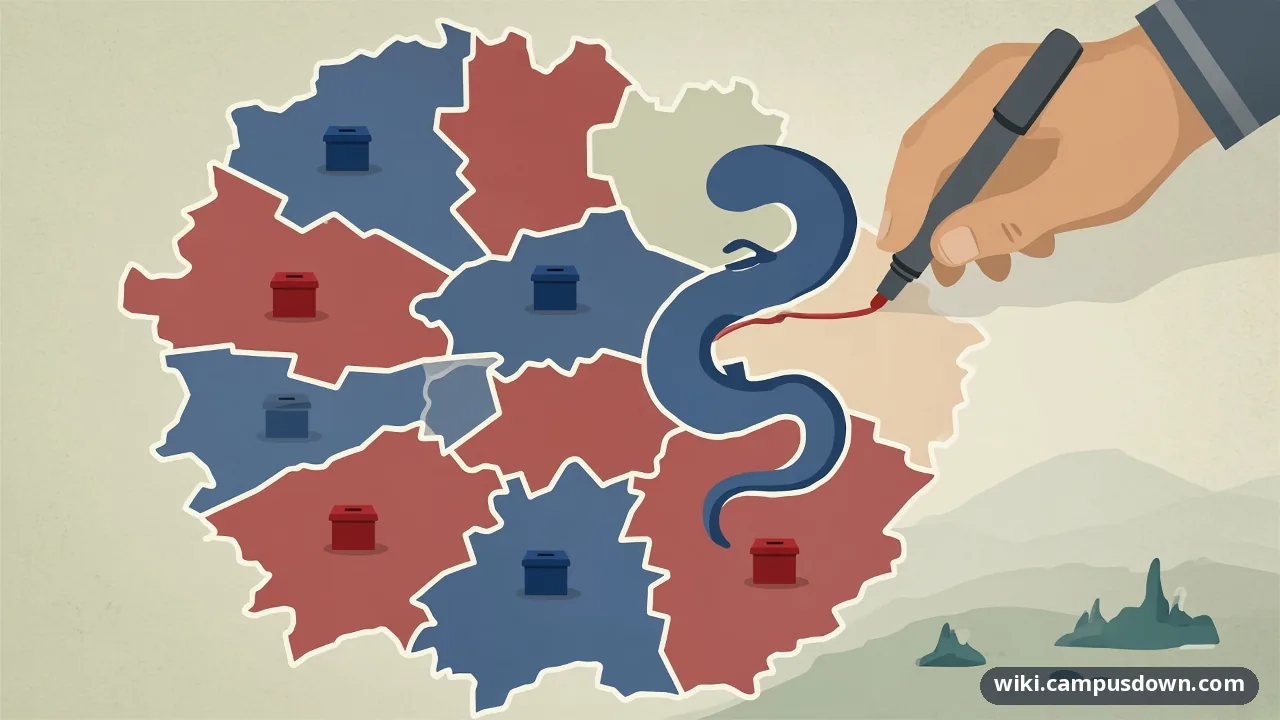
Gerrymandering is drawing the boundaries of election districts to help one party or group. In the US, states redraw congressional and state legislative districts every 10 years after the census. That process is called redistricting, and whoever holds the pen can tilt it.
The Brennan Center sums it up in one line: politicians end up choosing their voters instead of voters choosing their politicians.

Where the funny name comes from
In 1812, Massachusetts governor Elbridge Gerry signed a bill creating a long, twisty state senate district. At a Boston dinner party, illustrator Elkanah Tisdale sketched it as a monster with claws. Someone said it looked like a salamander. Poet Richard Alsop shot back: no, a “Gerry-mander.”
The cartoon ran in the Boston Gazette on March 26, 1812. Gerry's party won more state senate seats that April even though the other party got more votes statewide.
Packing and cracking
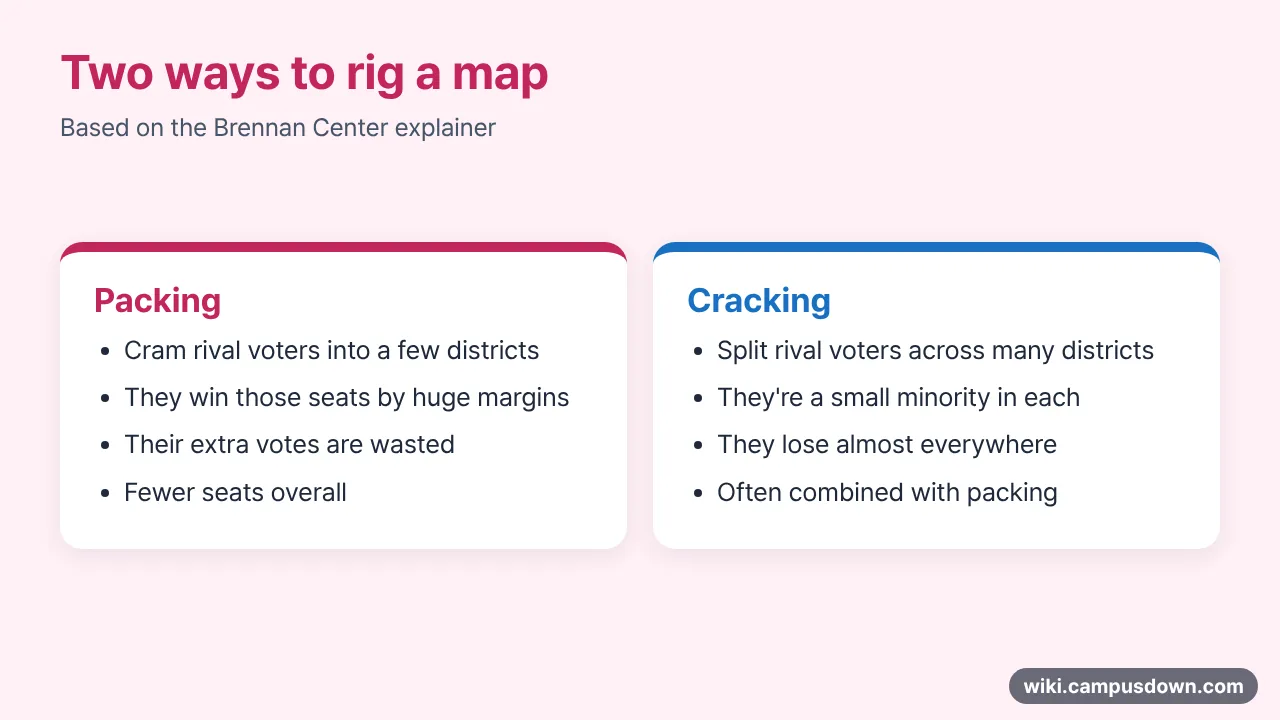
Packing crams the other side's voters into a few districts. They win those seats by a landslide, and every extra vote there is wasted.
Cracking splits them across many districts, so they're too small a share to win anywhere. Map drawers often use both.
Weird shapes aren't proof, though. A smart map can look neat and still be lopsided, and an odd shape might just follow a river or a city line.
Where things stand
In Rucho v. Common Cause (2019), the US Supreme Court said partisan gerrymandering claims are a political question federal courts can't decide. Some state courts and state laws still limit it.
FAQ
- Who was gerrymandering named after?
- Elbridge Gerry, the Massachusetts governor who signed the 1812 redistricting bill.
- What are packing and cracking?
- Packing crams rival voters into a few districts; cracking spreads them thin across many.
- Can federal courts stop partisan gerrymandering?
- Since Rucho v. Common Cause (2019), no. Some state courts and laws can.
Sources reviewed: 2026-11-20
References
- Smithsonian Magazine. Where Did the Term “Gerrymander” Come From? 1812 Massachusetts map, Boston Gazette cartoon of March 26, 1812.
- Brennan Center for Justice. Gerrymandering Explained. Redistricting every 10 years, cracking and packing, Rucho v. Common Cause (2019).