
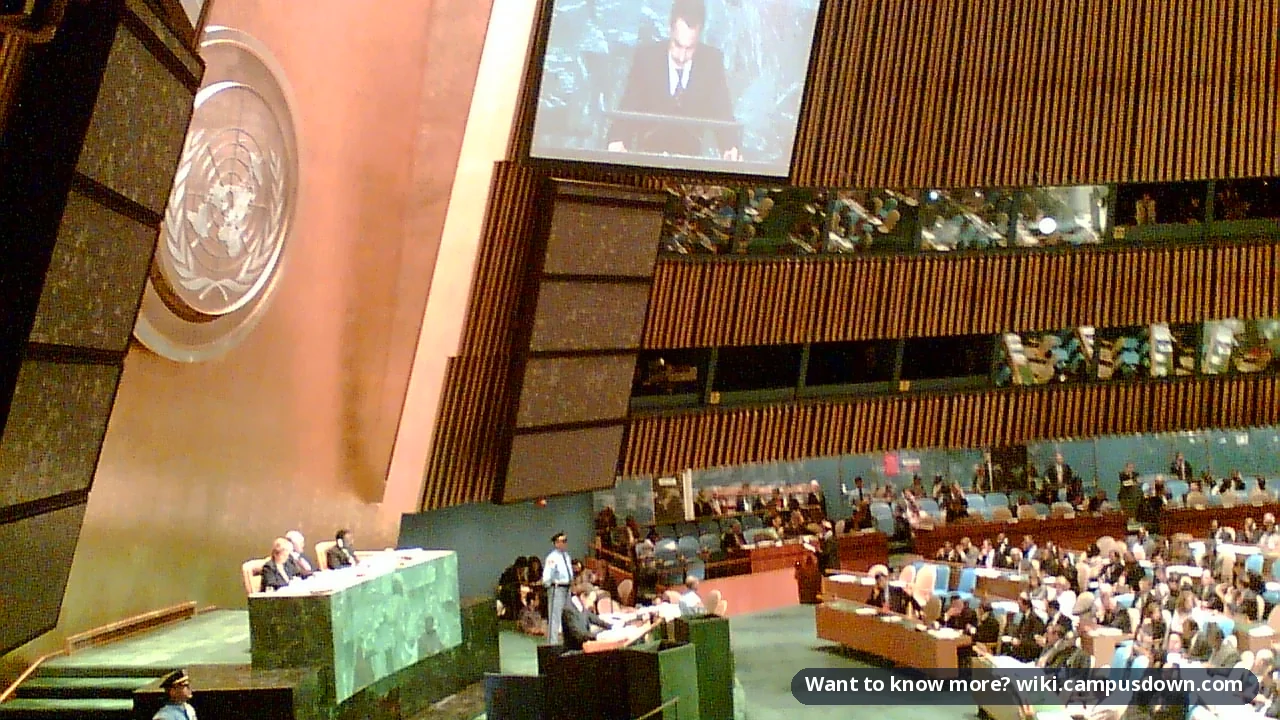
The empty seats of a general assembly hall make us ask where the authority for intervention should rest, and a military cemetery at dusk shows first that this question meets human lives. Just war theory is an ethical and legal theory that grew where the tradition of Augustine and Aquinas meets modern international law, and it reads going to war (jus ad bellum), waging war (jus in bello) and postwar responsibility (jus post bellum) separately. Just cause, legitimate authority, right intention, last resort, proportionality and a reasonable prospect of success belong mostly to judging whether to go to war, while discrimination and proportionality belong mostly to how it is waged. Reconstruction, accountability and reconciliation after the end are written on the third line. This division is not a license that blesses war. Saying that standards exist is not the same as retroactively stamping weapons already used as right. Merge the three lines into one, and the justification for intervention, restraint in waging war and the debts after war blur together.
Where going to war, waging war and postwar debts are split into three lines

Justice in going to war asks about just cause and authority, intention, last resort, proportionality and the prospect of success. Justice in waging war tries to distinguish combatants from noncombatants and to keep the harm of the means proportionate to the ends. Justice after war asks how to handle reconstruction and accountability and how to close the door on recurrence. Only when the three places stand apart does the sentence "the cause was just" fail to push out the sentence "the conduct was also just" automatically. The authority of an empty assembly hall is not a stamp of approval for intervention; it is closer to a warning that the authority may be empty. The rows of a cemetery leave behind the fact that proportionality calculations meet not only numbers but people's names. The balance lies in noting separately the claim that standards exist and the claim that something is already right.

Separating the language of blessing from the restraint of international law
Modern international humanitarian law has built up the rules of conduct in written provisions, and the UN Charter system tries to narrow the room for the use of force. Just war theory converses with those provisions but doesn't merge ethical standards with the minimum line of the provisions. Lawful and just are not the same stamp. Even when debates on humanitarian intervention open up, speak only of just cause and leave out last resort, proportionality and postwar debts, and justification becomes absolution. Natural law theory asks where universal standards are rooted, while this theory tries to apply those standards separately to the three stages of war. The balance lies in not merging the question of roots and the question of restraint at each stage into one lump.
| Standard situation | What tends to happen | What to note alongside it |
|---|---|---|
| Merging the three lines into "the intervention is already right" | Restraint in conduct and postwar debts easily hide beneath the justification | Separate going to war, waging war and postwar responsibility |
| Stamping lawful and just as the same thing | The minimum line of legal provisions easily turns into the ethical standard | Note lawfulness and the standards of justice separately |
| Speaking only of just cause and leaving out last resort and proportionality | Empty authority and the rows of the cemetery easily hide beneath the language of exemption | Keep the place of authority and the cost of proportionality side by side |
In practice: not turning a list of standards into absolution for intervention
Using this theory in international law classes, diplomatic debate and news reporting means not hiding the questions on all three lines. The practical balance is to keep side by side the cause and authority for going to war, discrimination and proportionality in waging it, and reconstruction and accountability after it. Speak only of the cause and leave out conduct, and the rows of the cemetery are erased; speak only of conduct and leave out the decision to go to war, and the empty seat of authority is hidden. Leave out the aftermath, and the debts after war become the victor's discretion. The empty seats and the cemetery are not the same photo. The key is using the theory as a check for restraint without raising it into a slogan that retroactively stamps weapons already used as right.
Checks for using the three lines of standards without closing them with absolution for intervention
- Separate the cause and authority for going to war, discrimination and proportionality in waging it, and reconstruction and accountability after it
- Don't mix lawful and just into the same stamp; first note whether the issue is "whether the standards of all three stages are met"
- Don't close an intervention on just cause alone; note last resort, proportionality and the prospect of success as well
- Use the theory as a check for restraint without retroactively stamping weapons already used as right, and keep the place of empty authority and the cost of the cemetery side by side
Knowing just war theory doesn't make an intervention already right. If you note going to war, waging war and the debts after war in one line, you can keep a list of standards from turning into a language of blessing.