
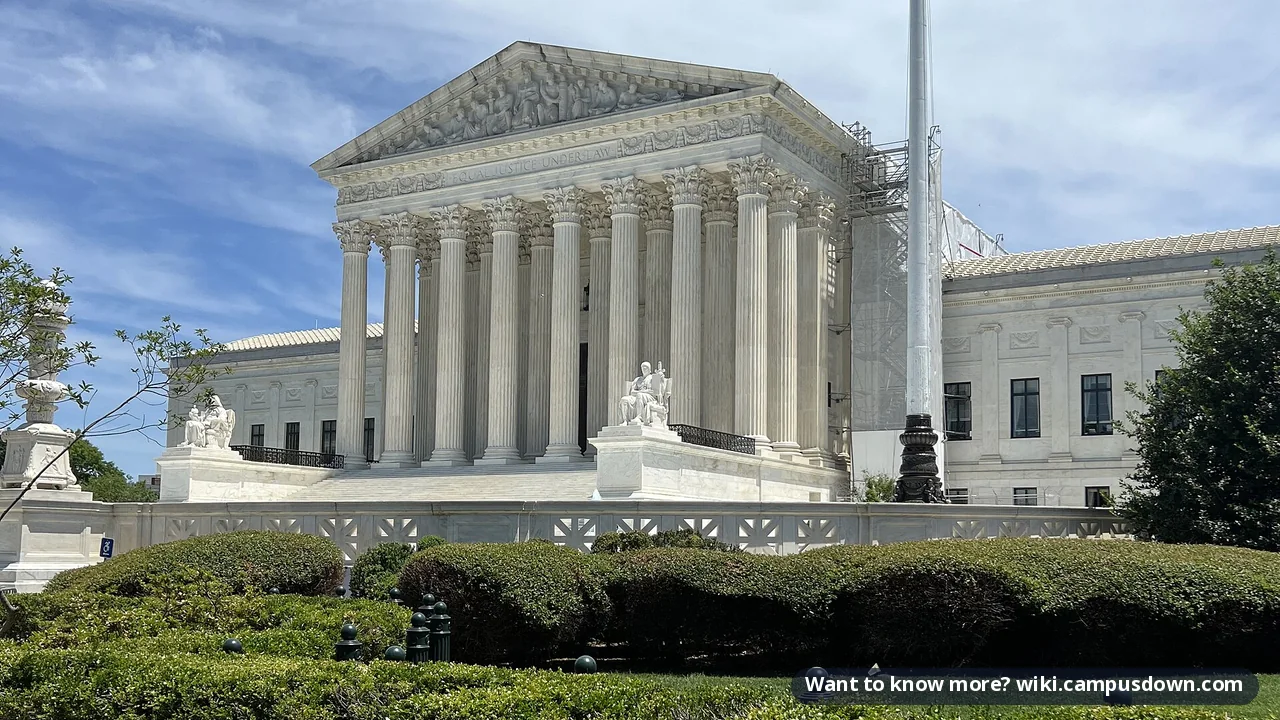
The columns of the Supreme Court building in daylight show where a constitutional text endures over time, but those columns don't fix its meaning in only one direction. Originalism is a theory of interpretation systematized in late-20th-century U.S. constitutional debate; it seeks to tie the meaning of the Constitution to its public meaning at the time of adoption, or to the understanding of its framers. Original public meaning became widely known to the public through the arguments of Antonin Scalia and others, and the strand that emphasizes the framers' intent is not quite the same. Living constitutionalism holds that the application of the text grows along with social change, and the two traditions have long faced off over the role of judges and the place of democratic amendment. This article doesn't declare either side the winner. Historical sources can serve as an anchor, but choosing and reading those sources is also interpretation. Using a theory of interpretation as a partisan weapon is a misuse of the concept.
Where public meaning and the framers' intent part ways
There are strands within originalism. Original public meaning asks how an ordinary reader would have read a provision's words when it was adopted. Original intent asks what those who drafted or ratified it were aiming for. The two questions can use the same historical sources, but they differ in whose understanding serves as the standard. Dictionaries, debates of the time and usage in case law can serve as anchors, but the reading differs depending on which sources are put first. Past agreement was never a single voice, so choosing the anchor is itself an interpretive choice. Merge the names into the single line "back to the original text," and the differences between strands are erased. The balance lies in keeping the place of the standard and the choice of sources side by side.

Separating it from living constitutionalism and the role of judges
Living constitutionalism holds that the application of the text grows along with the practice of each era. Originalism warns that if too much of that growth rests in judges' hands, the place of amendment moves into the courtroom. The other side holds that clinging only to the anchor of the past leaves the text unable to hold today's rights and institutions. Merge the two names into the single line "conservative versus progressive," and the standards of interpretation and the procedures of democratic amendment are erased. Keeping them apart lets you note separately the anchor of public meaning, the growth of application and the route of constitutional amendment. This contrast is one setting in U.S. constitutional debate, not a master key for judging every country's constitution by the same scheme. The balance lies in not raising the names of theories into a partisan scorecard.
| Interpretive situation | What tends to happen | What to note alongside it |
|---|---|---|
| Merging public meaning and the framers' intent into one line, "the original text" | The differences between strands and the choice of sources are easily hidden | Note which strand you use and which historical sources were put first |
| Stamping originalism and living constitutionalism as "conservative versus progressive" | Standards of interpretation and the route of amendment easily turn into a partisan scorecard | Note the role of judges and the place of democratic amendment separately |
| Reading the anchor of historical sources as a verdict of fate | It is easy to forget that choosing sources is itself interpretation | Keep the need for an anchor and the choices of reading side by side |
In practice: not turning an interpretive anchor into a partisan weapon
Using this theory in constitutional law classes, in reading court opinions and in public debate means bringing into view where the standard is anchored. The practical balance is to keep three lines side by side: state clearly which strand you use, original public meaning or original intent; don't hide which historical sources were put first; and don't turn the name of an interpretive theory into a partisan victory. Show only the photo of the columns and leave out the choice of sources, and the past looks like fate; speak only of today's needs and leave out the wording of the text, and the anchor disappears. A historian's hands opening an old law book are one scene of searching for meaning, not a legal victory. The key is using the theory as a check on reading without raising it into a scorecard for political camps.
Checks for using an interpretive anchor without closing it with a partisan scorecard
- State clearly which strand you use, original public meaning or original intent, and don't hide which historical sources were put first
- Don't mix the name up with living constitutionalism as "conservative versus progressive"; first note whether the issue is "where to anchor the standard of interpretation"
- Don't turn the name of an interpretive theory into a partisan victory, and note the role of judges and the route of democratic amendment separately
- Don't read the anchor of historical sources as a verdict of fate; keep in view that choosing sources is itself interpretation, and don't raise the theory into a scorecard for political camps
Knowing originalism doesn't mean you have to close today's rulings with the sentences of the past. If you note the standard of the strand and the choice of sources in one line, you can keep an interpretive anchor from turning into a partisan weapon.