
Why do you wash your hands before eating? Because of an idea that was controversial less than two centuries ago: germs make you sick.
Before germs: "bad air"
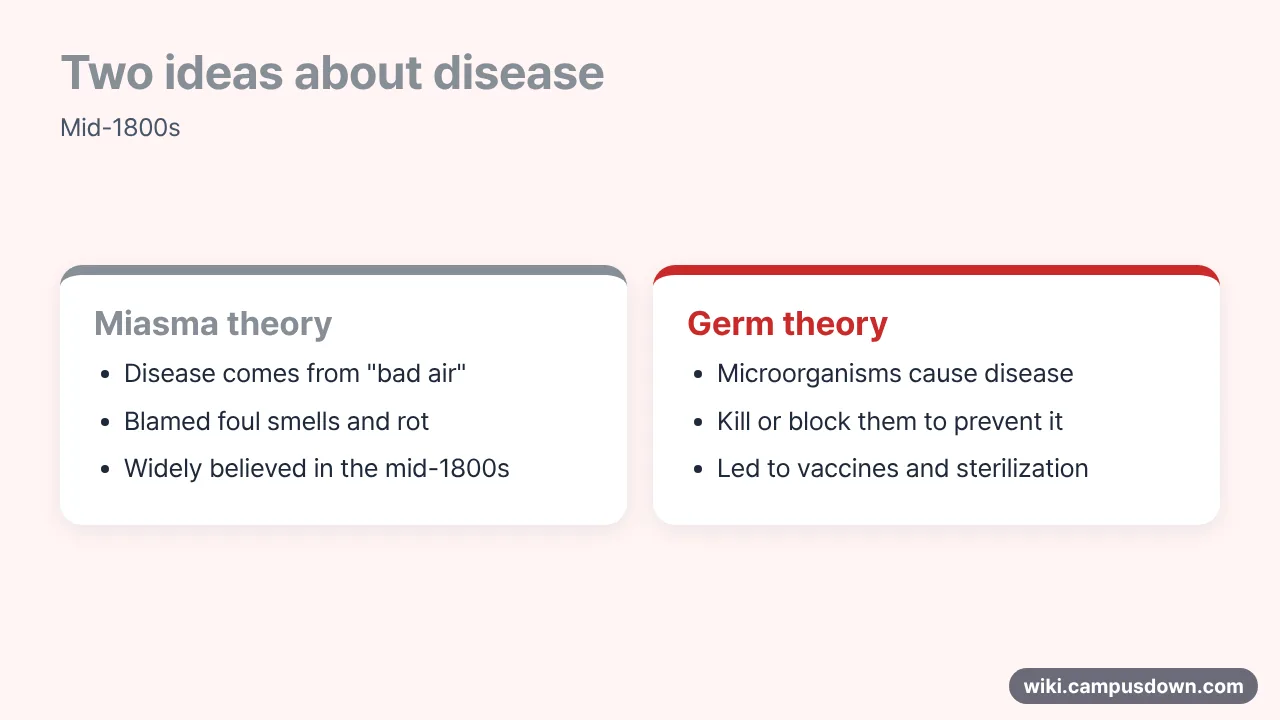
The Science History Institute notes that in the mid-1800s many people accepted miasma theory, the belief that diseases were caused by bad air. Foul smells from rot and sewage seemed like the obvious culprit.

Pasteur's flasks
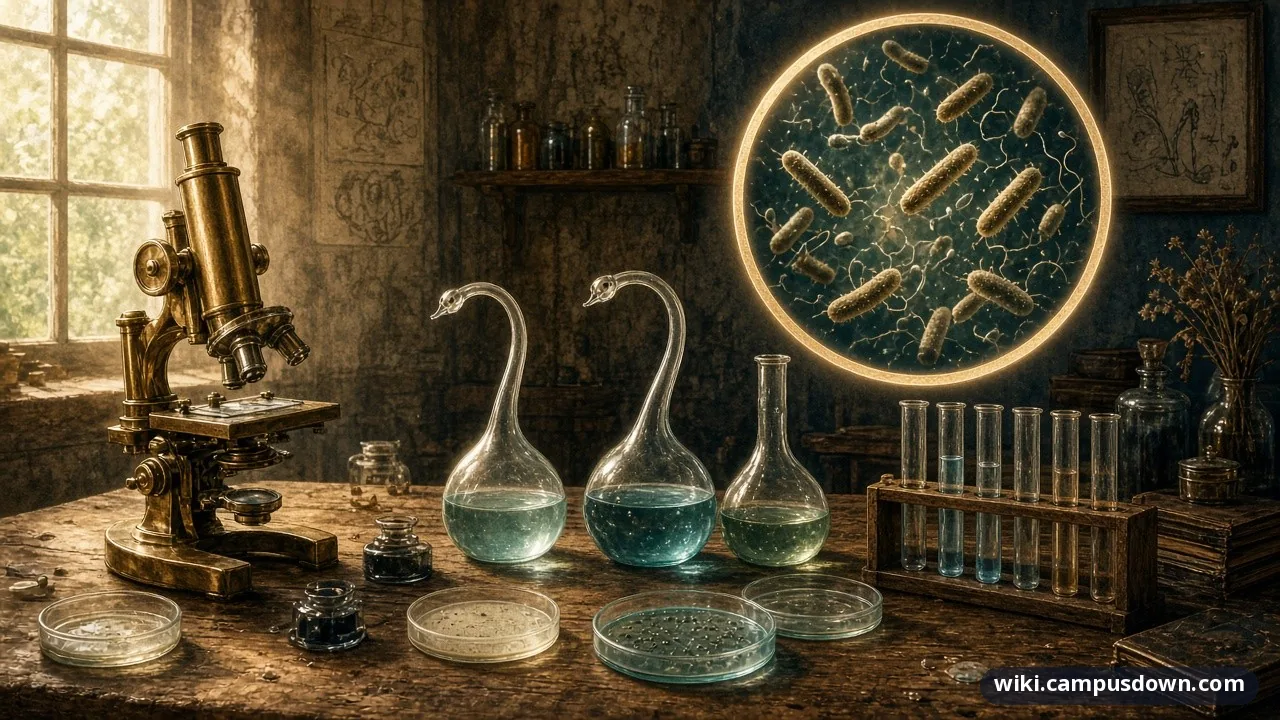
French chemist Louis Pasteur (1822–1895) wasn't the first to say pathogens cause disease. But his experiments gave the idea strong support. He designed swan-neck flasks whose long curved necks let air in but trapped dust and airborne microbes.
When he put sterilized broth in them, nothing grew. Air alone couldn't create life. That also struck at spontaneous generation, the popular belief that living things could arise from non-living matter.
From theory to vaccines
In 1881, at Pouilly-le-Fort, Pasteur tested an experimental anthrax vaccine on livestock. The 25 vaccinated animals survived infection; the unvaccinated ones died. German researcher Robert Koch is recognized as the discoverer of the bacterium that causes anthrax.
Why it matters
Germ theory turned hygiene, sterilization and vaccines from guesses into science. Much of modern medicine rests on it.
FAQ
- What did people believe before germ theory?
- Many accepted miasma theory: that disease came from bad air.
- What did Pasteur's swan-neck flasks show?
- Sterile broth stayed clear when microbes couldn't reach it, so air alone didn't create life.
- Who discovered the anthrax bacterium?
- German researcher Robert Koch.
Sources reviewed: 2026-11-20
References
- Science History Institute. Louis Pasteur. Germ theory vs. miasma theory, swan-neck flasks, spontaneous generation, the 1881 anthrax vaccine trial, Koch and anthrax.