
Why does the person who owns the factory earn more than the people running the machines? Karl Marx spent his life on questions like that, and the answers became Marxism.
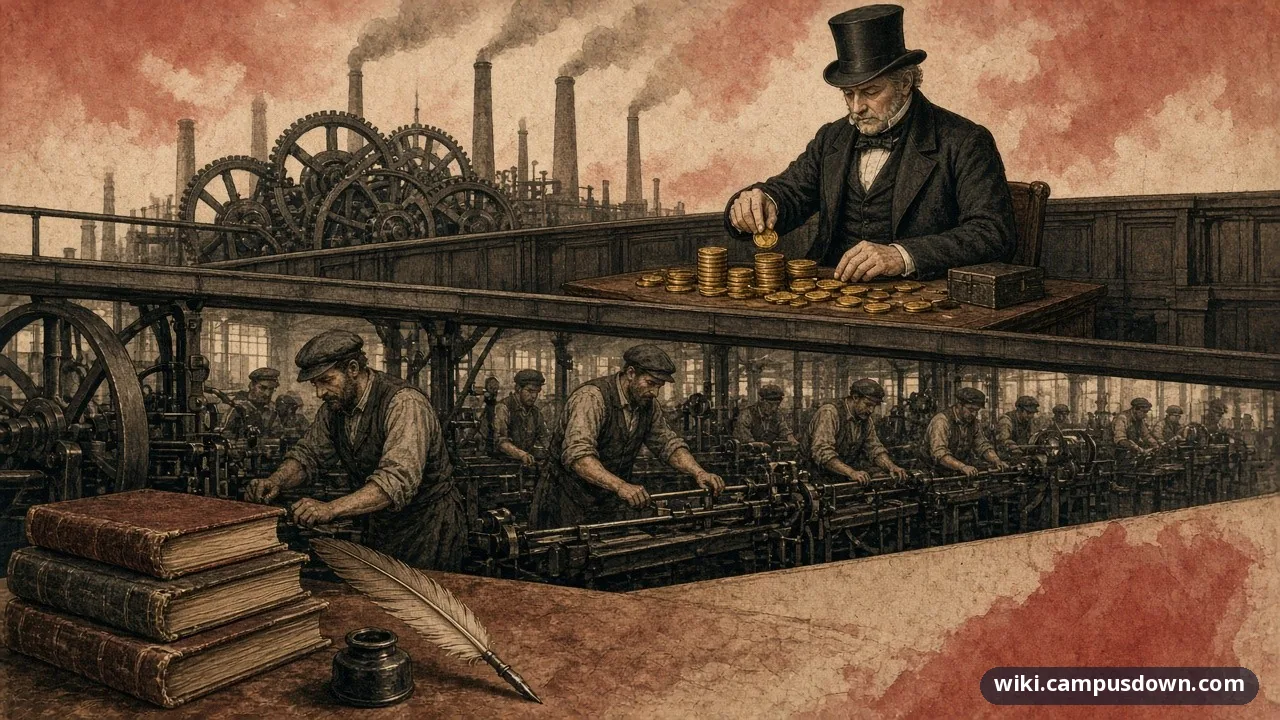
Who was Marx?
Karl Marx (1818–1883) is often remembered as a revolutionary. The Stanford Encyclopedia of Philosophy points out that he was also trained as a philosopher, with a doctorate in ancient philosophy. With Friedrich Engels he wrote the Communist Manifesto (1848). The first volume of Capital came out in 1867.

Alienation
Marx's early writing focuses on alienation. Under capitalism, he argued, workers don't control what they make or how they make it. Work that could be a source of fulfillment turns into something done just to survive.
Historical materialism
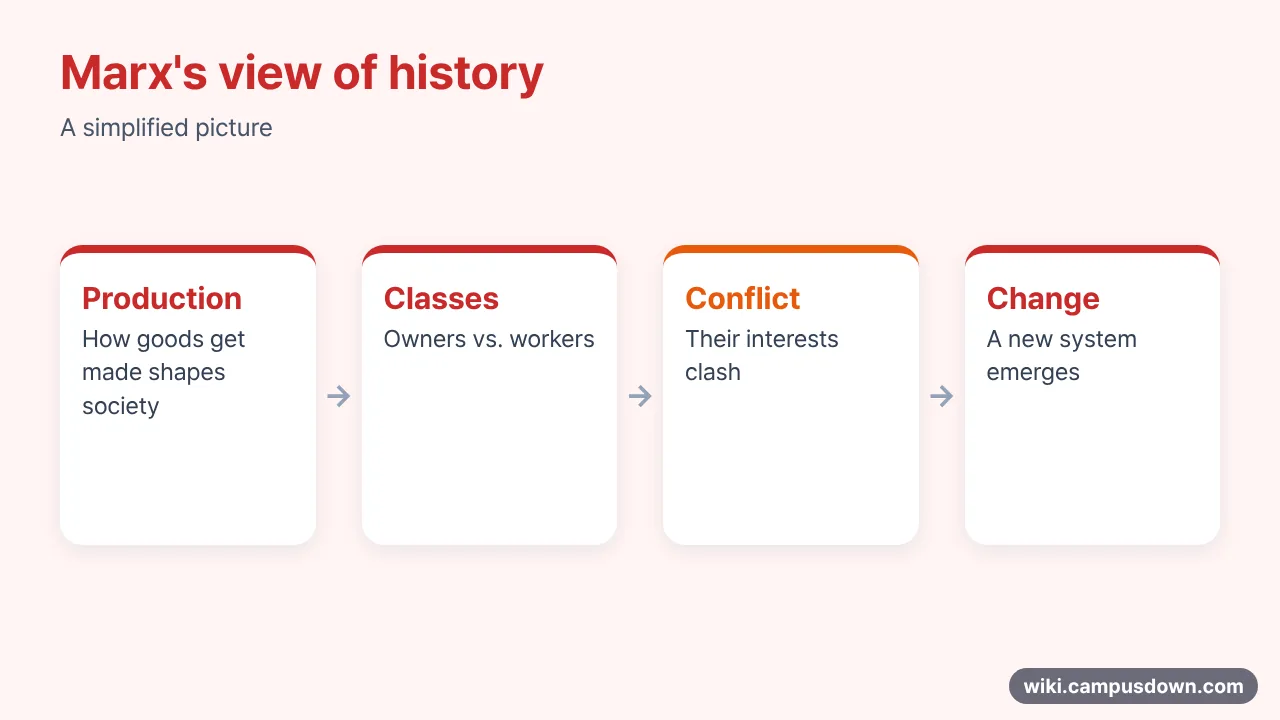
His theory of history is often called historical materialism. The idea: the way a society produces things (farms, factories, who owns them) shapes its laws, politics, and ideas. When those economic arrangements stop working, conflict between classes pushes society toward something new.
Why people still argue about it
Twentieth-century communist states claimed Marx as inspiration, and their record is a big part of why Marxism is so controversial. At the same time, his ideas about class, labor, and ideology still shape sociology, history, and economics. You can study Marx without agreeing with him, and most courses do just that.
FAQ
- Is Marxism the same as communism?
- Not exactly. Marxism is a way of analyzing society and history. Communism is the political goal and the movements and states that pursued it.
- What is alienation?
- Marx's idea that workers become cut off from their work, its products, and each other under capitalism.
- Did Marx write alone?
- Many key works, including the Communist Manifesto, were written with Friedrich Engels.
Sources reviewed: 2026-11-20
References
- Stanford Encyclopedia of Philosophy. Karl Marx. Alienation, historical materialism, economics, ideology, the state, communism.
- Marx, K. & Engels, F. (1848). Manifesto of the Communist Party. Marxists Internet Archive. Full text of the 1848 Manifesto.