
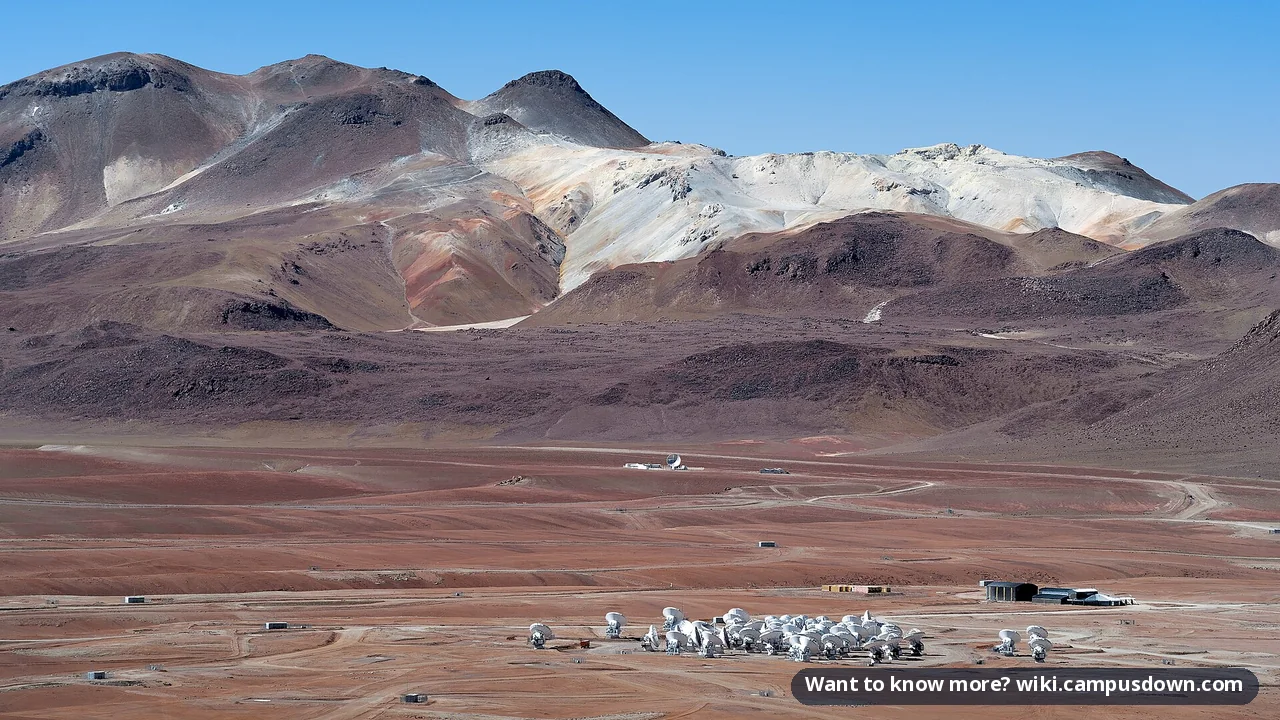
An array of radio telescopes in the desert shows the scale of the instruments we use to listen to the universe, and Earth photographed as a pale blue dot signals that the place where those instruments stand rests on very narrow conditions. The anthropic principle is a principle of reasoning given its modern formulation by Carter and others in the 1970s and 1980s. It holds that the conditions of the universe we observe are not independent of the conditions under which observers can exist. The weak version is close to a selection effect: a universe without observers is never reported, so the sample we see has already been filtered. The strong version goes further and is easily read as saying the universe must have properties that permit observers; it is also where the debate over explanatory power grows. This article does not declare victory for design. Turn the blue dot into a poster reading "made for us," and the selection effect and the gaps in the explanation both blur at once.
The weak version as a selection effect
The heart of the weak version is that observation does not pick a universe at random; only universes whose conditions let observers survive ever get reported. The impression that the constants and initial conditions "look suited to life" can only arise where someone is able to have that impression. This distinction is not a finished explanation but a check: note the bias in the sample first. A telescope array picking up a signal is likewise reported only from where it can pick one up. Keeping apart the claim that there is a selection effect and the claim that no deeper cause is needed is what keeps the reading balanced. Acknowledging the effect is not the same as declaring the question closed.
| Line of reasoning | What tends to happen | What to note alongside it |
|---|---|---|
| Reading the principle as "the universe was designed for us" | The selection effect easily hides beneath the language of purpose | Note sample bias and design claims separately |
| Merging the weak and strong versions into one line | The debate over explanatory power easily blurs all at once | Note the selection effect and the additional claims separately |
| Mixing it with many-worlds or the multiverse as "every world already exists" | The principle's reasoning and the list of worlds are easily erased together | Set the background of the sample and the claims about existence side by side |

Separating the strong version, explanatory power and many-worlds debates

The strong version is easily read as the sentence "the universe must permit observers," and the debate intensifies where it edges toward the language of purpose. Whether it has explanatory power depends on whether it offers information beyond the selection effect. The many-worlds interpretation and multiverse discussions sometimes combine with the weak version by treating the many conditions of different branches or regions as the background of the sample. That combination does not mean the anthropic principle is the same thing as many-worlds. Collapse the name into "the universe was designed for us" or "every world already exists," and the selection effect, the claims about existence and the gaps in the explanation all blur at once. A balanced account keeps the principle's reasoning separate from a list of worlds.
In practice: not turning a principle of reasoning into a design poster
In cosmology classes, science reporting and philosophical debate, using this principle means not hiding the bias in the sample or the gaps in the explanation. In practice, balance means keeping three things side by side: stating the selection effect of the weak version clearly; noting the additional claims and explanatory power of the strong version separately; and not stamping it with the sentence "made for us." Talk only about the blue dot and leave out where the telescopes stand, and it becomes a sentimental poster; talk only about fine-tuning and leave out the selection effect, and it slides into a victory for design. The key is to use the theory as a check on the sample without raising it into a slogan of purpose.
Checklist for using the anthropic principle without closing it into a design slogan
- State the selection effect of the weak version clearly, and do not hide that the effect is not the same as a complete explanation
- Do not mix the strong version with "the universe was designed for us"; note the additional claims and explanatory power separately
- Do not merge it with many-worlds or the multiverse into "every world already exists"; set the background of the sample and the claims about existence side by side
- Use the theory as a check on the sample; do not close a sentimental poster on the blue dot alone, and do not raise it into a slogan of purpose
Knowing the anthropic principle does not mean the universe was designed for us. Writing the selection effect, the additional claims of the strong version and the gaps in the explanation on a single line makes it less likely that the principle turns into a poster of purpose.