
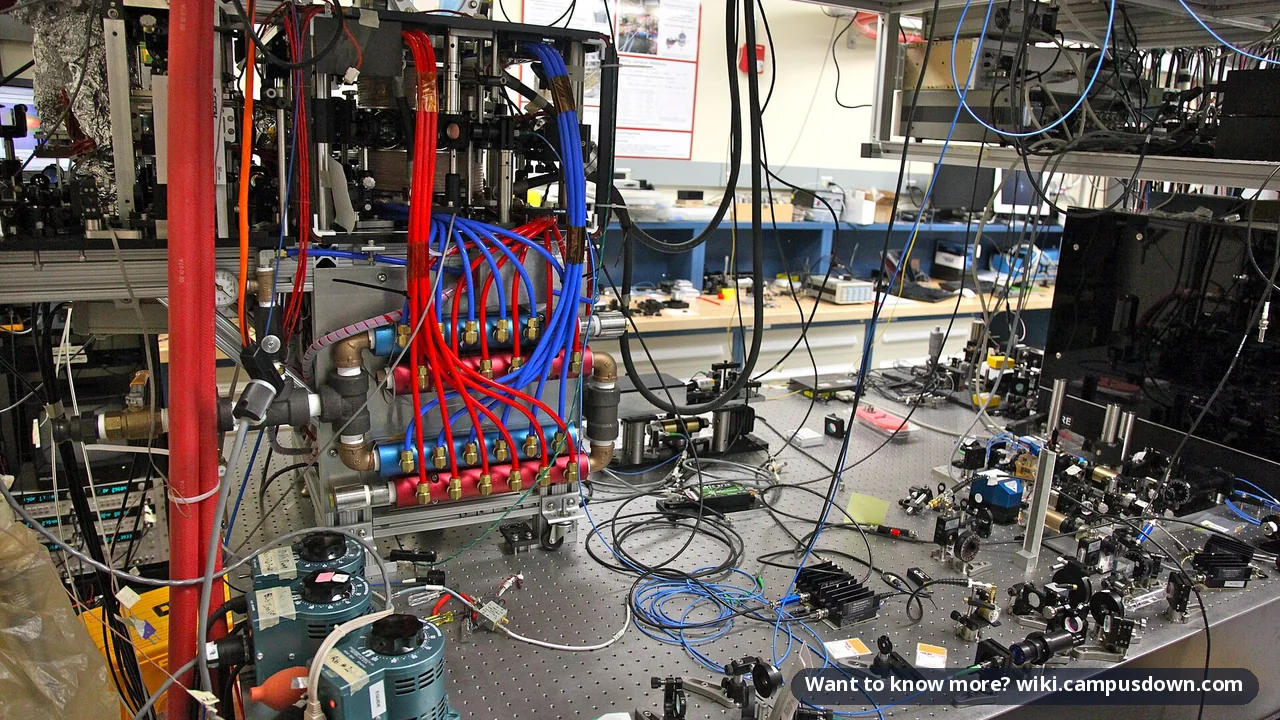
A laser on an optical table shows how delicately measuring devices handle the interference of waves, and a fork in a forest path seen from above shows a single route dividing into several branches. The many-worlds interpretation is a reading proposed by Hugh Everett in 1957 that sees quantum measurement as a branching of the wave function, with each outcome realized on a different branch. Instead of a picture of collapse in which the observer "keeps one and erases the rest," it is closer to saying that a universal wave function divides into branches while keeping every term. The Copenhagen family of interpretations puts measurement and classical apparatus at the center and applies probability rules, and the two readings have long stood opposed. The points of contention are how the meaning of probability is to be read in terms of the weight of branches, and where the uniqueness of experience remains. This article is not a travel guide. Turn the photo of a forking path into a fantasy poster, and the mathematics of measurement and the place of experience blur together.
Where the realization of branches is read in place of collapse
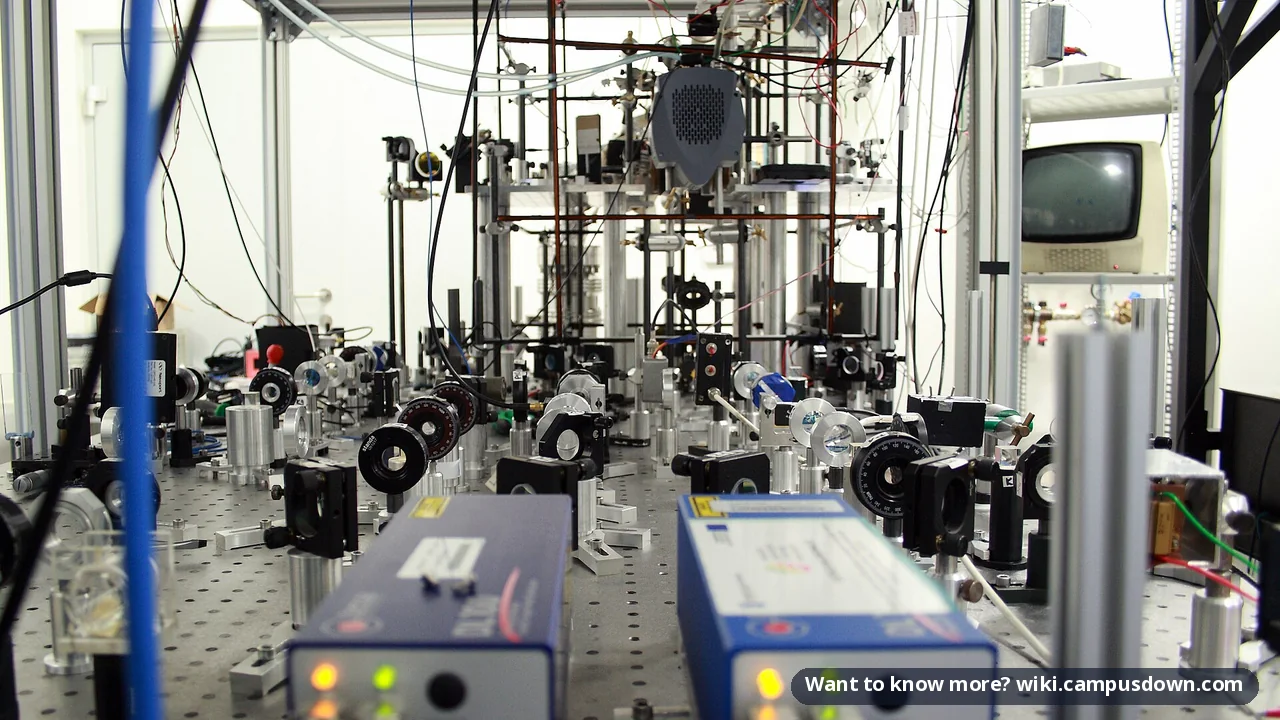
The core of this interpretation is that it tries to remove the postulate that, at the moment of measurement, the wave function reduces to a single eigenstate. The universal wave function evolves linearly, and measurement is closer to dividing branches in which observer and apparatus are entangled. Each branch keeps one outcome, and to the observer within that branch, that outcome looks unique. This picture is not an invitation to visit other branches. The balance lies in noting separately the claim that branches divide and the claim that one can move between branches. Interference on an optical table shows mathematics in which terms remain together, but turn that mathematics into a travel map, and the place of measurement becomes fantasy.

Separating the Copenhagen interpretation, probability and the uniqueness of experience
The Copenhagen family of interpretations is closer to a bundle of related readings than a single doctrine, and it puts measurement, classical apparatus and probability rules at the center. The many-worlds interpretation removes collapse from that center and tries to reread the same mathematics through the realization of branches. The meaning of probability is a long-standing difficulty for this interpretation. If every outcome happens somewhere, what are the frequencies we count in the laboratory frequencies of? The uniqueness of experience remains in the same place. The explanation that the world looks like one to an observer within a branch and the intuition that we actually live only one life may not be the same statement. Merge the two interpretations into one line, "mystery versus common sense," and the rules of measurement and the open place of probability are erased.
| Interpretive situation | What tends to happen | What to note alongside it |
|---|---|---|
| Reading the realization of branches as a fantasy of travel | The mathematics of measurement easily hides beneath the language of a poster | Separate the division of branches from movement between branches |
| Merging it with the Copenhagen interpretation into one line, "mystery versus common sense" | The rules of measurement and the open place of probability are easily erased | Note the reason for removing collapse and the difficulty of probability together |
| Stamping the uniqueness of experience as an already solved answer | The explanation within a branch and the intuition of where we live easily blur together | Keep the apparent uniqueness within a branch and the remaining difficulty side by side |
In practice: not turning the picture of branches into a fantasy of travel
Using this interpretation in physics classes, debates on interpretation and science reporting means not hiding the reason for removing collapse or the open place of probability. The practical balance is to keep three lines side by side: note whether the wave function remains linear; state clearly that realization on each branch is not the same as permission to travel; and don't stamp the meaning of probability or the uniqueness of experience as a finished answer. Speak only of the fork in the forest path and leave out the optical table, and the interpretation becomes a poster; speak only of the apparatus and leave out the uniqueness of experience, and the difficulty is erased. The key is using the theory as a check on measurement without raising it into the slogan "we set off into infinite parallel worlds."
Checks for using the interpretation of branches without closing it with a fantasy of travel
- Note whether the wave function remains linear, and state clearly that realization on each branch is not the same as permission to travel
- Don't mix the name up with the Copenhagen interpretation as "mystery versus common sense"; note the reason for removing collapse and the difficulty of probability together
- Don't stamp the uniqueness of experience as an already solved answer; keep the apparent uniqueness within a branch and the remaining difficulty side by side
- Use the theory as a check on measurement, don't close with a poster on the fork in the forest path alone, and don't raise it into the slogan "we set off into infinite parallel worlds"
Knowing the many-worlds interpretation doesn't mean you can travel to another branch. If you note linear evolution, the realization of branches and the open place of probability in one line, you can keep the interpretation from turning into a fantasy poster.