
What holiday starts the day after Christmas, lasts a week, and gives each day its own big idea? Kwanzaa. It's a celebration of African American and Pan-African culture, and it's built around family, community and a candle holder with seven candles.
What Kwanzaa is
Kwanzaa runs every year from December 26 to January 1. It was created in 1966 by Maulana Karenga, a professor of Africana studies, after the Watts uprising in Los Angeles. He wanted a holiday that brought Black families and communities together around shared values and African heritage.
The name comes from the Swahili phrase matunda ya kwanza, "first fruits," a nod to harvest festivals across Africa. Kwanzaa is cultural, not religious, so people of any faith can celebrate it, and many do it alongside Christmas.

The seven principles
Each day focuses on one of the Nguzo Saba, the seven principles, named in Swahili:
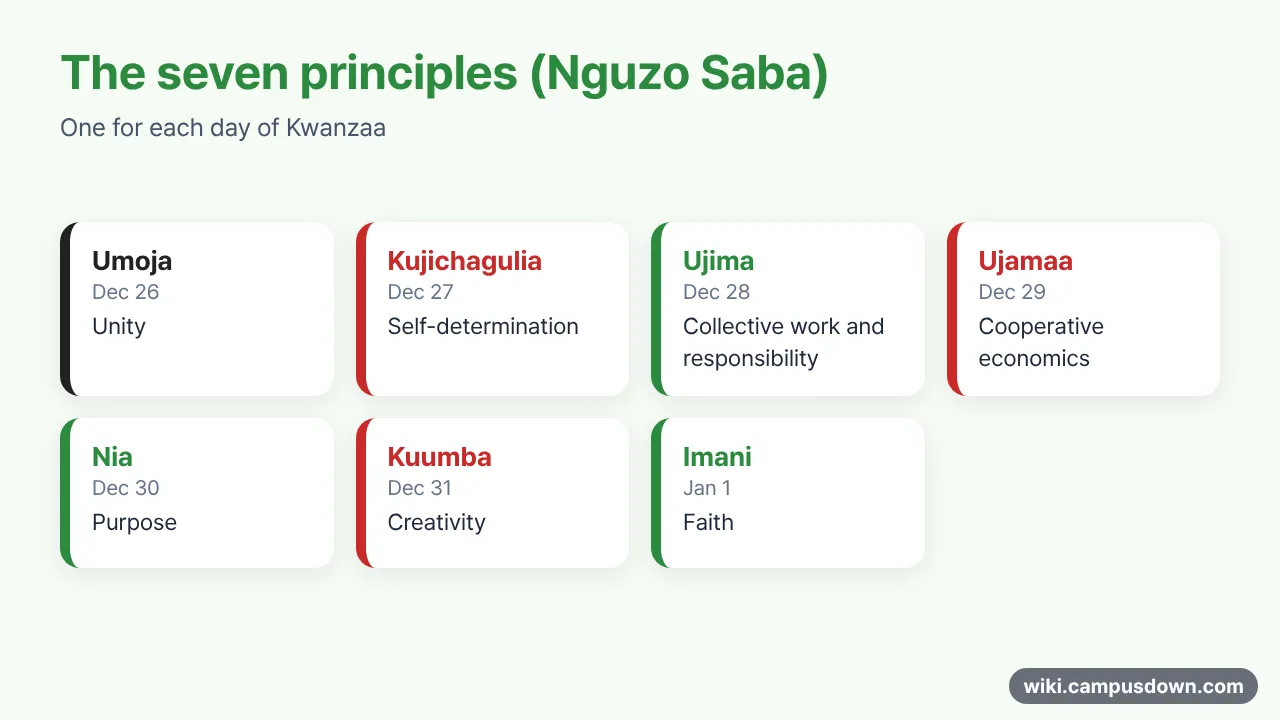
On each evening, families light a candle, talk about that day's principle and what it means in their lives.
Symbols on the table
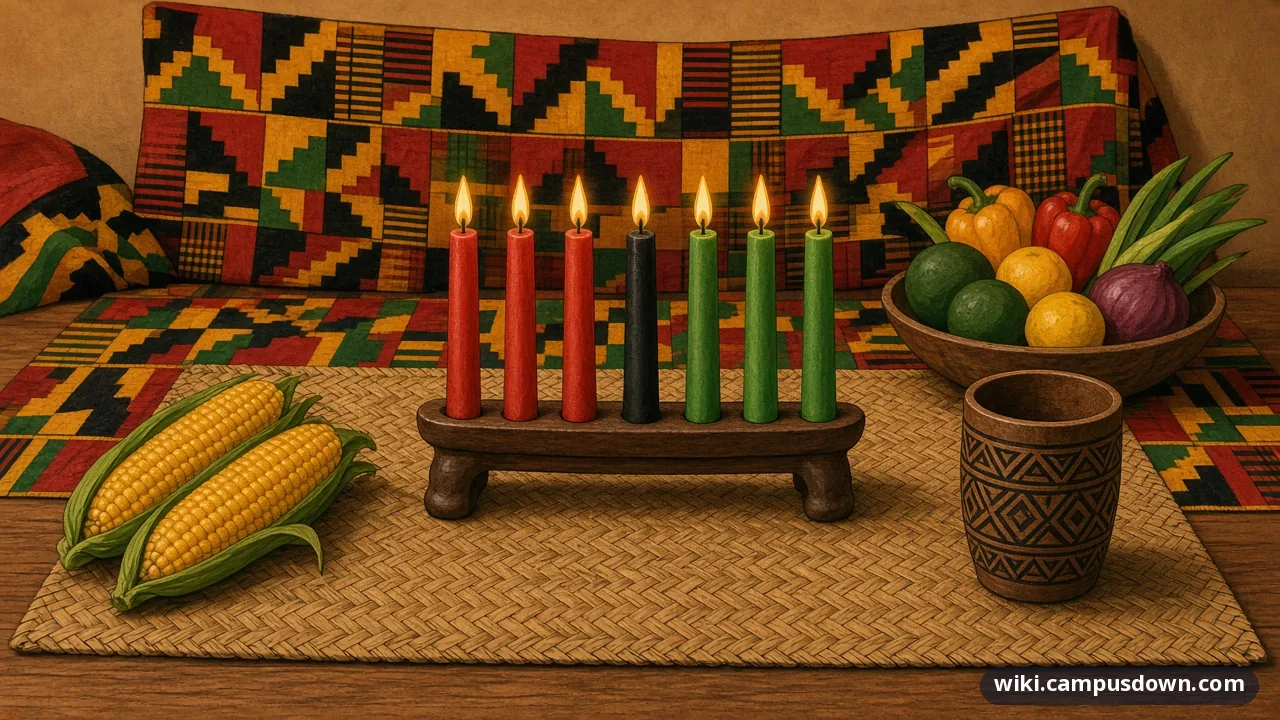
- Kinara: the candle holder
- Mishumaa saba: the seven candles. Three red on the left, one black in the center, three green on the right. The black candle, for unity, is lit first.
- Mkeka: a straw mat, standing for tradition
- Muhindi: ears of corn, for children
- Kikombe cha umoja: the unity cup
- Zawadi: gifts, ideally handmade or educational
On December 31 many families hold a big feast called the Karamu.
FAQ
- When is Kwanzaa 2026?
- Saturday, December 26, 2026 to Friday, January 1, 2027. It's the same dates every year.
- What do the colors mean?
- Black for the people, red for their struggle, and green for the future and hope that comes from the struggle.
- How do you greet someone?
- "Habari gani?" ("What's the news?") is the traditional greeting. The answer is the name of that day's principle.
Sources reviewed: 2026-11-20
References
- The Official Kwanzaa Website (Maulana Karenga). Origins, principles and symbols.
- Encyclopaedia Britannica. Kwanzaa. History and customs.