
Did Coca-Cola invent Santa's red suit? Nope. But the real story is even better: a 4th-century bishop, a Dutch nickname, a poem, a cartoonist and a soda ad all played a part.
Who Santa Claus is
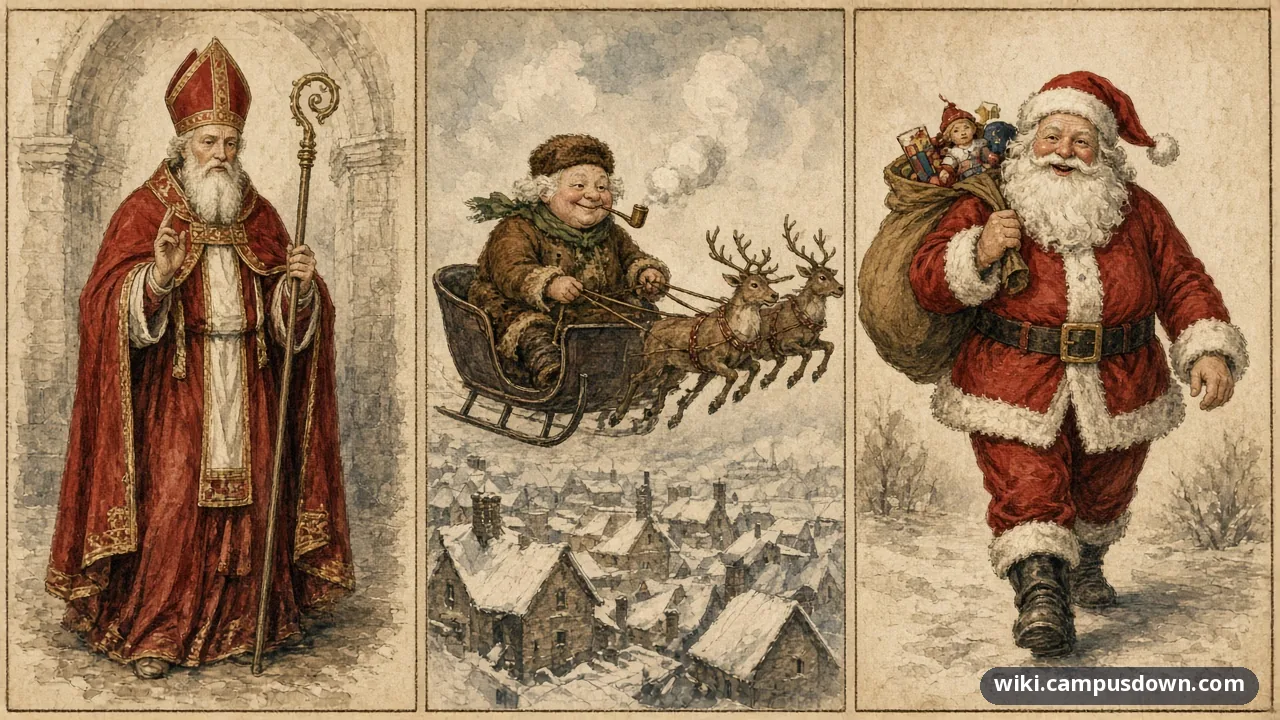
Santa Claus is the legendary figure who brings gifts to children on Christmas Eve. In the classic version he lives at the North Pole, keeps a list of who's naughty or nice, and flies a sleigh pulled by reindeer. The UK's Father Christmas is a separate figure who later merged with Santa.

It starts with Saint Nicholas
The real person behind the legend is Saint Nicholas, a bishop of Myra, in what is now Turkey, in the 4th century. Stories praised his generosity, especially secret gifts to people in need. His feast day is December 6, and in the Netherlands he's still celebrated as Sinterklaas. In English, that name slowly turned into "Santa Claus."
America builds the modern Santa
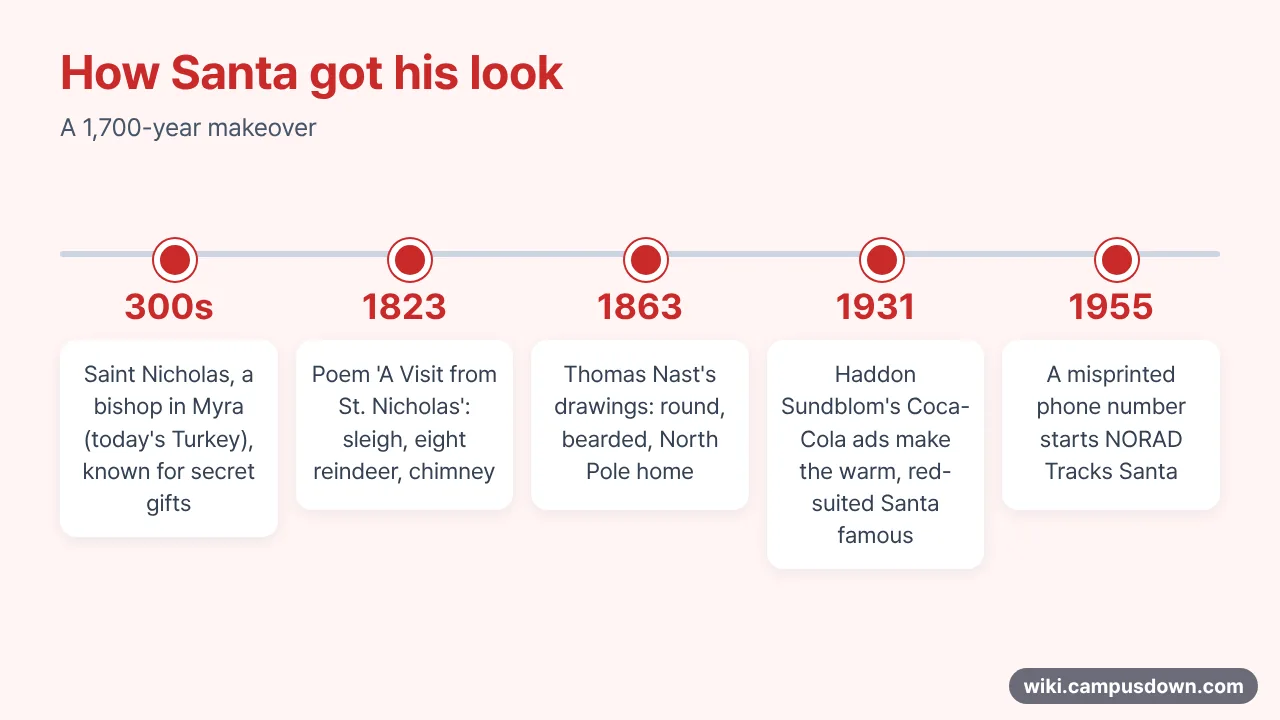
- 1823: the poem "A Visit from St. Nicholas" ("'Twas the night before Christmas") gave him a sleigh, eight named reindeer and a trip down the chimney. It's usually credited to Clement Clarke Moore, though some scholars argue for Henry Livingston Jr.
- 1863 on: cartoonist Thomas Nast drew Santa for Harper's Weekly for decades and helped fix the jolly, bearded look and the North Pole workshop.
- 1931: Haddon Sundblom painted a friendly, human-sized Santa for Coca-Cola ads that ran for years.
Reindeer, radar and other add-ons
Rudolph the Red-Nosed Reindeer was created in 1939 by Robert L. May for a Montgomery Ward booklet. And since 1955, NORAD has "tracked" Santa every Christmas Eve, a tradition that began when a newspaper ad printed the wrong phone number and kids called a military operations center.
FAQ
- Is Santa Claus based on a real person?
- Yes, loosely. He grew out of legends about Saint Nicholas, a 4th-century bishop of Myra.
- Did Coca-Cola create Santa's red suit?
- No. Red-suited Santas existed earlier. The 1931 Coca-Cola ads popularized one warm, realistic version.
- What's the difference between Santa and Father Christmas?
- Father Christmas began as an English personification of the season's cheer. Over time he and Santa blended into the same character.
Sources reviewed: 2026-11-20
References
- Encyclopaedia Britannica. Santa Claus. Saint Nicholas, Sinterklaas and the American Santa.
- HISTORY. Santa Claus. The 1823 poem, Thomas Nast and later history.
- NORAD Tracks Santa. About. How the 1955 tradition began.