
What if Santa had a bouncer? In the Alps he kind of does. Krampus is the hairy, horned, tongue-out creature who tags along with Saint Nicholas in early December, and for a lot of Austrian and Bavarian kids he's the reason to behave.
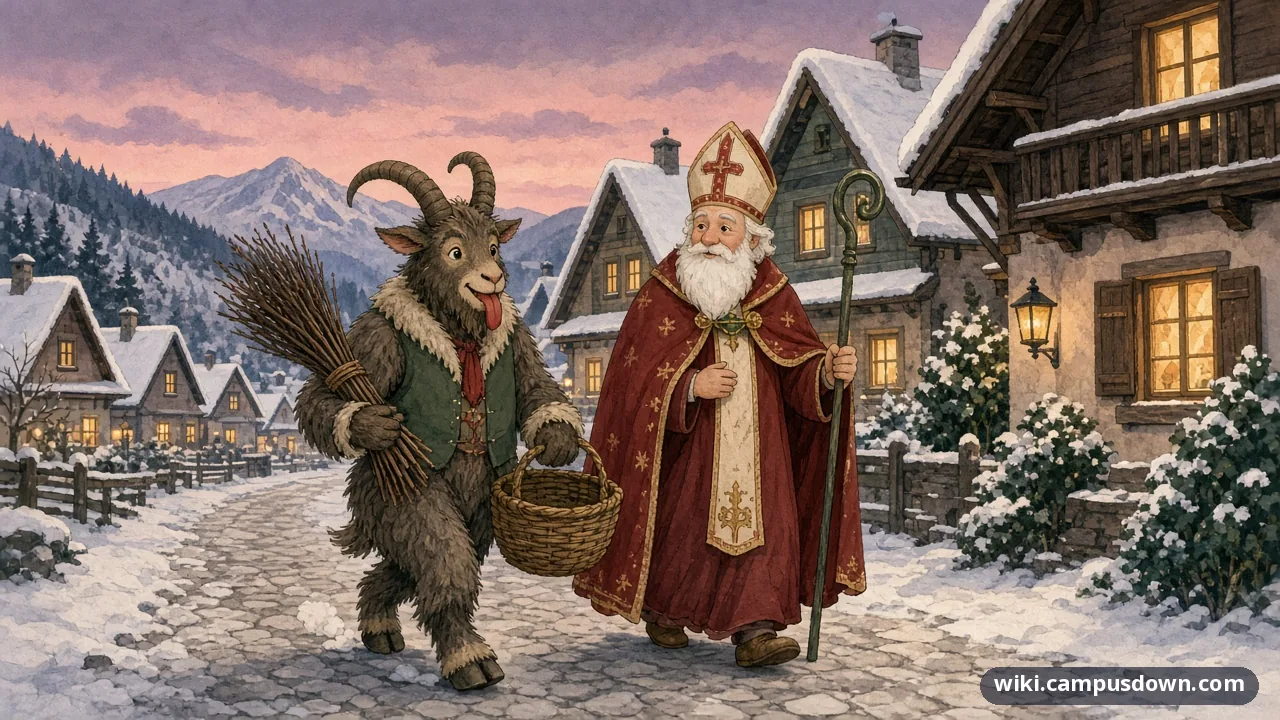
Who is Krampus?
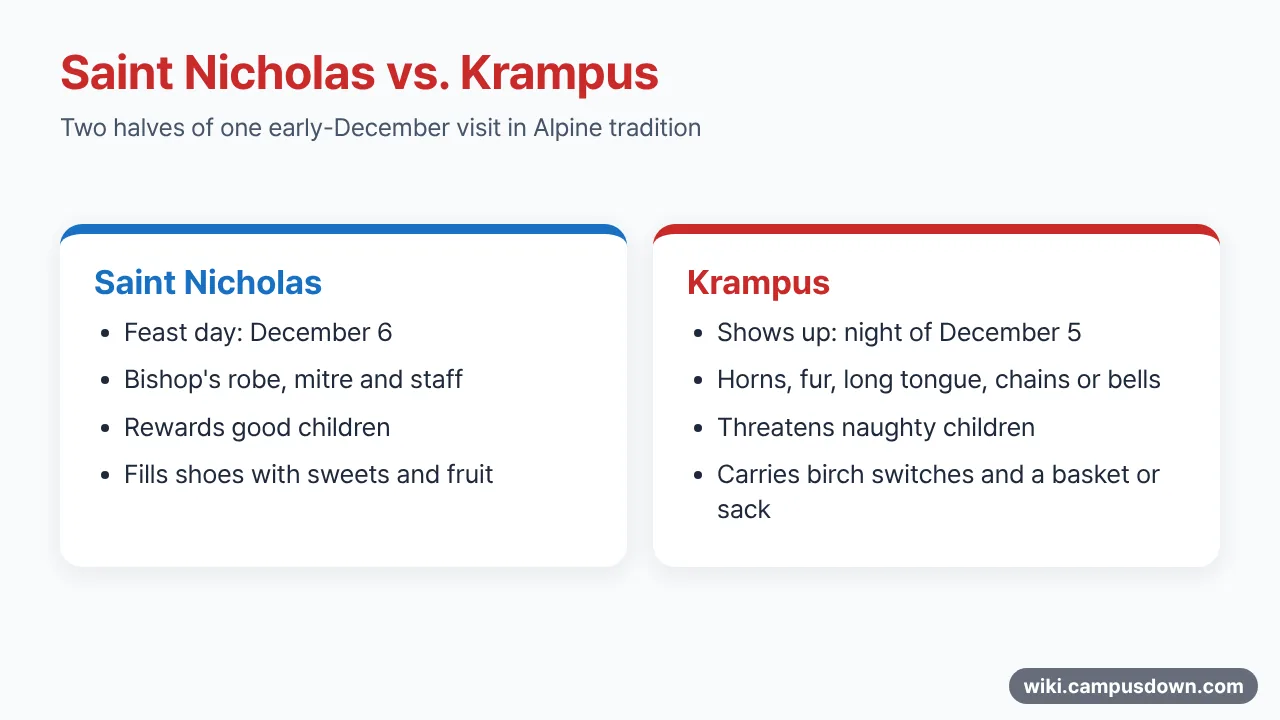
Krampus is a figure from Alpine Christmas folklore, known across Austria, Bavaria, South Tyrol and neighboring regions. He usually looks like a goat-legged devil: horns, shaggy fur, a long red tongue, rattling chains or cowbells, and a bundle of birch twigs called a Rute.
The Library of Congress folklife blog points out a neat detail. Krampus is often less one monster and more a type of monster, like "a vampire." In some towns you'll see dozens of Krampuses at once.

Krampusnacht and the December 6 handoff
The key date is December 5, the eve of Saint Nicholas Day. That night Nicholas visits homes or towns, and Krampus comes with him. Good kids find sweets or small gifts in their shoes the next morning. Naughty ones get the switch, or at least the threat of being stuffed into Krampus's basket and hauled away.
Separate from that visit there's the Krampuslauf, a "Krampus run," where costumed performers with carved wooden masks and bells parade through the streets. It's loud, a bit chaotic, and these days a big tourist draw.
Where did he come from? (Honest answer: it's debated)
You'll read everywhere that Krampus is an ancient pagan god. Be careful with that. The Library of Congress folklorist notes that many of those claims cite each other without real evidence.
The clearest documented roots are in medieval Christian art and drama. Devils in German art look a lot like Krampus, and Saint Nicholas plays from the 11th and 12th centuries gave the saint stage companions. Older outdoor winter processions may have fed into the custom too. So "very old, partly pagan-flavored, mostly shaped by church folk drama" is the safer summary.
From postcards to Hollywood
In the late 1800s and early 1900s, Austrians mailed Krampuskarten, holiday cards that were often funny, sometimes flirty. In the 21st century Krampus jumped to the U.S., with Krampus parades popping up in American cities and a 2015 horror-comedy film simply called Krampus.
Part of the appeal is contrast. A sugary Christmas season gets a dark, mischievous counterweight, and people love that.
Krampus vs. other Christmas companions
- Knecht Ruprecht and Belsnickel in German-speaking lands also carry switches.
- Père Fouettard in France plays a similar punisher role.
- Santa Claus in American tradition mostly dropped the scary sidekick and kept the naughty-or-nice list.
FAQ
- Is Krampus the devil?
- He looks devil-like and was shaped by medieval images of devils, but in the custom he works for Saint Nicholas, not against him.
- When is Krampusnacht?
- The night of December 5, the eve of Saint Nicholas Day on December 6. Krampus runs can happen on other days around then.
- Do people still celebrate it?
- Yes. Krampus runs are popular in Austria and Bavaria, and similar events now take place in the United States.
Sources reviewed: 2026-11-20
References
- Library of Congress, Folklife Today. (2025). Krampus: Origins and Development of a Winter Devil. A careful look at what's documented, including medieval art and drama, and which origin stories lack evidence.
- National Geographic. (n.d.). What is Krampus? Explaining the horrific Christmas beast. Krampusnacht on December 5, Nikolaustag on December 6, and other European Christmas companions.
- Smithsonian Center for Folklife and Cultural Heritage. (n.d.). Screams of Terror and Delight: Unmasking Krampus in Southern Indiana. How Krampus parades spread to the United States.
- HISTORY. (2025). Meet Krampus, the Christmas Devil Who Punishes Naughty Children. Overview of Krampusnacht and the Krampuslauf.