
Ever looked up and thought the Moon looked huge tonight? Sometimes it really is a little bigger. That's a supermoon.
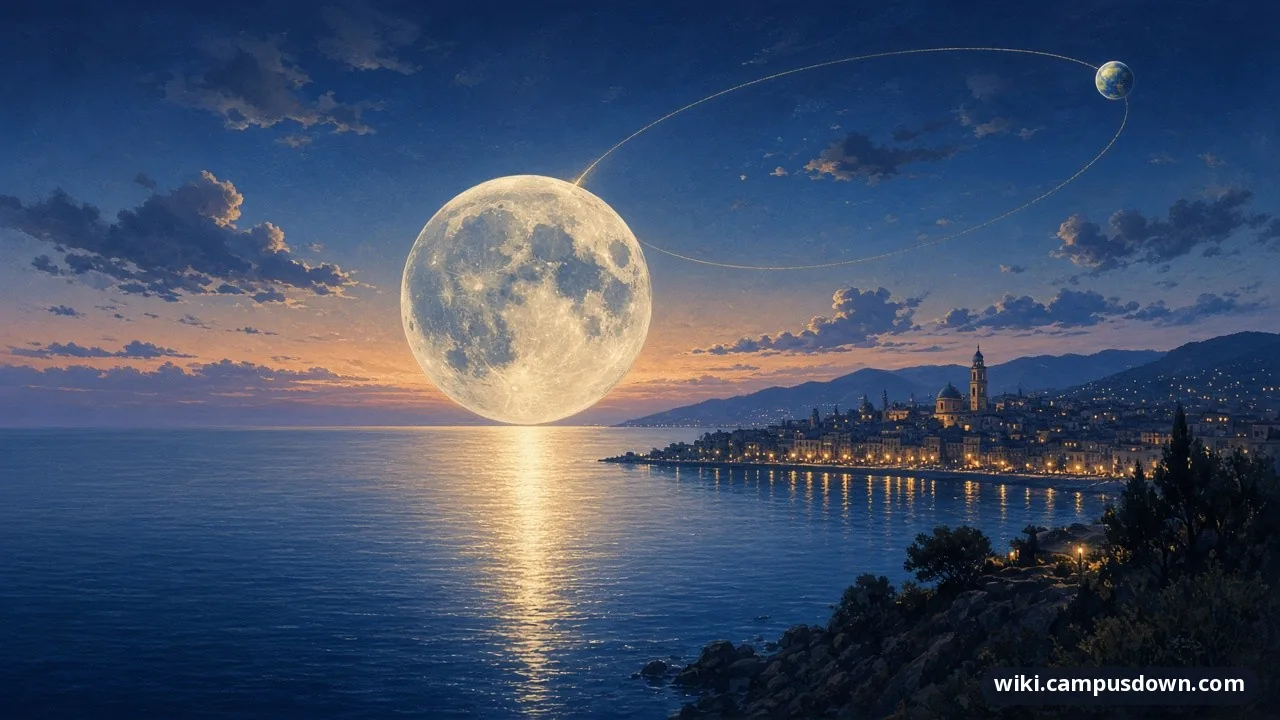
What a supermoon is
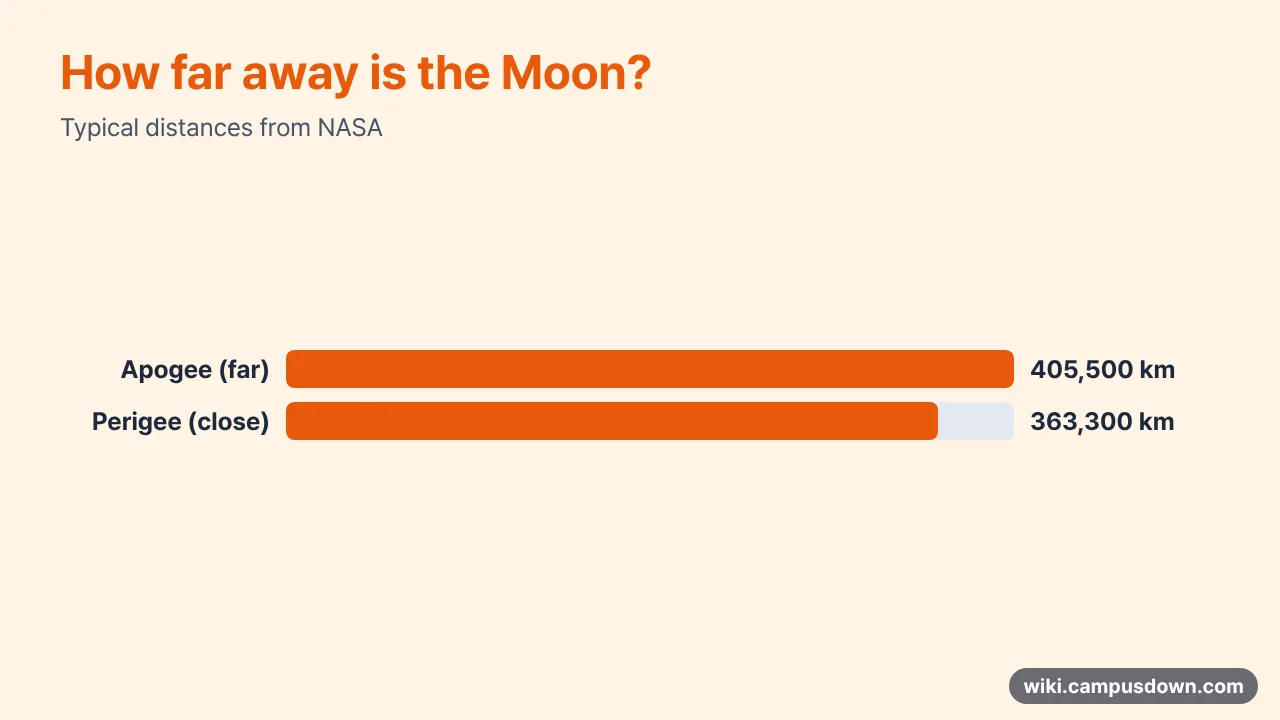
The Moon's orbit isn't a perfect circle. Each month it reaches a closest point, called perigee, and a farthest point, called apogee. A supermoon is a full Moon that happens at or near perigee.
NASA notes “supermoon” isn't an official astronomy term. It's usually used for a full Moon within about 90 percent of perigee.

How super is it, really?
At its closest, a full Moon can look up to 14% bigger and 30% brighter than the year's faintest full Moon (sometimes called a micromoon). Honestly, 14% is hard to notice by eye. The brightness is easier to spot.
Supermoons can also bring slightly higher tides than usual, since the Moon is closer.
When's the next one?
NASA lists supermoons on November 24, 2026 and December 24, 2026 (01:28 UTC). Supermoons come in runs of three or four in a row each year.
FAQ
- How much bigger is a supermoon?
- Up to about 14% bigger and 30% brighter than the year's faintest full Moon.
- Is supermoon a scientific term?
- Not officially. It's a popular name for a full Moon near perigee.
- When is the December 2026 supermoon?
- NASA lists December 24, 2026 at 01:28 UTC.
Sources reviewed: 2026-11-20
References
- NASA Science. Supermoons. Perigee ~363,300 km, apogee ~405,500 km; up to 14% bigger, 30% brighter; upcoming dates.
- NASA JPL Education. What's a Supermoon and Just How Super Is It? Classroom explainer.