
Why do Christmas cards say "Yuletide greetings" when nobody talks about "Yule" the rest of the year? Because Yule was here first. It was a midwinter festival long before Christmas reached northern Europe, and the word never really left.
What Yule is
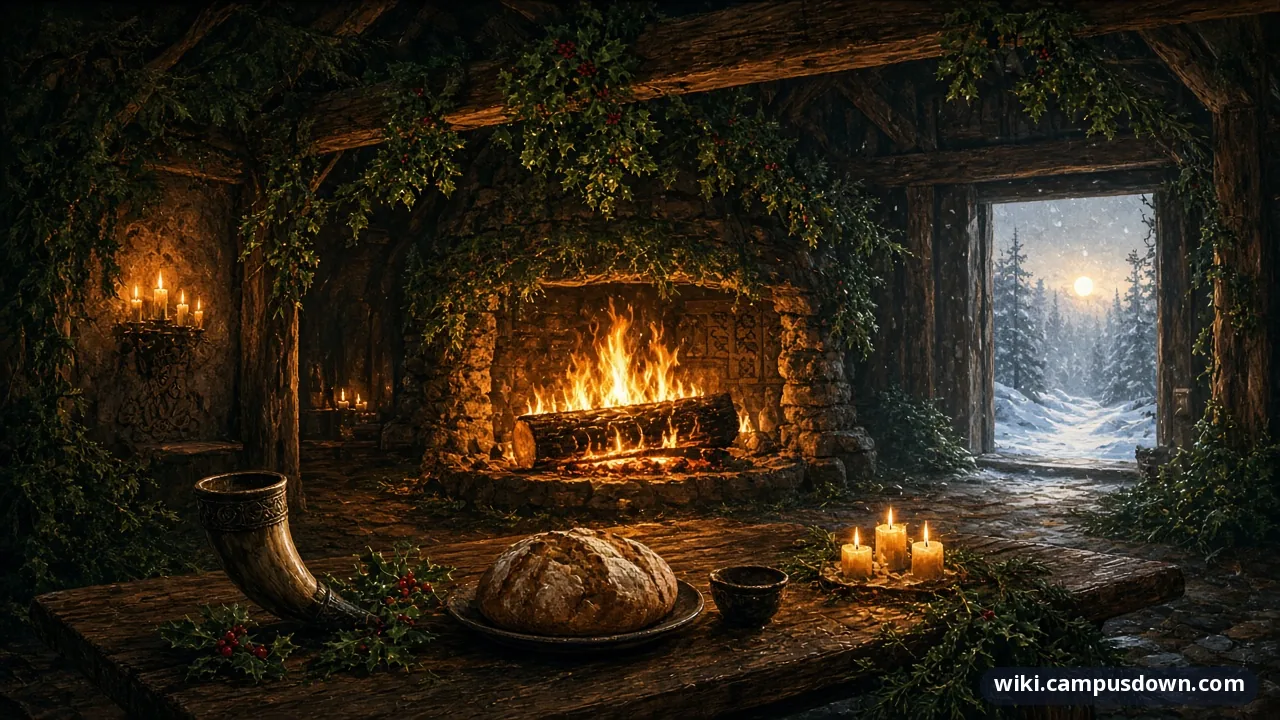
Yule was a midwinter festival of the pre-Christian Germanic peoples. It was called jól in Old Norse and geol in Old English. Old sources describe feasting, ceremonial drinking, oath-swearing and stories of trolls and the restless dead visiting farms in the dark of winter.
When northern Europe became Christian, Yule merged with Christmas. In Danish, Norwegian and Swedish, Christmas is still called jul, and in Icelandic it's jól.

Where the dates came from
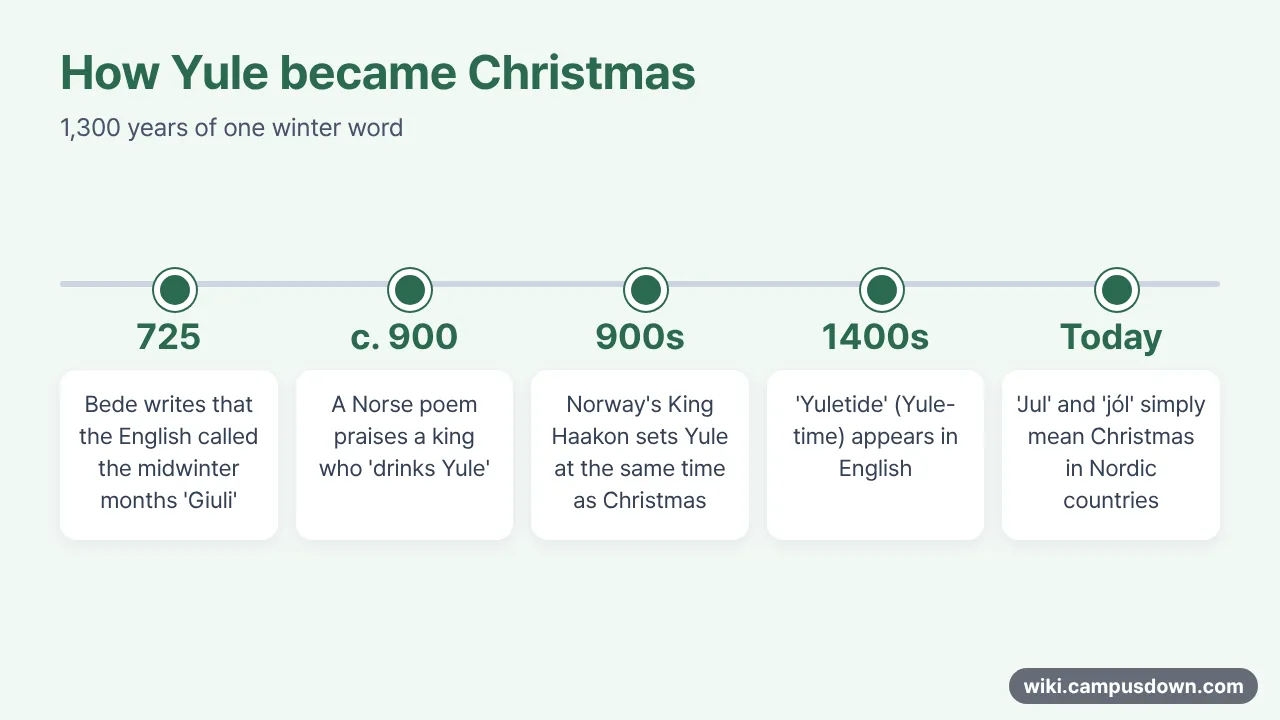
The English monk Bede, writing in 725, said the Anglo-Saxons called the months around midwinter "Giuli." Medieval Norse sources describe a Yule feast that lasted several days. According to the saga of Haakon the Good, the 10th-century Norwegian king moved the feast to line up with Christmas.
The Yule log and other leftovers
- Yule log: a big log burned in the hearth over the holidays, later turned into a chocolate cake (bûche de Noël)
- Evergreens: holly, ivy and fir boughs that stay green in the dead of winter
- Yule goat: a straw goat that's still a Christmas decoration in Sweden and Finland
Yule today
For most people, Yule is just a cozy old word for Christmas. Some modern Pagans, including many Wiccans, celebrate Yule as a festival of the winter solstice, around December 21, to mark the return of longer days.
FAQ
- Is Yule the same as Christmas?
- Today, mostly yes. Originally it was a separate pre-Christian midwinter festival that later merged with Christmas.
- When is Yule?
- Modern Pagans usually celebrate it at the winter solstice, around December 21. In Nordic countries "jul" is Christmas, December 24–26.
- What does Yuletide mean?
- "Yule-time," the Christmas season.
Sources reviewed: 2026-11-20
References
- Scandinavian Archaeology. From Jól to Yule. Norse sources and Haakon the Good.
- Anatoly Liberman. Jolly Yule. OUPblog (2008). Why the origin of the word is uncertain.
- NPR. How 'Yule' went from animal sacrifice to Christmas carols (2025). Scholars on the word's possible origins.