
Why would engineers from the world's biggest tech companies send their kids to a school with chalkboards and no laptops? That question made Waldorf education famous in the United States. Waldorf, also called Steiner education, is a school model that puts imagination, art, and hands-on work ahead of early academics and screens.

Origins and philosophy
The Austrian thinker Rudolf Steiner opened the first Waldorf school in 1919 in Stuttgart, Germany, for the children of workers at the Waldorf-Astoria cigarette factory. Steiner divided childhood into roughly seven-year stages and argued that each stage needs a different kind of teaching:
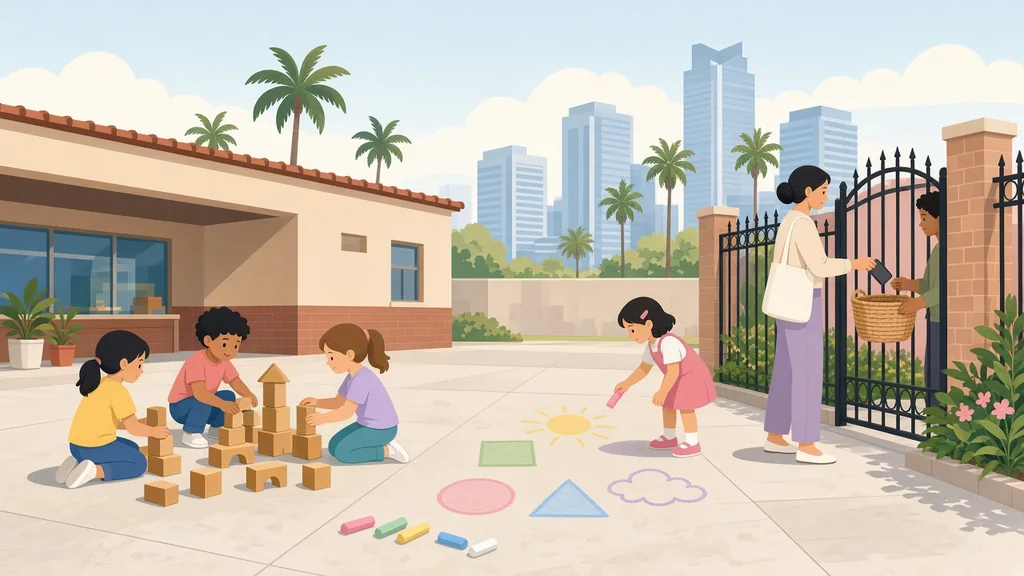
- Early childhood (to about age 7): learning through imitation, play, and daily rhythm, with little formal instruction.
- Elementary years (about 7 to 14): learning through imagination, stories, and the arts.
- Adolescence: developing independent judgment and abstract thinking.
These ideas grow out of anthroposophy, Steiner's spiritual philosophy. Most Waldorf schools say they do not teach anthroposophy to students, but it shapes the curriculum and teacher training.

What a Waldorf classroom looks like
- Late formal reading: reading instruction usually starts around first or second grade, later than in most US public schools.
- Main lesson blocks: each morning a long lesson focuses on one subject for several weeks.
- Looping teachers: a class teacher often stays with the same students for several years.
- Arts and handwork: painting, music, knitting, and woodworking are core subjects, not extras.
- Limited screens: many schools ask families to limit media use, especially for young children.
Key idea
Waldorf's central bet is that children learn academics better later if their early years build imagination, movement, and attention first.
US cases
- When and where
- 1928, New York City
- What happened
- The Rudolf Steiner School in Manhattan opened as the first Waldorf school in the United States. Other early schools followed in places such as Detroit, Sacramento, and Garden City, New York.
- Why it matters
- It marks the start of a movement that later spread to hundreds of private schools and public charter programs across the country.
- When and where
- October 2011, Los Altos, California
- What happened
- The New York Times reported on a Waldorf school in Los Altos where many families worked at tech companies, yet the classrooms used blackboards, books, and crafts rather than computers. One Google executive quoted in coverage said grammar school students did not need technology aids.
- Why it matters
- The story turned Waldorf into a national talking point about screen time.
- When and where
- 2008, Sacramento, California
- What happened
- Waldorf-inspired education spread into the public system mainly through charter and magnet schools, and the first public Waldorf-methods high school opened in Sacramento in 2008. A group of critics had earlier sued Sacramento-area districts, arguing that anthroposophy is a religion and should not be taught in public schools; the courts did not accept that claim.
- Why it matters
- It shows how the model moved into taxpayer-funded schools, and why it remains controversial there.
Criticisms
- Pseudoscience concerns: critics, including researchers at California State University, Sacramento, have pointed to anthroposophical ideas in some lessons that do not match mainstream science.
- Vaccination: some Waldorf communities have had low vaccination rates, which public health officials have linked to outbreaks.
- Evidence: research on Waldorf outcomes is limited and mostly correlational, so claims about long-term benefits are hard to confirm.
- Late reading: some parents and educators worry that delaying reading can disadvantage children who move to conventional schools.
Related concepts
Waldorf is often compared with Montessori and Froebel approaches in early childhood education, and it draws on ideas about play and development and child development stages. Its emphasis on whole-child learning echoes Pestalozzi.
Study material (Korean): 「유아교육 과제 – 발도르프 프로그램의 개념과 교육목표」
Frequently asked questions
- What is the difference between Waldorf and Montessori?
- Montessori stresses self-directed work with structured materials; Waldorf stresses teacher-led imagination, arts, and group rhythm, and usually delays academics more.
- Is Waldorf education religious?
- Waldorf schools are not tied to a church, but the curriculum comes from Steiner's spiritual philosophy, anthroposophy, which is why critics question its use in public schools.
- Do Waldorf schools ban technology?
- Most limit screens in the early grades and introduce computers later, usually in middle or high school.