
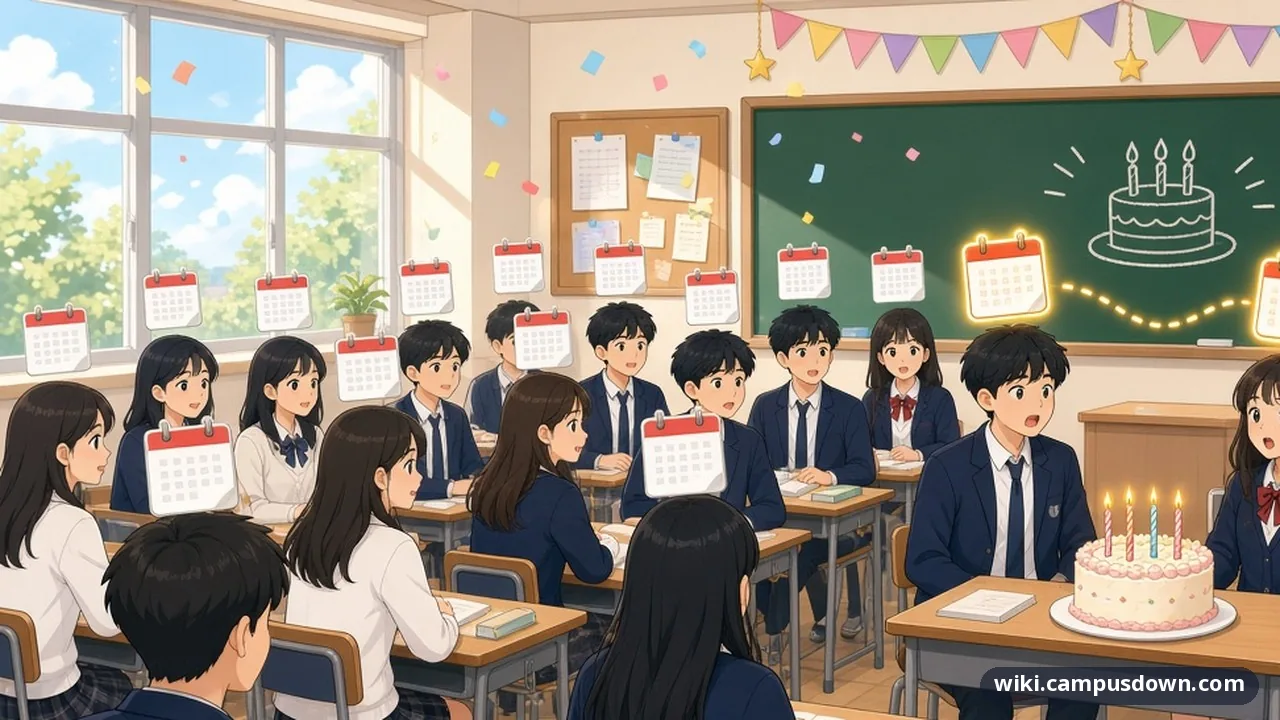
How many people do you need in a room before two of them probably share a birthday? It sounds like it should take hundreds. The real answer is 23.
Why it feels wrong
Our brains quietly turn the question into "How many people until someone shares my birthday?" That really does take a big group. But the actual question is whether any two people match.

It's about pairs
Scientific American's Science Buddies activity walks through the counting. In a group of 23, the first person can be compared with 22 others, the second with 21 new ones, and so on. Add 22 + 21 + ... + 1 and you get 253 pairs. That's 253 chances for a match.
The quick math
It's easier to find the chance that nobody matches, then subtract from 1. Person two avoids person one with probability 364/365, person three avoids both with 363/365, and so on. Multiply those for 23 people and you get about 0.493. So the chance of at least one match is about 50.7%.
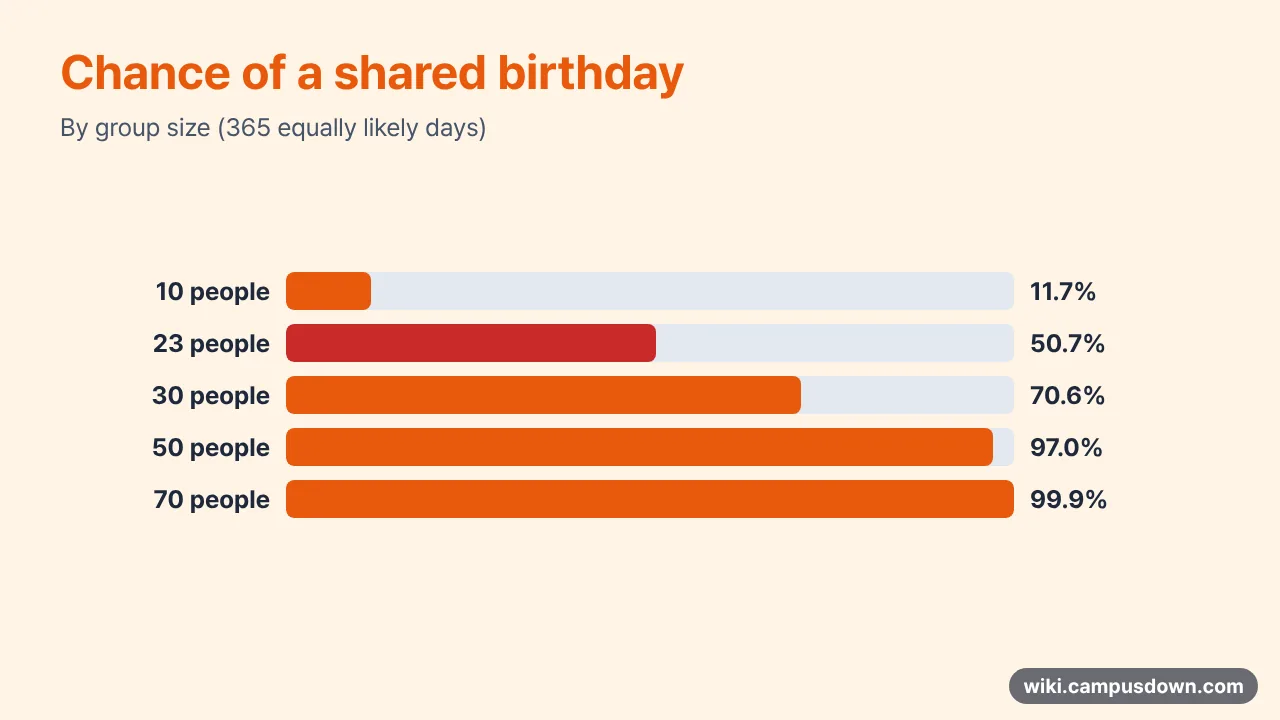
The odds climb fast. With 30 people it's about 70%. With 50 it's about 97%.
Why it matters beyond birthdays
The same pair-counting shows up when computer scientists think about "collisions," like two different files ending up with the same short code. Small chances add up fast when there are lots of pairs.
FAQ
- Why is it called a paradox?
- It isn't a true paradox. The answer just feels wrong to most people.
- What's the chance with 23 people?
- About 50.7%, assuming 365 equally likely birthdays.
- How many people for a near-certain match?
- About 70 people gives roughly 99.9%.
Sources reviewed: 2026-11-20
References
- Science Buddies (2012). Using Probability to Understand the Birthday Paradox. Scientific American. 23 people give about a 50-50 chance; 253 possible pairs; a hands-on test.