
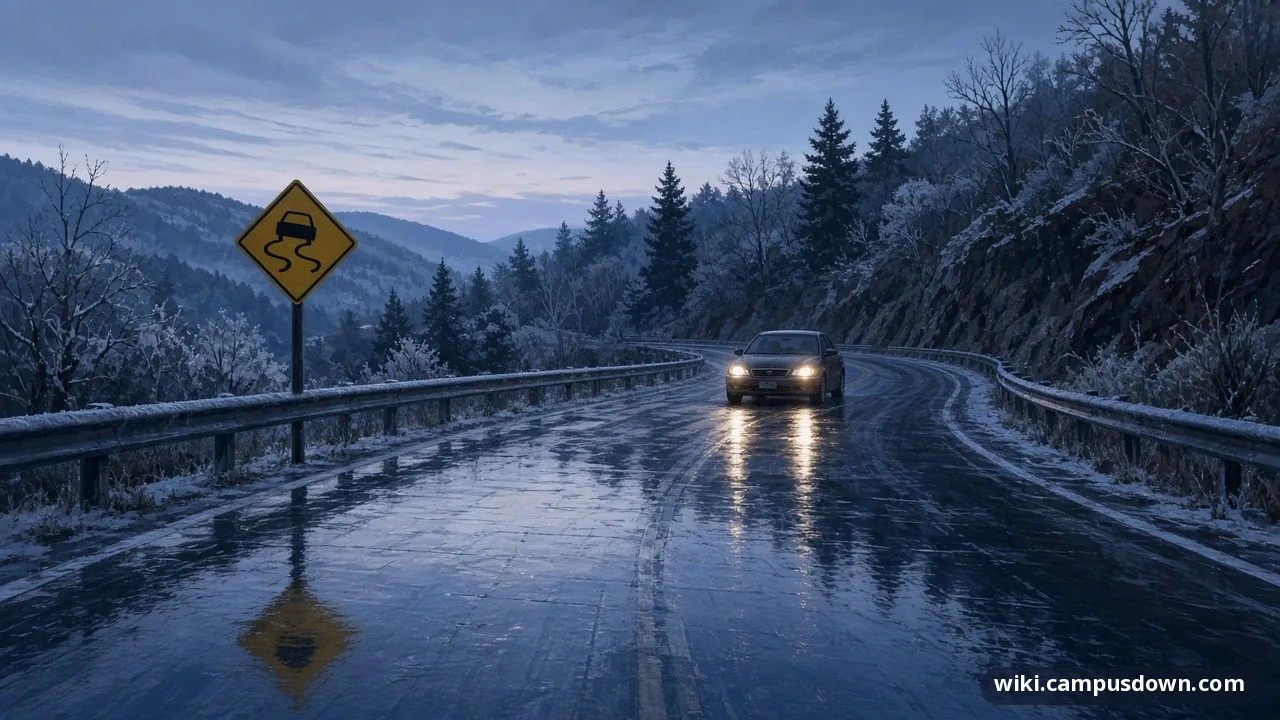
The road looks wet, not icy. Then your tires slip. That's what makes black ice so sneaky.
What black ice is
The National Weather Service defines black ice as patchy ice on roads or other surfaces that can't easily be seen. It's clear, not white, so the black road shows through underneath.
Why clear? Snow and frost look white because of air trapped inside. Black ice has almost no air bubbles, explain meteorologists at the University of Wisconsin–Madison.

When and where it forms
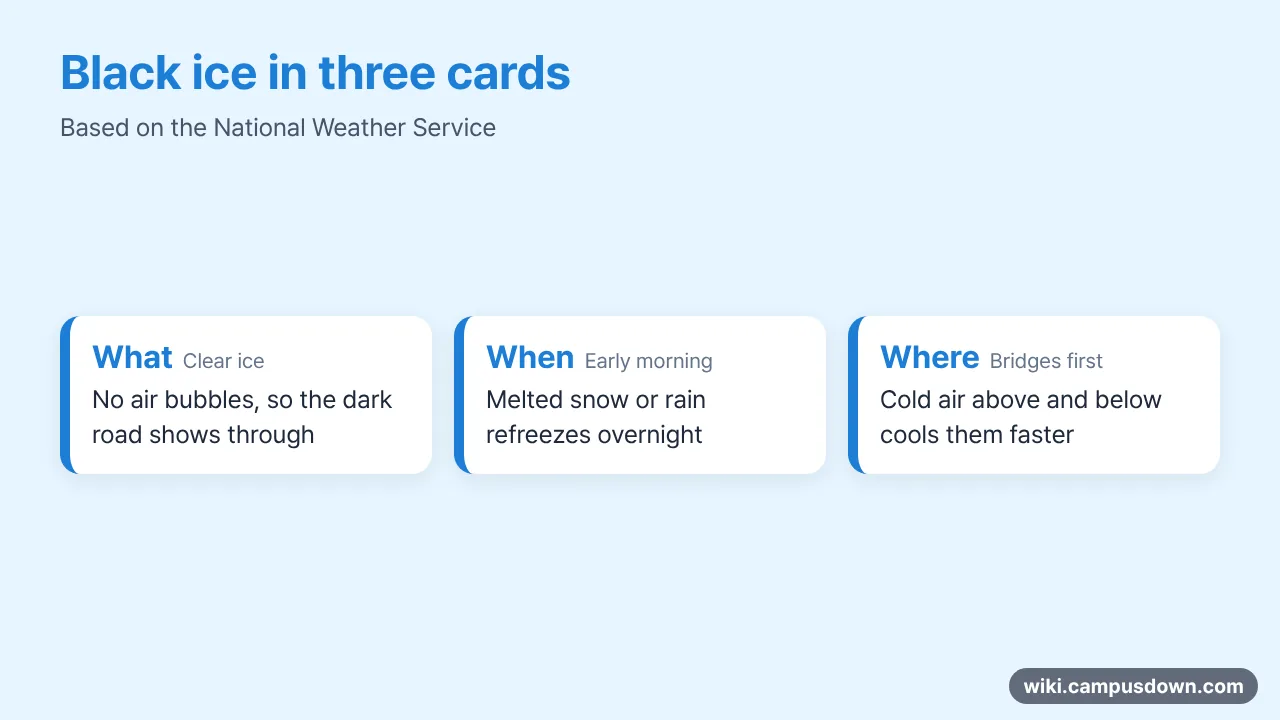
It's most common in the early morning, after melted snow refreezes overnight, or when roads are wet from rain and the temperature drops below freezing.
Bridges and overpasses freeze before other roads because cold air hits them from above and below. That's why you see signs saying “Bridge may freeze before road.”
Staying safe
- If the air is near freezing and the road looks wet, assume it might be ice.
- Slow down and leave extra space, especially on bridges.
- Avoid sudden braking or sharp turns.
FAQ
- Why is it called black ice?
- It's clear, so the dark road shows through.
- Why do bridges freeze first?
- Cold air cools them from above and below.
- When is black ice most likely?
- Early mornings after melt or rain refreezes overnight.
Sources reviewed: 2026-11-20
References
- National Weather Service. Ice Storms (incl. Black Ice). Definition; early mornings; refreezing melt or rain; bridges freeze first.
- The Weather Guys (UW–Madison). What is “black ice?” Why it’s clear: no trapped air bubbles.