
CampusDownWiki
Total citations 125,995한국어KO 12,859EnglishEN 77,485日本語JA 9,775中文ZH 25,876
CampusDown ↗
English

Hypothermia

🩺 Nursing & Health By CampusDown Wiki Editorial Team Last updated Views 4
Hypothermia is a dangerous drop in body temperature below 35°C (95°F), which happens when your body loses heat faster than it can make it. It can affect thinking, so people often don't notice it's happening.
Contents
  1. 1. What hypothermia is
  2. 2. Signs and what to do
  3. 3. Who's most at risk
  4. 4. FAQ
  5. 5. References

You don't need a blizzard to get dangerously cold. A rainy hike, a soaked jacket or a night in a chilly room can be enough.
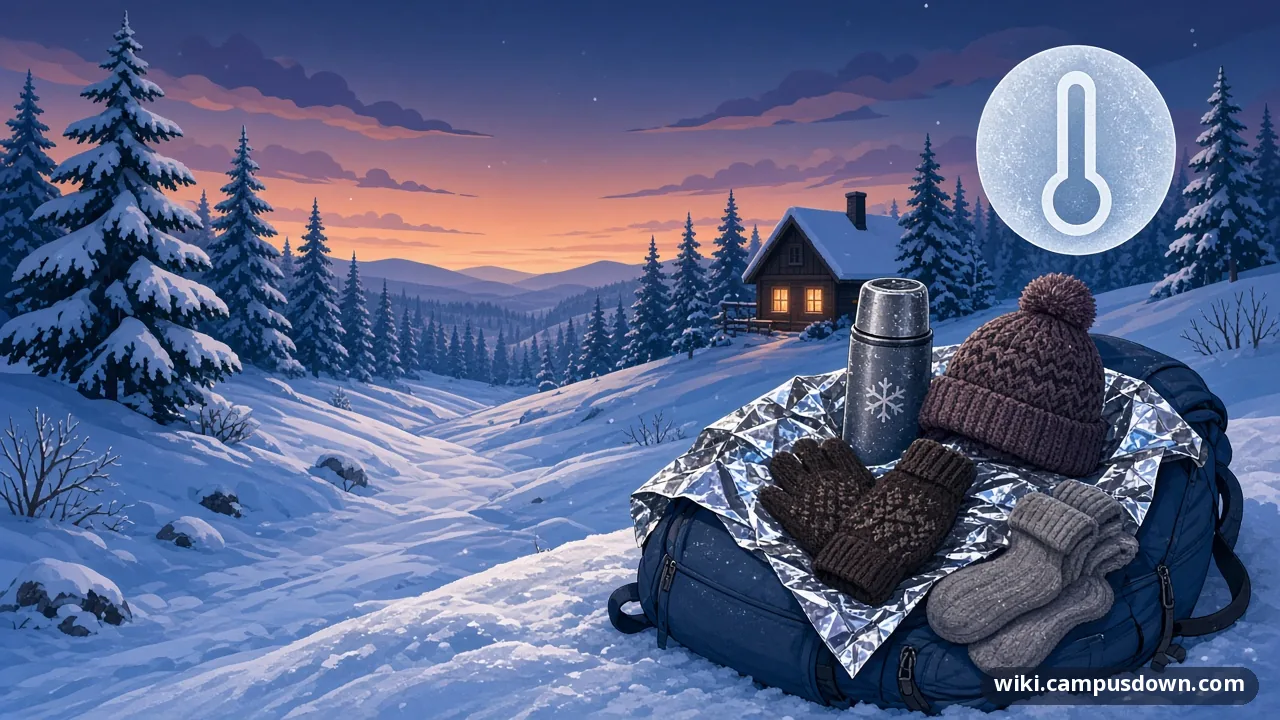
Flat illustration of a snowy trail at dusk with an emergency foil blanket, a thermos, a wool hat, mittens and dry socks laid on a backpack, a frosted thermometer icon and a warm-lit cabin in the distance
Dry layers, warm drink, shelter.

What hypothermia is

Hypothermia is when your body temperature drops below 35°C (95°F). Normal is about 37°C. It happens when your body loses heat faster than it can make it, usually from cold weather or cold water.

The CDC points out a sneaky part: low body temperature affects the brain, so a person may not realize what's happening.

Signs and what to do
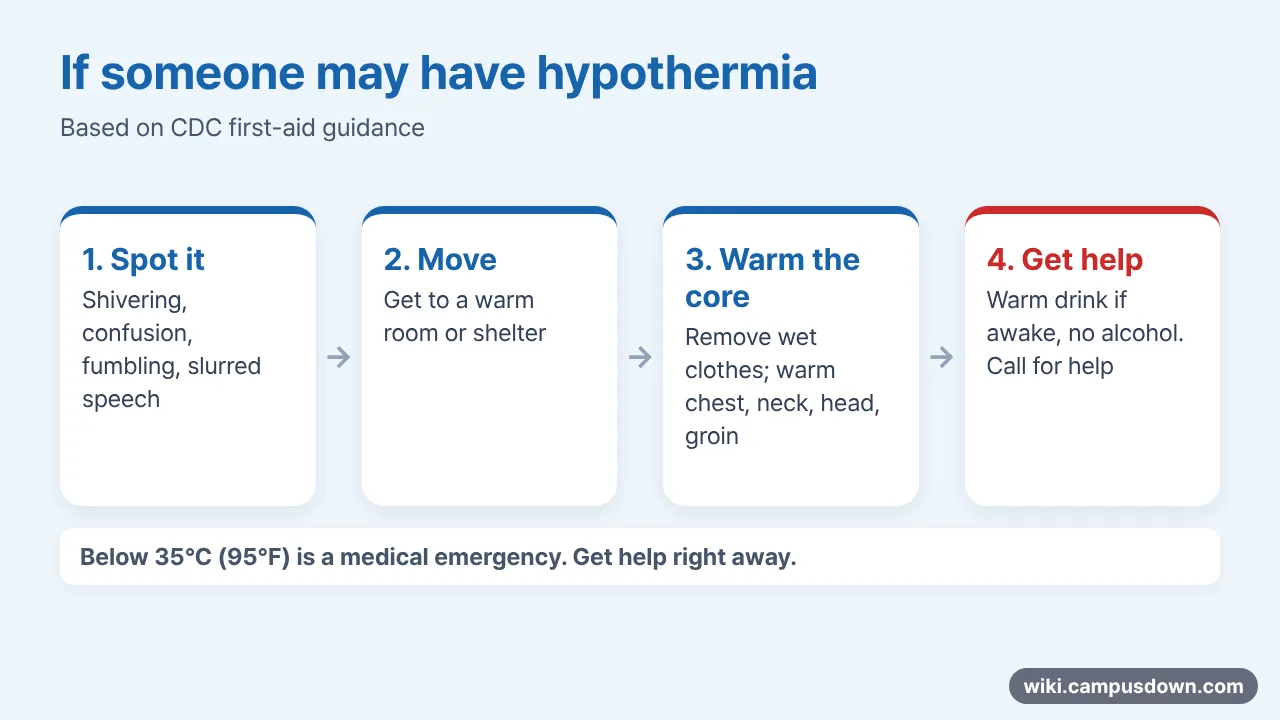
Flow diagram for hypothermia: spot the signs like shivering, confusion, fumbling hands and slurred speech, get the person to a warm place, remove wet clothes and warm the chest, neck, head and groin first, give warm non-alcoholic drinks if conscious, and get medical help; under 35°C is an emergency
Spot it, then warm the core.

In adults, watch for shivering, exhaustion, confusion, fumbling hands, memory loss, slurred speech and drowsiness. Babies may have bright red, cold skin and very low energy.

Get the person somewhere warm, take off wet clothing and warm the center of the body first. Warm drinks help if they're awake, but no alcohol. If their temperature is below 95°F, get medical help immediately.

Who's most at risk

Older adults without enough food, clothing or heating, babies sleeping in cold bedrooms, people outdoors for a long time (like hikers or people experiencing homelessness), and people who have been drinking alcohol.

FAQ

What temperature is hypothermia?
Below 35°C (95°F).
Can you get hypothermia when it's not freezing?
Yes, especially if you're wet and chilled.
Should you give alcohol to warm someone up?
No. Give warm non-alcoholic drinks only if the person is conscious.

Sources reviewed: 2026-11-20

References

  1. CDC. Preventing Hypothermia. Risk groups, warning signs, first aid, 95°F.
  2. NHS. Hypothermia. Below 35°C; normal is about 37°C.

Found this helpful? Share it

Send it to a friend who needs it.

X Facebook Threads

Reports and materials that use this theory (Korean)

There are no materials dedicated to this theory yet, but you can search related reports in the CampusDown library (Korean).

Find more reports · Search '저체온증' on CampusDown →

You may also like

This article was last updated on November 20, 2026. It is based on widely recognized original works and textbooks; when citing it in a paper, please check the original sources listed in the references.