
Why does a cold city square in December smell like oranges and cloves? Somewhere nearby, a pot of mulled wine is steaming.
What mulled wine is
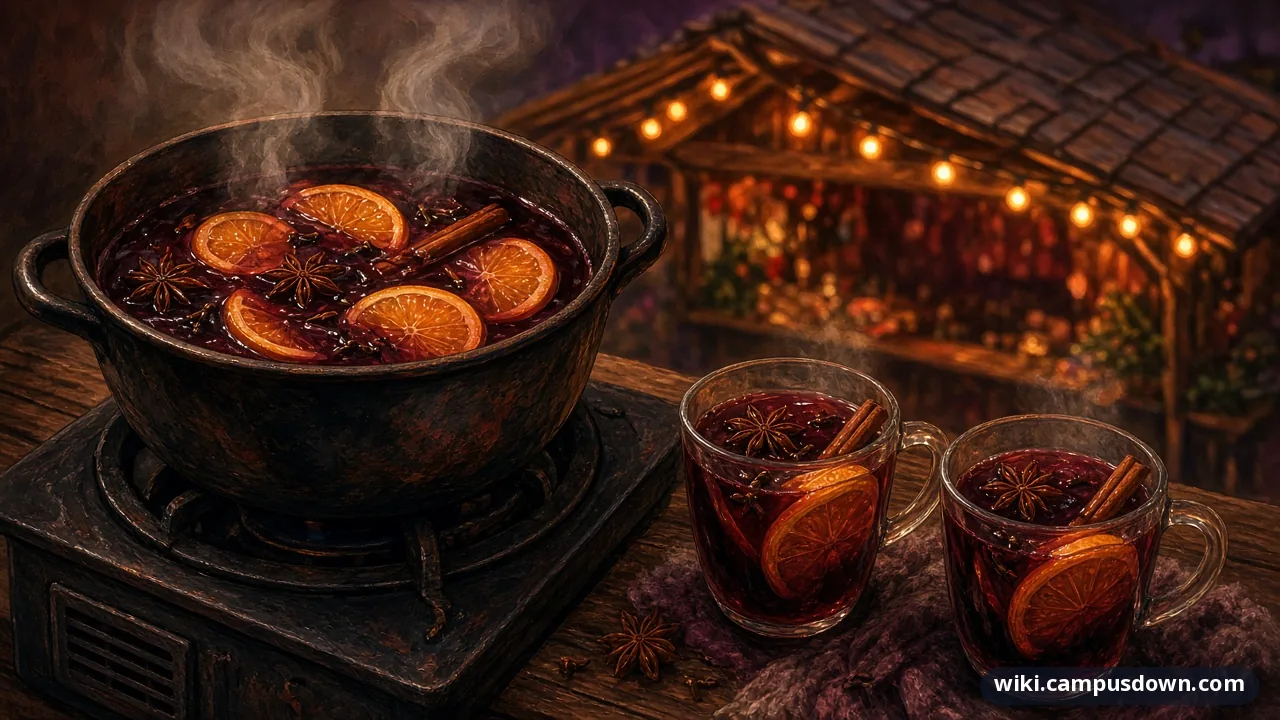
Mulled wine is sweetened red wine warmed with spices like cinnamon, cloves, ginger, mace and nutmeg, often with orange slices. It's sold in pubs and festive markets across Europe. Germany calls it Glühwein; France calls it vin chaud.

Where "mulled" comes from
The word likely traces back to Old English mulse, a drink of honey mixed with water or wine, from the Latin mel, honey. Before sugar was common, honey was how people sweetened drinks.
A drink with a long résumé
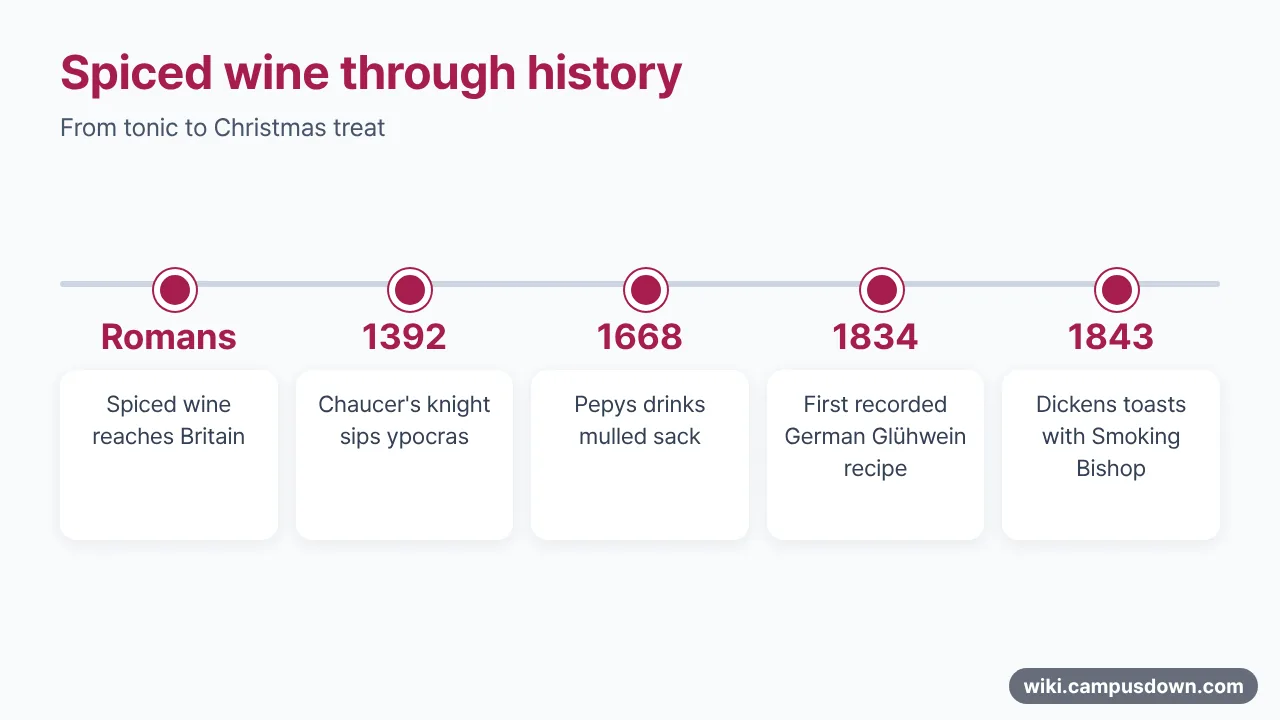
Spiced wine is thought to have reached Britain with the Romans. In the Middle Ages it was often called hippocras and taken as a health tonic, hot or cold. Chaucer's elderly knight drinks it in The Canterbury Tales, and diarist Samuel Pepys wrote about comforting himself with "mulled sack" in 1668.
Germany's first recorded Glühwein recipe was written on December 11, 1834, by August Raugraf von Wackerbarth. It was lost for years and rediscovered in a Saxon state archive in 2013.
Quick tips
- Heat gently and don't boil it; the aroma and alcohol cook off.
- Non-alcoholic versions use grape juice or red tea.
- Heated wine still contains alcohol, so the usual age and driving rules apply.
FAQ
- Is Glühwein the same as mulled wine?
- Yes, Glühwein is the German name. Recipes vary by country.
- Does mulled wine have alcohol?
- Yes, unless it's a non-alcoholic version. Warming it doesn't remove all the alcohol.
- What spices go in mulled wine?
- Usually cinnamon, cloves, nutmeg, ginger or star anise, with orange and a sweetener.
Sources reviewed: 2026-11-20
References
- The Conversation. A brief history of mulled wine: from health tonic to festive treat. Romans, hippocras, Chaucer, Pepys, Dickens, the word "mulled".
- Deutsches Weininstitut. Glühwein: Beliebtes Saisongetränk mit langer Tradition (German). The 1834 recipe.