
Is eggnog a drink, a dessert or a dare? A bit of all three. It's thick, sweet and very eggy, and in the US and Canada it shows up in grocery stores right around Thanksgiving and vanishes after New Year's.
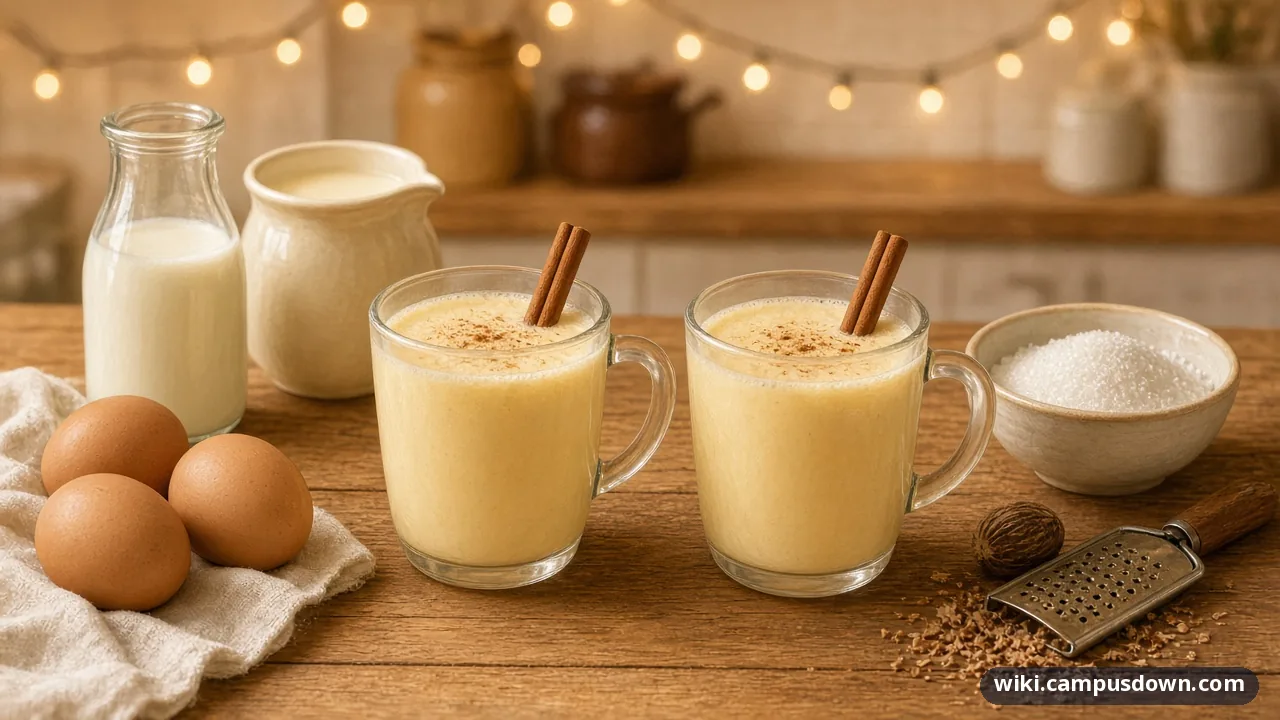
What eggnog is
Eggnog is a chilled drink made from milk, cream, sugar and beaten eggs, usually dusted with nutmeg or cinnamon. Many people add rum, brandy or bourbon. Without the alcohol, it's basically a pourable custard.

Where it came from
Food historians often trace eggnog to medieval British drinks like posset, a hot mix of milk, alcohol and spices. It became especially popular in the American colonies, where dairy, eggs and rum were easy to get.
Nobody's sure where "nog" comes from. Two common guesses are "noggin," a small wooden cup, and "nog," an old word for a strong ale.
Is raw-egg eggnog safe?
Raw eggs can carry Salmonella. The FDA says dishes containing eggs should be cooked to 160°F (71°C), and recipes served raw should use pasteurized eggs. Here's the easy way to do that at home:
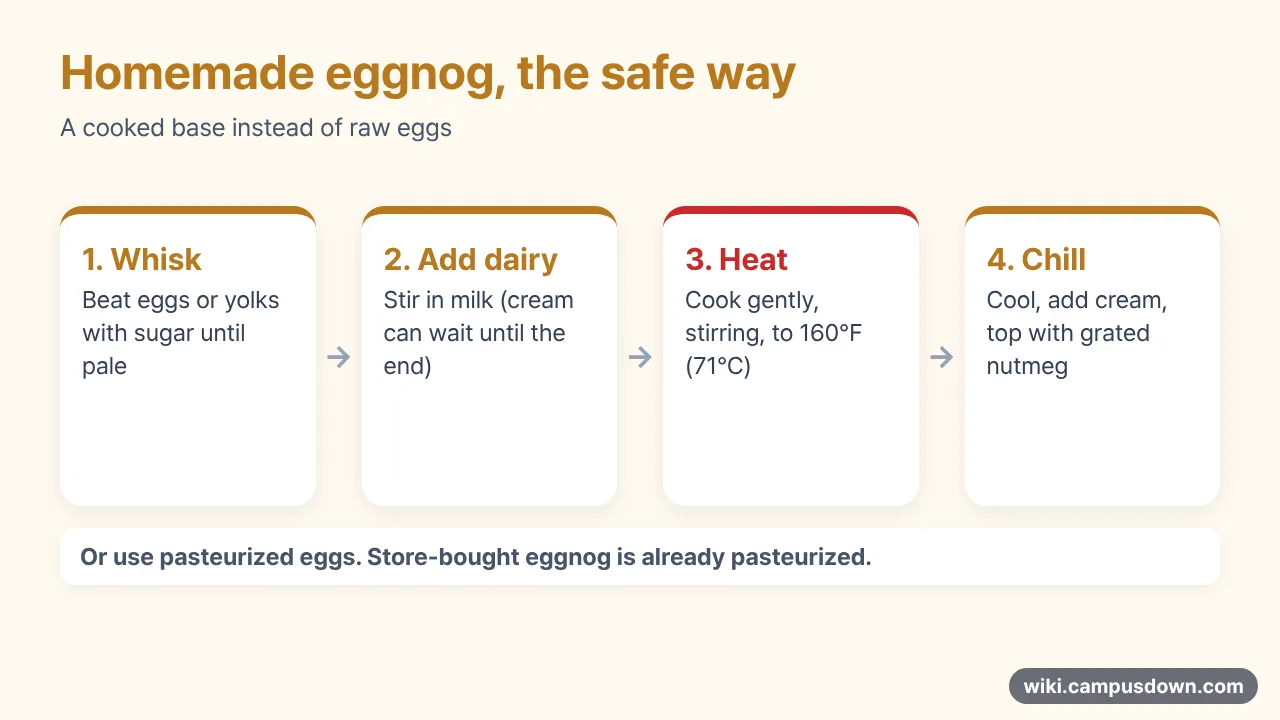
Store-bought eggnog in the US is made with pasteurized eggs, so it's ready to pour.
Eggnog vs. similar drinks
- Rompope (Mexico): eggnog-like, flavored with vanilla and cinnamon
- Coquito (Puerto Rico): coconut-based, often without eggs
- Advocaat (Netherlands): a thick egg liqueur
FAQ
- Does eggnog have alcohol?
- Store-bought eggnog usually doesn't. Many people add rum, brandy or bourbon at home.
- What does eggnog taste like?
- Like melted vanilla ice cream with nutmeg: sweet, creamy and rich.
- Can I make it without eggs?
- Yes. Many recipes use a cornstarch-thickened milk base or plant milks instead.
Sources reviewed: 2026-11-20
References
- Encyclopaedia Britannica. Eggnog. Ingredients and history.
- U.S. FDA. What You Need to Know About Egg Safety. 160°F and pasteurized eggs.
- U.S. Army. The Eggnog Riot. West Point, Christmas 1826.