
Is a candy cane shaped like a shepherd's staff? A "J"? Or just easy to hang on a tree? The honest answer: nobody really knows.

What a candy cane is
A candy cane is a hard sugar stick with a hook on one end, usually peppermint-flavored and striped red and white. It's one of the most recognizable Christmas sweets in the US.

A history full of legends
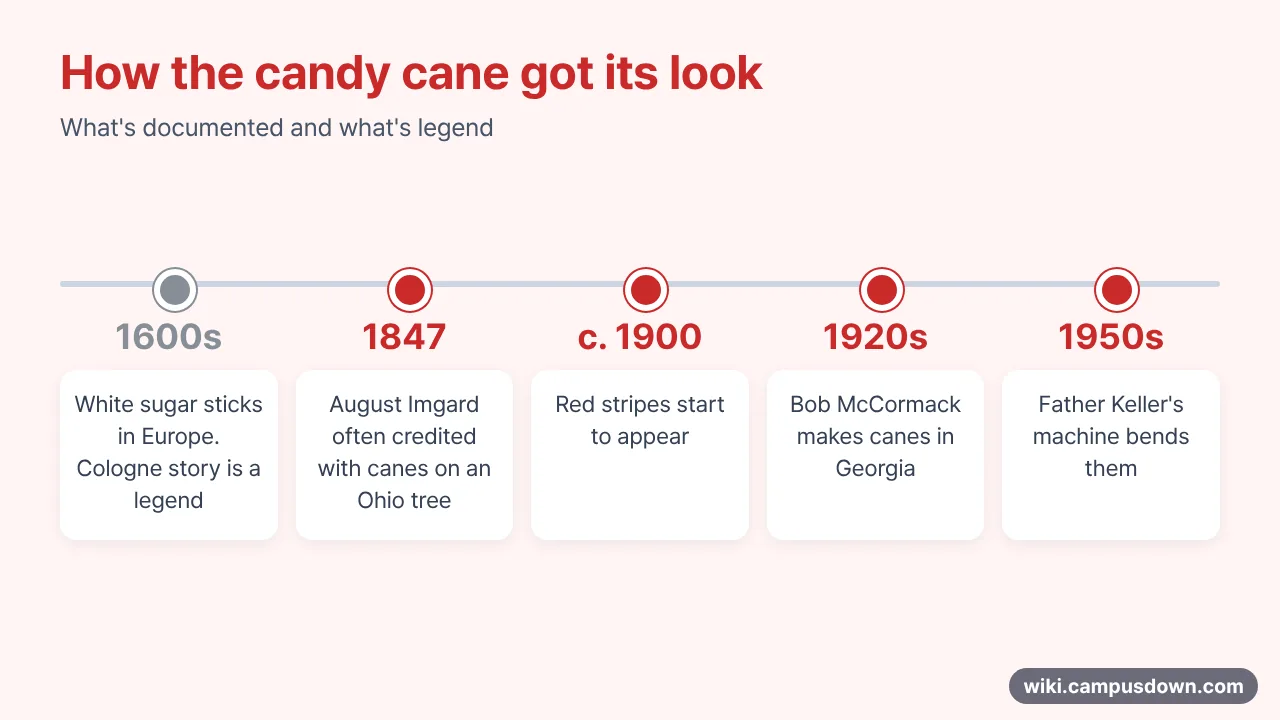
A popular story says that in 1670 a choirmaster at Cologne Cathedral handed out bent sugar sticks to keep choirboys quiet. Historians say there's no real evidence for it. Stories that the stripes are a secret Christian code are also legends.
What we do know: candy sticks existed in Europe by the 1600s, and canes were plain white for a long time. Red stripes only show up around 1900.
The priest who fixed the bend
In the 1920s, Bob McCormack started making candy canes in Albany, Georgia. Bending them by hand was slow, and lots broke. His brother-in-law, a Catholic priest named Gregory Harding Keller, invented a machine that automated the bend, and output jumped from thousands a day to millions.
FAQ
- Who invented the candy cane?
- Nobody knows for sure. The Cologne choirmaster story is a legend.
- Why are candy canes striped?
- Stripes appeared around 1900. The reason isn't documented, and religious explanations came later.
- What flavor is a classic candy cane?
- Peppermint.
Sources reviewed: 2026-11-20
References
- Smithsonian Magazine. We Don't Know the Origins of the Candy Cane. Legends, stripes c. 1900, Keller.
- HISTORY. Who Invented Candy Canes? 1670 legend, Imgard 1847, white for 200 years.
- CBS News. The history of candy canes. Bob McCormack, Keller Machine.