
Why do we bake little people out of cookie dough every December, then bite their heads off first? Gingerbread has a longer story than you'd think.
What gingerbread is
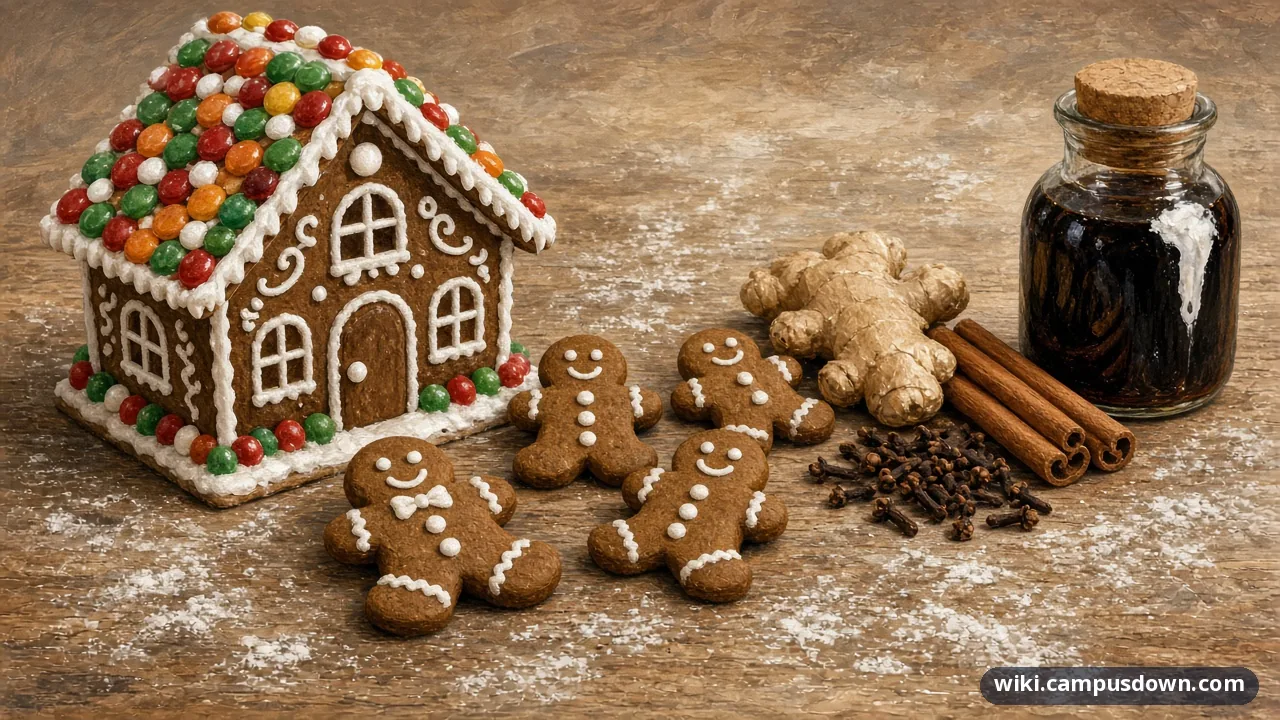
Gingerbread is a sweet baked treat flavored with ginger and other warm spices like cinnamon and cloves, usually sweetened with molasses or honey. It can be a soft cake or a crisp cookie sturdy enough to build a house.

A medieval fair favorite
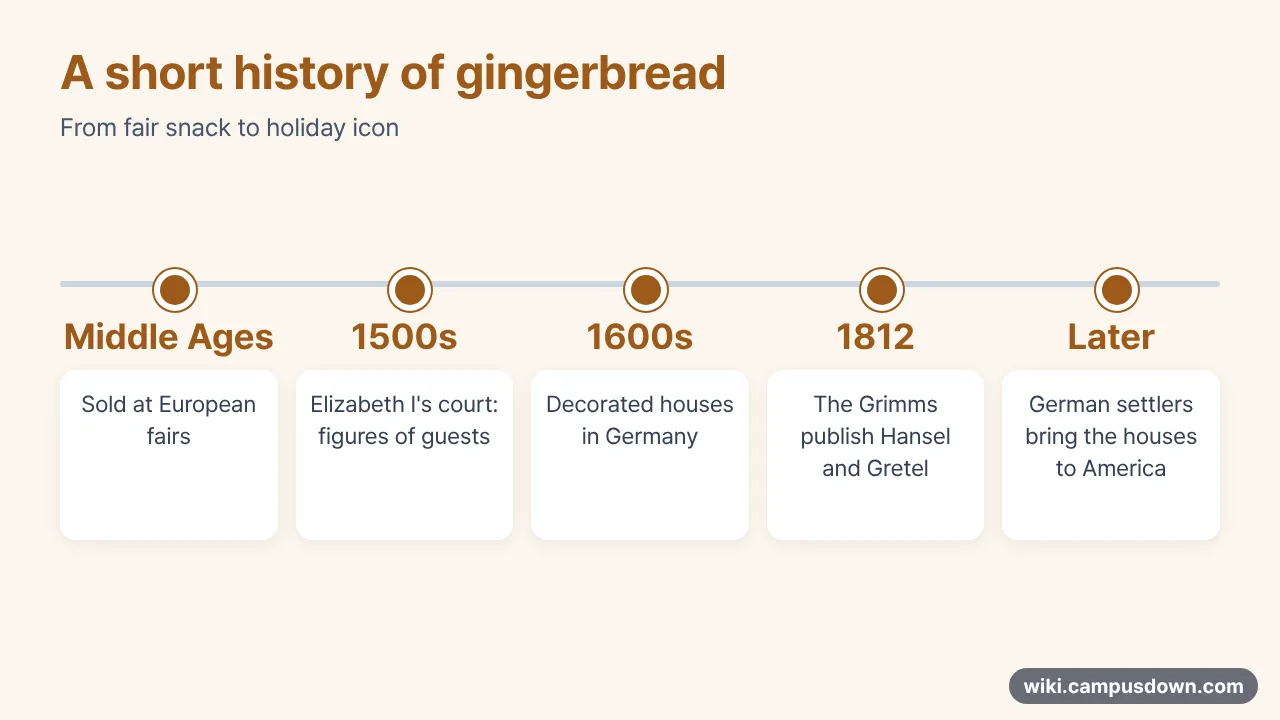
In medieval Europe, gingerbread was a popular treat sold at fairs. At the Tudor court in England, Queen Elizabeth I famously had gingerbread figures made to look like her guests, which is often called an early version of the gingerbread man.
Gingerbread houses
Decorated gingerbread houses date back to the 1600s in Germany. When the Brothers Grimm published "Hansel and Gretel" in the early 1800s, with its witch's house made of treats, the story helped make gingerbread houses popular. German settlers later brought the tradition to America.
Why it's a Christmas thing
Spices were once pricey and saved for special occasions, and gingerbread became tied to holidays and Christmas markets. Today it's a December classic from cookies to lattes.
FAQ
- Who made the first gingerbread man?
- Nobody knows, but Elizabeth I had gingerbread figures made of her guests.
- Are gingerbread houses from Hansel and Gretel?
- They existed earlier, in 1600s Germany, but the Grimms' story helped popularize them.
- What gives gingerbread its color?
- Mostly molasses and spices.
Sources reviewed: 2026-11-20
References
- Smithsonian Magazine. A Brief History of Gingerbread. Medieval fairs, Elizabeth I.
- Smithsonian Magazine. The Un-Christmassy Origin of Gingerbread Houses (2017). Houses since the 1600s, Grimm, German settlers.
- Royal Museums Greenwich. A Tudor Christmas. Gingerbread at the Tudor court.