
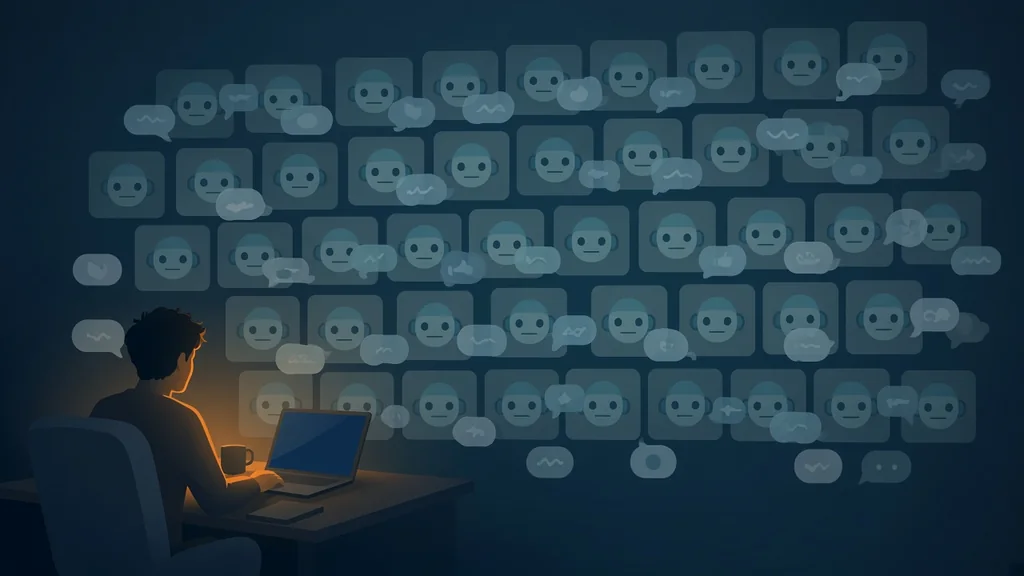
Ever scrolled a comment section and wondered whether anyone in it was actually human? The dead internet theory takes that feeling and runs with it: it claims that most of what you see online is now produced by bots and automated systems, and that the "real" internet quietly died years ago.
What the dead internet theory says
In its strong form, the theory makes two claims. First, that since around 2016 or 2017 the bulk of online posts, replies, and accounts have been generated by software rather than people. Second, that this shift was deliberate, pushed by companies or governments to steer what users believe and buy.
The first claim points at something measurable. The second is a conspiracy claim with no solid evidence behind it. Most researchers who take the idea seriously keep the measurable part and drop the coordinated-plot part.

Where the idea came from
The theory circulated on imageboards before it had a name. It spread widely after a January 2021 post titled "Dead Internet Theory: Most Of The Internet Is Fake" on the forum Agora Road's Macintosh Cafe, written by a user called IlluminatiPirate.
In August 2021, The Atlantic ran a piece by Kaitlyn Tiffany arguing that the theory is wrong as stated but "feels true." That framing stuck. The launch of ChatGPT in late 2022 then gave the idea a second life, because generating fluent text at scale suddenly became cheap.
What the data actually shows
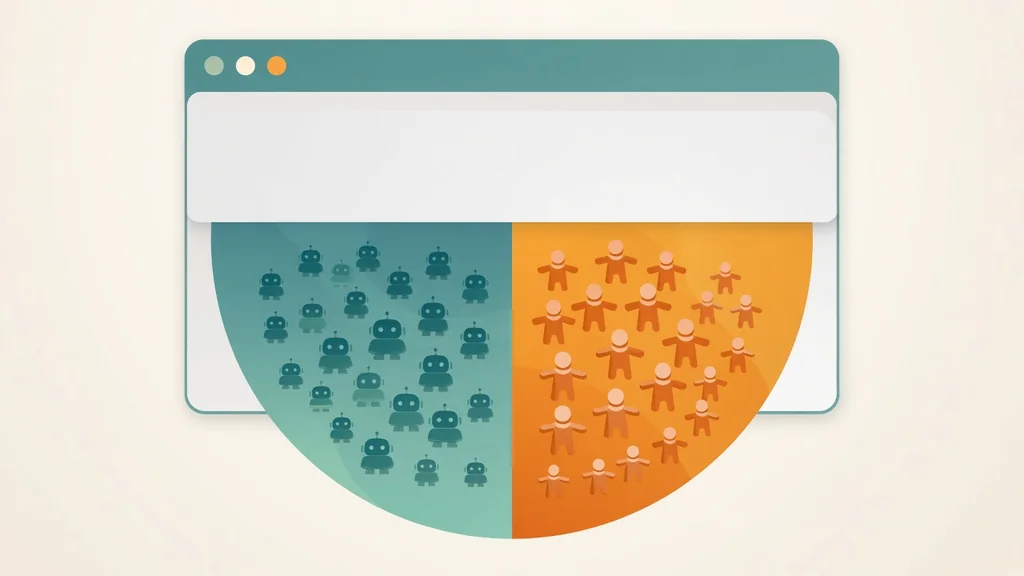
Bot traffic is real and large. The cybersecurity firm Imperva publishes an annual Bad Bot Report, and its 2025 edition estimated that automated traffic made up about 51% of all web traffic in 2024, the first time in a decade that it passed human traffic.
That number needs care. Much of it is crawlers, scrapers, price checkers, and attack tools, not fake people chatting. High bot traffic does not mean most conversations are fake. It means much of the machinery hitting websites is automated.
Key idea
The defensible version of the theory is narrower: a growing share of online traffic and content is automated, which makes signals like likes, reviews, and follower counts less trustworthy.
US cases
- When and where
- 2022, United States
- What happened
- During Elon Musk's attempt to back out of buying Twitter, the two sides fought in Delaware court over how many accounts were spam or bots. Twitter's filings said under 5% of monetizable daily users were spam; Musk argued the figure was higher. The deal closed in October 2022.
- Why it matters
- It showed that even the platform itself could not settle the bot share to everyone's satisfaction, which is exactly the uncertainty the theory feeds on.
- When and where
- August 2024, Federal Trade Commission
- What happened
- The FTC finalized a rule banning fake consumer reviews and testimonials, including reviews attributed to people who do not exist and AI-generated fake reviews, and allowing civil penalties for knowing violations.
- Why it matters
- Regulators treating generated reviews as a real market problem is the strongest mainstream support for the "content is increasingly fake" part of the idea.
Criticisms and limits
- Traffic is not speech. Bot share of requests says little about bot share of posts people actually read.
- No coordinated plot has been documented. Spam, engagement farming, and ad fraud have ordinary profit motives.
- Survivorship in feeds. Recommendation systems can make the web look emptier and more repetitive than it is, which is closer to the filter bubble than to a dead internet.
Related concepts
The theory overlaps with the echo chamber, with enshittification (platforms degrading as they chase revenue), and with the illusory truth effect, since repeated bot posts can make a claim feel familiar. Deepfakes and Poe's law explain why it is getting harder to tell sincere human posts from generated or satirical ones.
Study material (Korean): 「필터 버블과 가짜뉴스 분석, 확산 원인과 대책 논의」
Frequently asked questions
- Is the dead internet theory true?
- Not in its strong form. Bots generate roughly half of web traffic by some industry estimates, but there is no evidence that most human conversation has been replaced or that a single group is running it.
- When did the internet supposedly "die"?
- Believers usually point to 2016–2017. The specific date comes from the 2021 forum post, not from any measured turning point.
- How can I spot bot accounts?
- Look for brand-new accounts with high posting volume, repeated phrasing across accounts, and profiles with no history. No single sign is proof.