
Why do some kids in Spain and Mexico get their big presents on January 6 instead of Christmas morning? Because that's Epiphany, the day the Three Kings arrive.
What Epiphany is
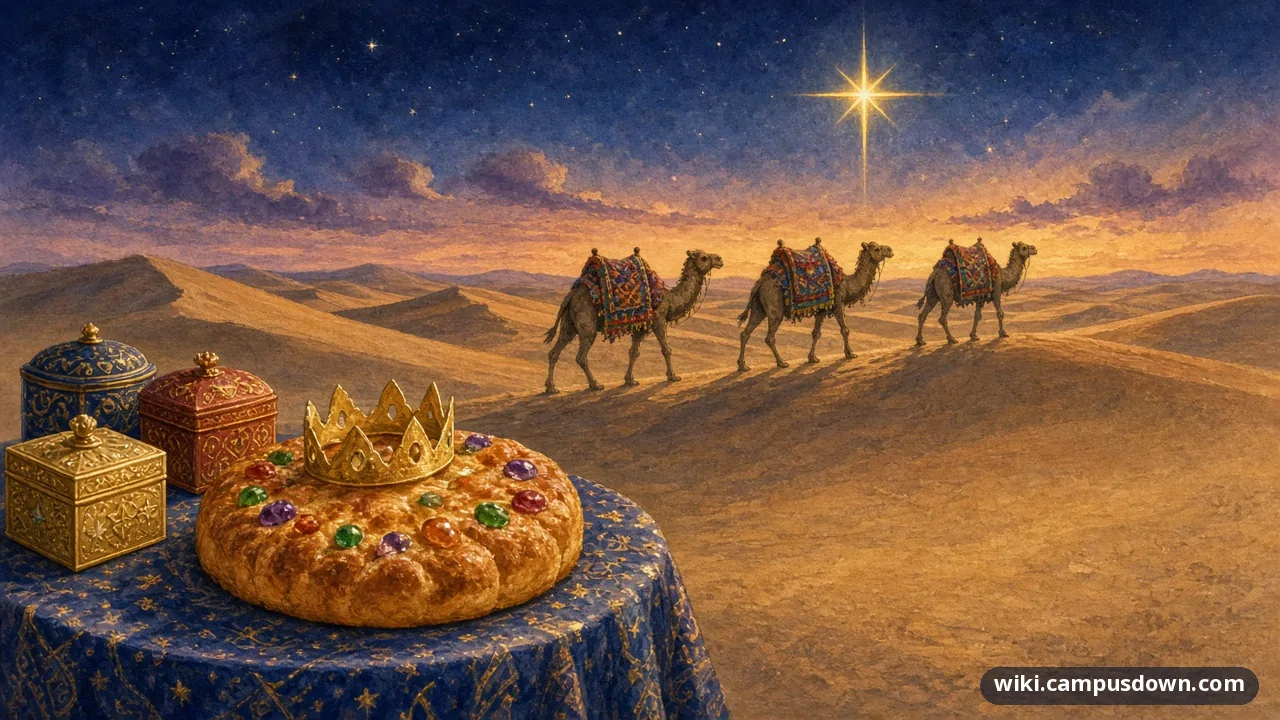
Epiphany is a Christian feast on January 6, the day after Twelfth Night. The word comes from Greek and means "appearance" or "manifestation."
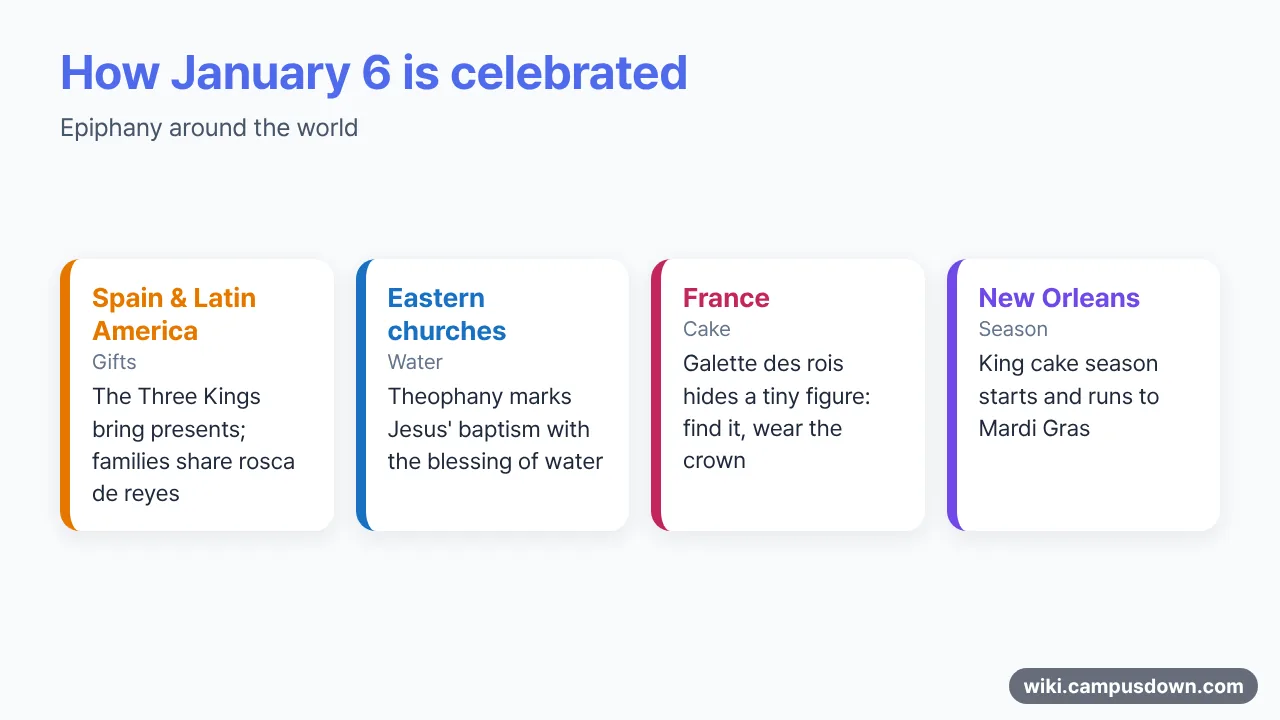
In Western churches it remembers the Magi, the wise men from the East who followed a star to the infant Jesus. Many Eastern churches call it Theophany and focus on Jesus' baptism in the Jordan River. Orthodox churches that keep the Julian calendar mark it on January 19.

How people celebrate
In Spain and much of Latin America it's Día de Reyes. Children leave out shoes, and sometimes hay for the camels, and wake up to gifts. Families share a ring-shaped sweet bread called rosca de reyes with a tiny baby figurine baked inside.
Why "epiphany" also means a sudden insight
Outside church, an epiphany is that "aha!" moment when something suddenly makes sense. It borrows the same idea of something hidden being revealed.
FAQ
- When is Epiphany?
- January 6. Some Orthodox churches celebrate on January 19.
- Is Epiphany the same as Twelfth Night?
- No. Twelfth Night is the evening of January 5; Epiphany is the next day.
- How many kings were there?
- The Bible doesn't give a number. "Three" comes from the three gifts: gold, frankincense and myrrh.
Sources reviewed: 2026-11-20
References
- Encyclopaedia Britannica. Epiphany. Meaning, Western and Eastern customs.
- History.com. Epiphany: Three Kings Day, Twelfth Night. Día de Reyes and rosca.
- Smithsonian Institution. Three Kings Day. Traditions in the Americas.