
Imagine sleeping through the whole winter and waking up when the snow melts. Some animals basically do. But it's way weirder than a long nap.
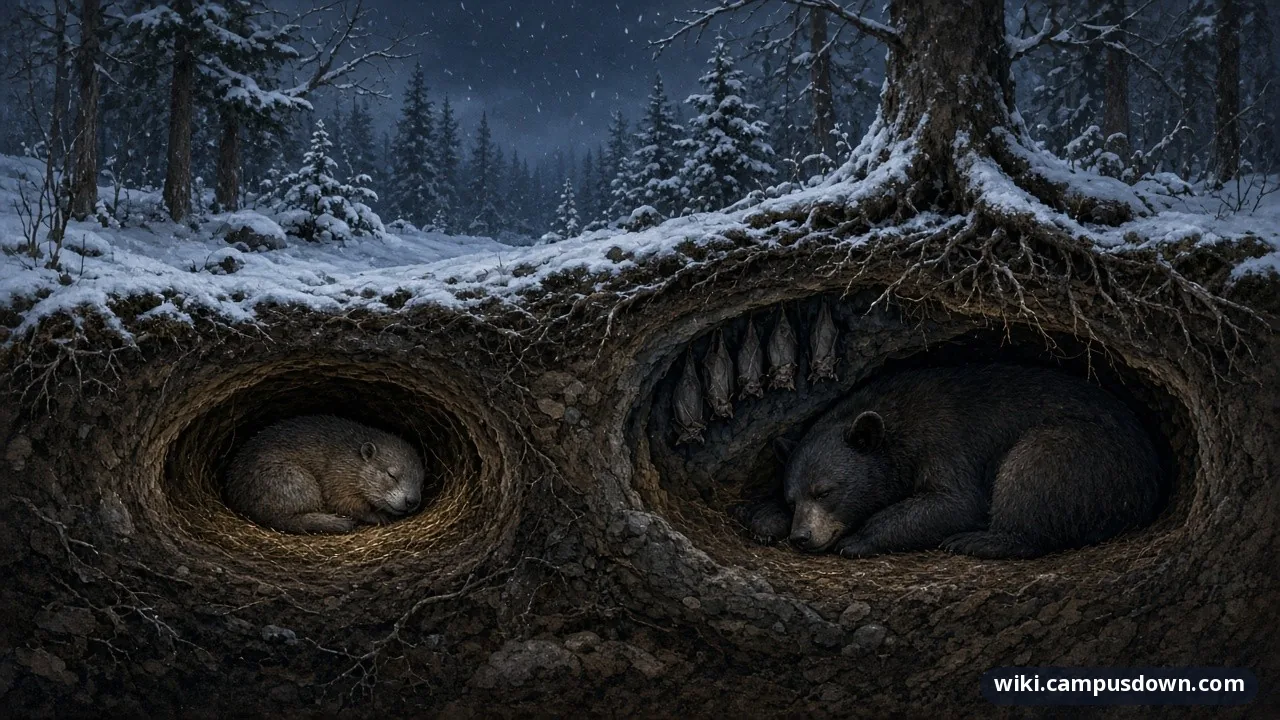
What hibernation is
Winter brings two problems: cold and not much food. Many animals slow down to get through it. That's called dormancy.
Hibernation is a very specific kind of dormancy. The US National Park Service lists three requirements: reduced metabolism, a slower heart rate and a lower body temperature.

How cold they get
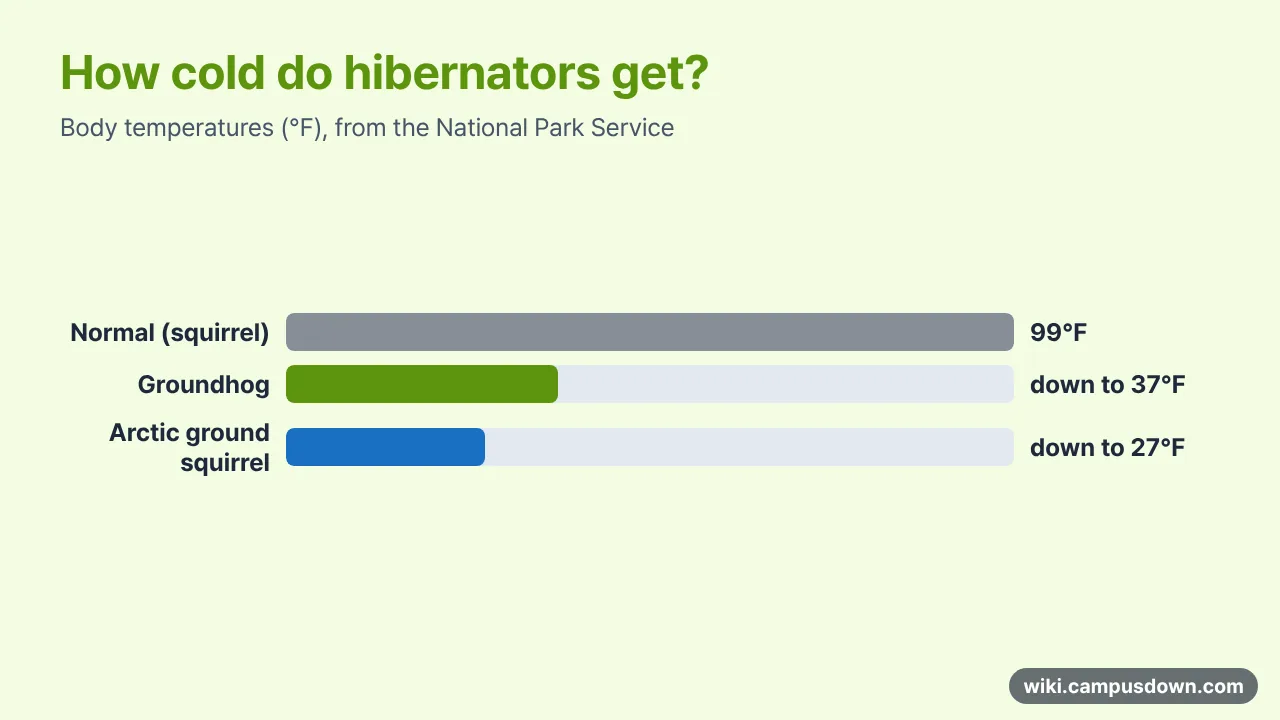
Rodents are the champions. An Arctic ground squirrel's body is normally about 99°F, but in hibernation it can drop as low as 27°F, below freezing. A groundhog can drop to 37°F and may go from about 14 pounds in fall to 5 pounds by spring.
So, do bears hibernate?
It's been a real argument among biologists. Bears don't cool down much like rodents do, so by the strict definition they're not “deep” hibernators. The Park Service now describes hibernation as a spectrum, and bears are highly efficient at it. Black bear cubs are even born in January while mom is dormant.
Not just mammals
Snakes and other reptiles do something similar called brumation. Some bats are true hibernators, roosting in caves and old mines all winter.
FAQ
- What are the signs of true hibernation?
- Lower metabolism, slower heart rate and lower body temperature.
- Do bears really hibernate?
- They're efficient but not “deep” hibernators; biologists see hibernation as a spectrum.
- What's brumation?
- A reptile version of winter dormancy, triggered by cold.
Sources reviewed: 2026-11-20
References
- U.S. National Park Service. Hibernation: Nature’s Nap Time. Three requirements; Arctic ground squirrel 99°F to 27°F; bats; brumation.
- U.S. National Park Service. Groundhog. Body temperature can drop to 37°F; about 14 lb in fall, 5 lb in spring.
- U.S. National Park Service. Species Spotlight: Black Bear. Bears are efficient but not “deep” hibernators; hibernation as a spectrum.