
If a false idea is spread in public, should the government silence it, or should people answer it with better arguments? The marketplace of ideas is the American answer most often given in free-speech debates: let ideas compete openly and truth is most likely to win. The phrase appears in court opinions, university speech policies and arguments about social media.

The idea and its roots
The theory has older roots. John Milton argued for unlicensed printing in Areopagitica in 1644, and John Stuart Mill defended open debate in On Liberty in 1859. The market metaphor entered American law through Justice Oliver Wendell Holmes Jr. in 1919, who wrote that the best test of truth is the power of a thought to get itself accepted in the competition of the market.
Key idea
The marketplace of ideas does not claim that every idea is true. It claims that, over time, open competition is a better way to find truth than government selection, and that the remedy for bad speech is more speech.

US cases
- When and where
- Leaflets thrown August 23, 1918; decided November 10, 1919, New York City and Washington, D.C.
- What happened
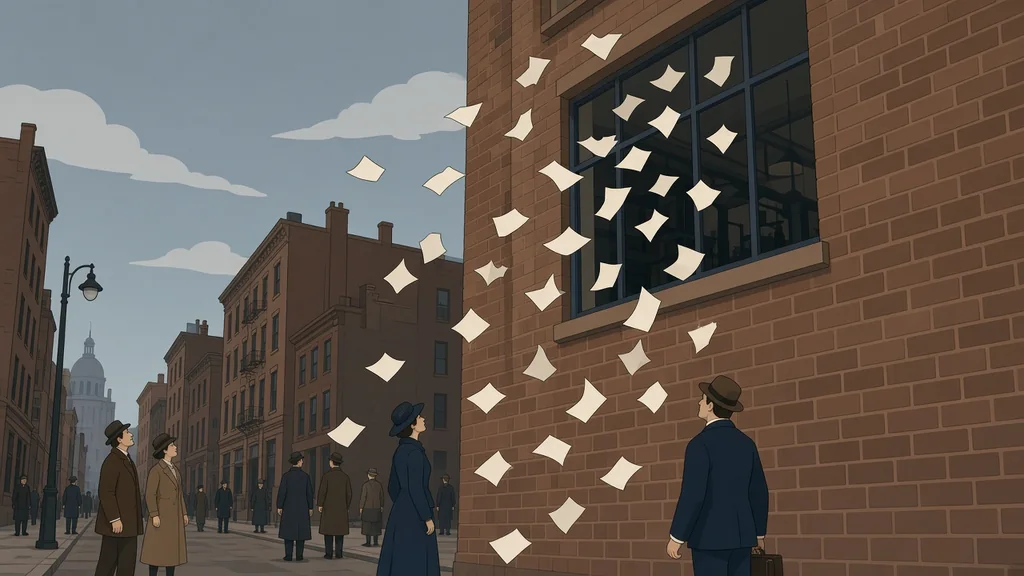
- On August 23, 1918, leaflets were thrown from a fourth-floor window of a hat factory in Lower Manhattan. One was in English and signed "Revolutionists" and criticized the sending of American troops to intervene in the Russian Civil War; another was in Yiddish. The defendants, a group of immigrants from the Russian Empire, were convicted under the Sedition Act of 1918. The Supreme Court upheld the convictions 7–2 in an opinion by Justice John H. Clarke. Justice Holmes dissented, objecting to sentences of twenty years for leaflets he described as the work of "poor and puny anonymities," and wrote that the ultimate good is better reached by free trade in ideas.
- Why it matters
- The dissent, joined by Justice Louis Brandeis, became one of the most quoted passages in First Amendment law and began a gradual shift toward stronger protection of political speech.
- When and where
- March 9, 1953 and January 23, 1967, Supreme Court of the United States
- What happened
- In Rumely, a concurring opinion by Justice William O. Douglas, joined by Justice Hugo Black, said that a publisher who sells books and pamphlets bids for the minds of men in the market place of ideas. In Keyishian, Justice William Brennan wrote for the Court that the classroom is peculiarly the marketplace of ideas, striking down New York rules aimed at removing teachers considered subversive.
- Why it matters
- These cases show the metaphor moving from a single dissent into mainstream constitutional language, especially in education and publishing.
Criticisms
The metaphor has long been questioned. Law professor Stanley Ingber argued in a 1984 Duke Law Journal article that the marketplace of ideas is a "legitimizing myth," because real markets of ideas are shaped by unequal wealth, access and power. Critics also say that people do not always evaluate ideas rationally, that false claims can spread faster than corrections, and that online platforms and recommendation systems change which ideas get attention. Defenders reply that government control of speech is more dangerous than the problems it tries to fix, while others support narrower limits on speech that threatens harm.
Related concepts
The theory is a core part of First Amendment free speech doctrine and relates to John Stuart Mill's harm principle, which defines when speech or action may be limited. Debates over hate speech test how far the metaphor reaches. Online recommendation systems can create a filter bubble that weakens open competition, and economists apply a similar logic to prices in the efficient market hypothesis.
Study material (Korean): 「언론법 과제 – 인터넷상 표현의 자유와 그 근거」
Frequently asked questions
- Who first used the phrase marketplace of ideas?
- The idea comes from Milton and Mill, and Justice Holmes expressed it as "free trade in ideas" in his 1919 Abrams dissent. Justice Douglas used the phrase "market place of ideas" in 1953.
- Is the marketplace of ideas a legal rule?
- No. It is a theory used to explain why the First Amendment protects speech, not a rule that decides cases by itself.
- What is the main criticism of the theory?
- That real conditions are unequal and people do not always choose truth, so open competition may not reliably produce it.
References
- Wikipedia: Marketplace of ideas
- Abrams v. United States, 250 U.S. 616 (1919), Legal Information Institute
- United States v. Rumely, 345 U.S. 41 (1953), Legal Information Institute
- Keyishian v. Board of Regents, 385 U.S. 589 (1967), Legal Information Institute
- Ingber, S. (1984). The Marketplace of Ideas: A Legitimizing Myth. Duke Law Journal