
Why did doctors once believe that a bad smell could give you cholera? For more than two thousand years, many physicians thought epidemics came from miasma, a poisonous "bad air" rising from rotting matter, swamps and sewage. The theory was wrong about the cause, yet it pushed American cities to clean up in ways that saved lives.
Definition
Miasma, from the Greek word for pollution, was described as a foul vapor that carried disease. Under this view, cholera, plague and fevers spread through the air wherever filth decayed, especially at night. The word malaria, from the Italian for "bad air," is a leftover from this idea. Miasma theory was gradually abandoned after about 1880, when germ theory showed that specific microorganisms cause specific diseases.
Key idea
Miasma theory linked disease to filth, which was partly right. Its mistake was blaming the smell rather than the germs, water and insects that actually carried infection.

Why it lasted so long
The theory matched everyday experience. Disease clustered in crowded, dirty, smelly neighborhoods, and cleaning them often reduced illness. Reformers such as Florence Nightingale used it to make hospitals cleaner and better ventilated. The same belief also slowed acceptance of John Snow's argument in the 1850s that cholera spread through contaminated water.
US cases
- When and where
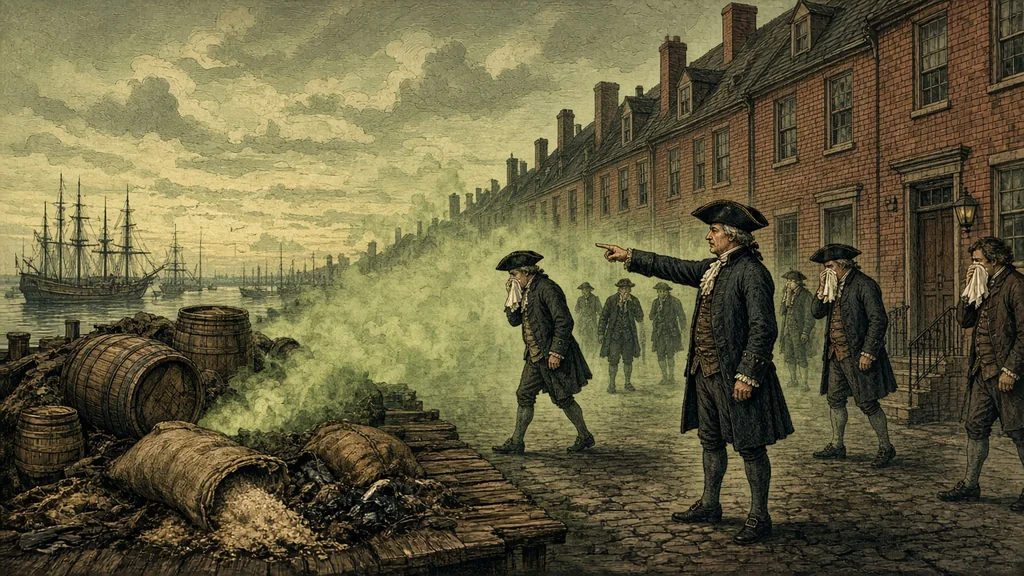
- August–November 1793, Philadelphia
- What happened
- As yellow fever killed 5,000 or more people in a city of about 50,000, Dr. Benjamin Rush blamed "some damaged coffee which putrefied on the wharf near Arch Street" for causing the fevers.
- Why it matters
- The episode shows miasma thinking at work in the nation's capital of the time, more than a century before mosquitoes were confirmed as the carriers of yellow fever.
- When and where
- 1878–1880, Memphis, Tennessee
- What happened
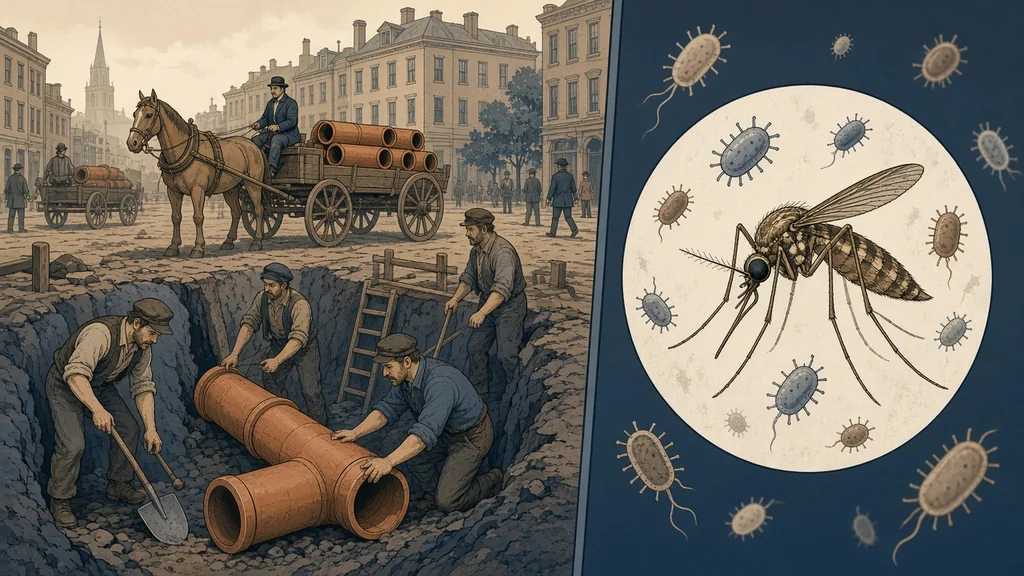
- After yellow fever killed more than 5,000 people in Memphis in 1878, the new National Board of Health sent engineer George E. Waring Jr., who designed a separate sewer system to keep household waste away from wells. Civic leaders believed poor sanitation spread yellow fever.
- Why it matters
- The belief about the cause was wrong, but the sewers improved public health, and the Memphis crisis helped lead to a national public health body.
The mosquito link was confirmed in 1900–1901 by the US Army commission led by Walter Reed in Cuba, building on the hypothesis of Cuban physician Carlos Finlay.
Criticisms
- Wrong mechanism: miasma theory could not explain why some people near the same smell fell ill and others did not.
- Delayed better science: it overshadowed evidence for waterborne and insect-borne disease.
- Blame on the poor: linking disease to "filthy" neighborhoods sometimes fed prejudice against immigrants and poor communities.
Related concepts
Miasma theory was replaced by germ theory, a textbook example of a paradigm shift. The sanitation it inspired is part of the epidemiologic transition from infectious to chronic disease. Its long life also shows confirmation bias, since cleanups that worked seemed to prove the wrong cause.
Study material (Korean): 「런던과 함부르크의 전염병 유행의 원인 핵심 내용 요약 정리」
Frequently asked questions
- What is miasma theory in simple terms?
- It was the old belief that diseases came from poisonous bad air produced by rotting matter and filth.
- Why was miasma theory wrong?
- Diseases like cholera and yellow fever are caused by microorganisms spread through water, contact or insects, not by smells.
- Did miasma theory do any good?
- Yes. Its focus on removing filth led to sewers, clean water and cleaner hospitals, which reduced the spread of germs.