
What if the "flower" everyone buys for Christmas isn't a flower at all? Look closely at a poinsettia and you'll see the trick.
What a poinsettia is
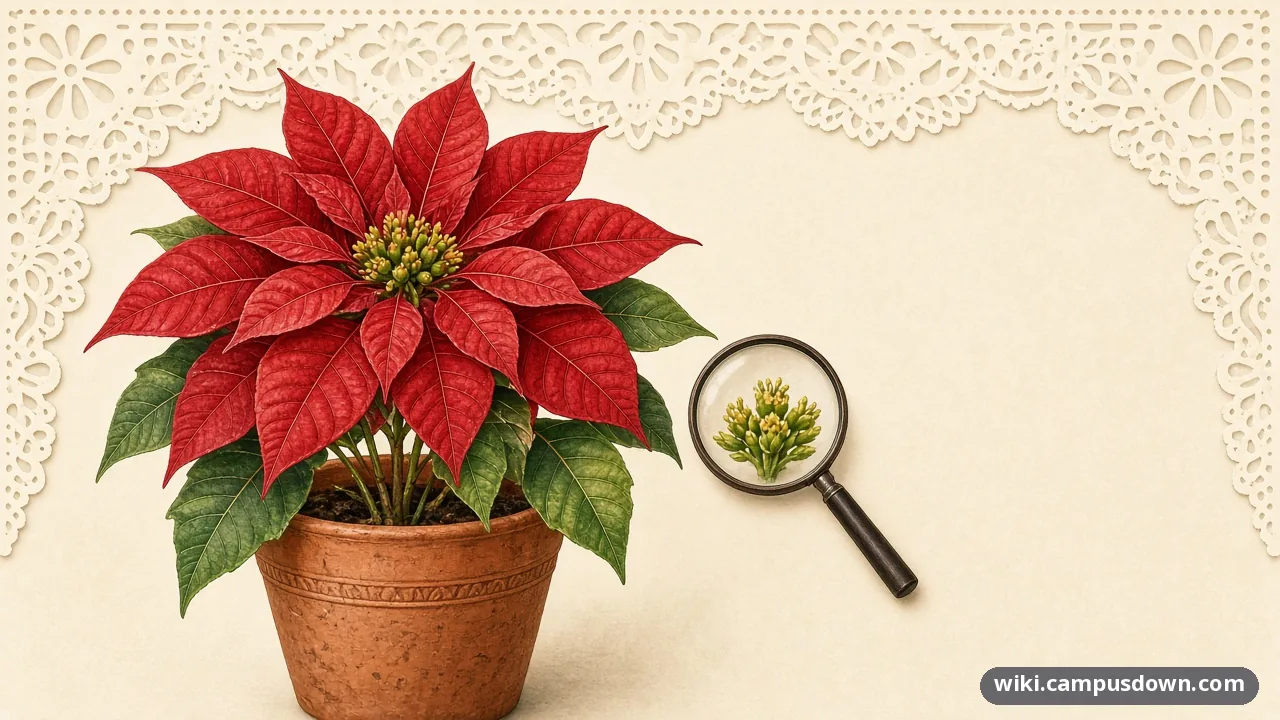
The poinsettia, Euphorbia pulcherrima, is a shrub native to Mexico. In the wild it can grow 10 to 15 feet tall. In stores it's the potted plant with big red tops that shows up every December.

The red parts aren't petals
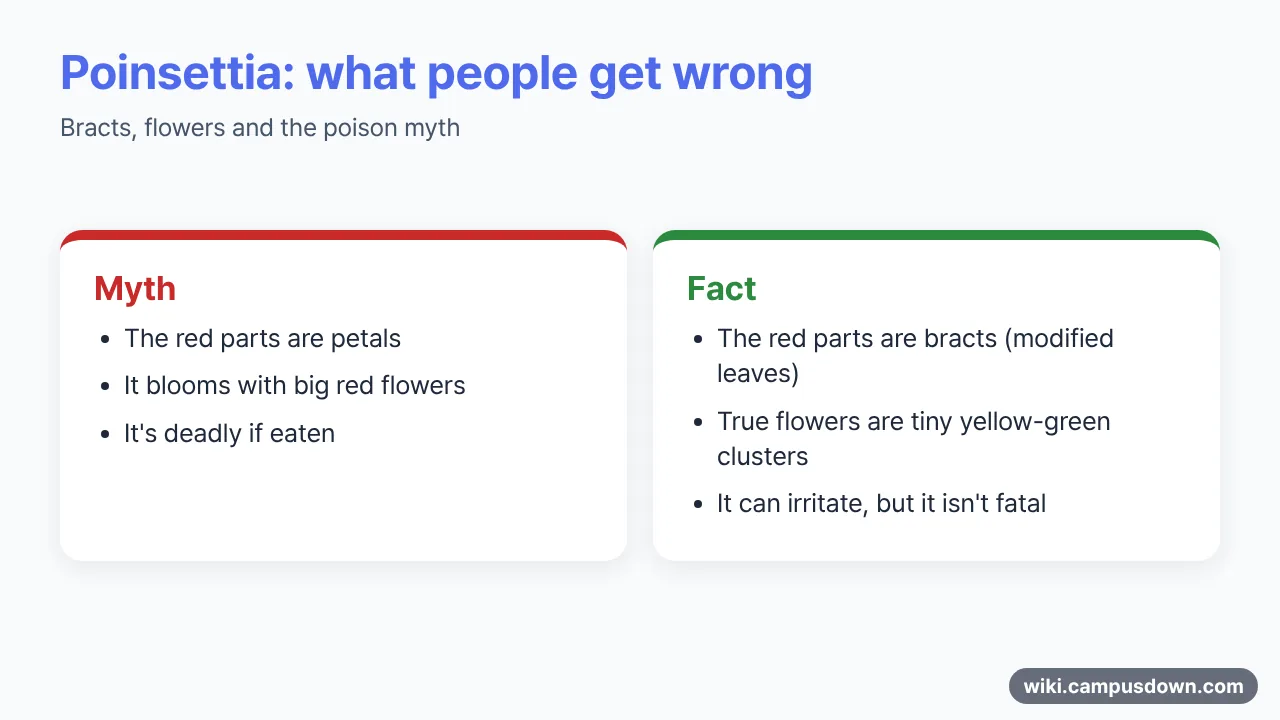
Those red "petals" are bracts, modified leaves. The real flowers are the tiny yellow-green clusters right in the center. Today bracts also come in white, pink, burgundy, orange and marbled patterns.
Where the name comes from
The Aztecs called the plant cuetlaxochitl. They used the bracts to make a reddish dye and the sap to treat fevers.
Its English name honors Joel Roberts Poinsett, an amateur botanist who became the first U.S. minister to Mexico in 1825. He sent cuttings home to his South Carolina greenhouse and shared them with friends and botanical gardens. Since 2002, December 12 has been National Poinsettia Day in the U.S., marking the day Poinsett died in 1851.
Is it poisonous?
No, it isn't deadly. Poison Control says eating it can cause an upset stomach or vomiting, and the milky sap can irritate skin, especially in people with a latex allergy. Pets may vomit or get diarrhea. Keep it out of reach anyway.
FAQ
- Are poinsettias poisonous to cats and dogs?
- They can cause mild stomach upset, but they aren't considered deadly.
- Why are poinsettias linked to Christmas?
- Their red bracts are at their brightest in December, so growers and stores made them the holiday plant.
- Is a poinsettia a flower?
- It's a flowering plant, but the red parts are bracts, not flowers.
Sources reviewed: 2026-11-20
References
- NDSU Extension. History, Facts, and Care of Poinsettias. Aztec use, Poinsett, bracts and the 500-leaf study.
- U.S. House of Representatives, History, Art & Archives. Poinsett's Popular Poinsettia. 1825 appointment and National Poinsettia Day.
- Poison Control (National Capital Poison Center). Are poinsettias poisonous? Irritating, not fatal.