
Why do some American neighborhoods still have fewer trees, lower home values and fewer bank branches than others nearby? Part of the answer is redlining, the practice of denying loans and services to areas because of who lives there. The name comes from a literal red line on government maps drawn in the 1930s.
Definition
Redlining means refusing or limiting mortgages, insurance or other financial services to residents of certain neighborhoods based on their racial or ethnic makeup rather than individual creditworthiness. Sociologist John McKnight coined the term in the 1960s to describe Chicago banks that classified some neighborhoods as "hazardous" because of their residents' race.
Key idea
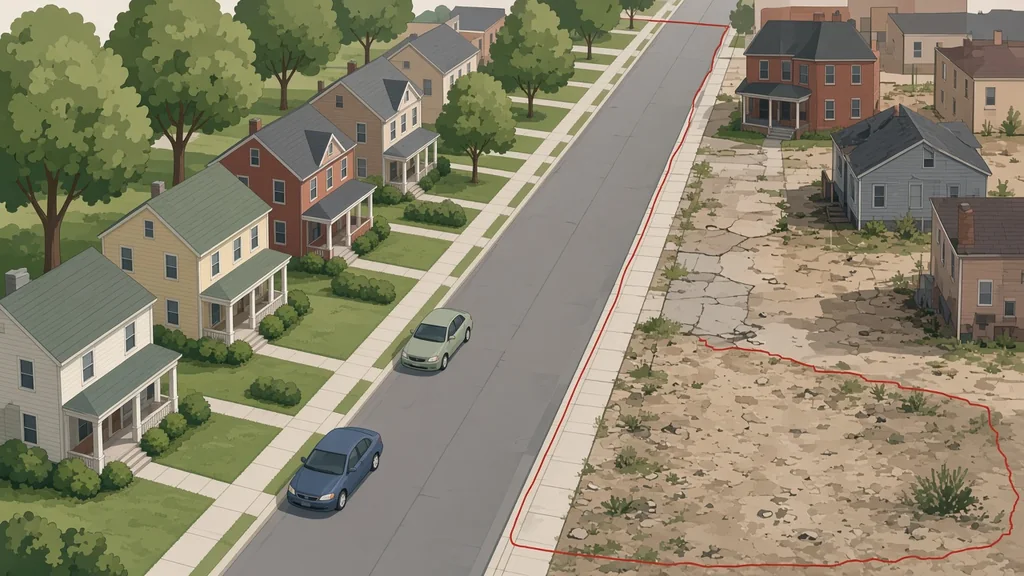
Redlining judged neighborhoods, not people. A qualified borrower could be turned down simply because of the area's racial makeup, which blocked home ownership, the main way many American families build wealth.

The HOLC maps
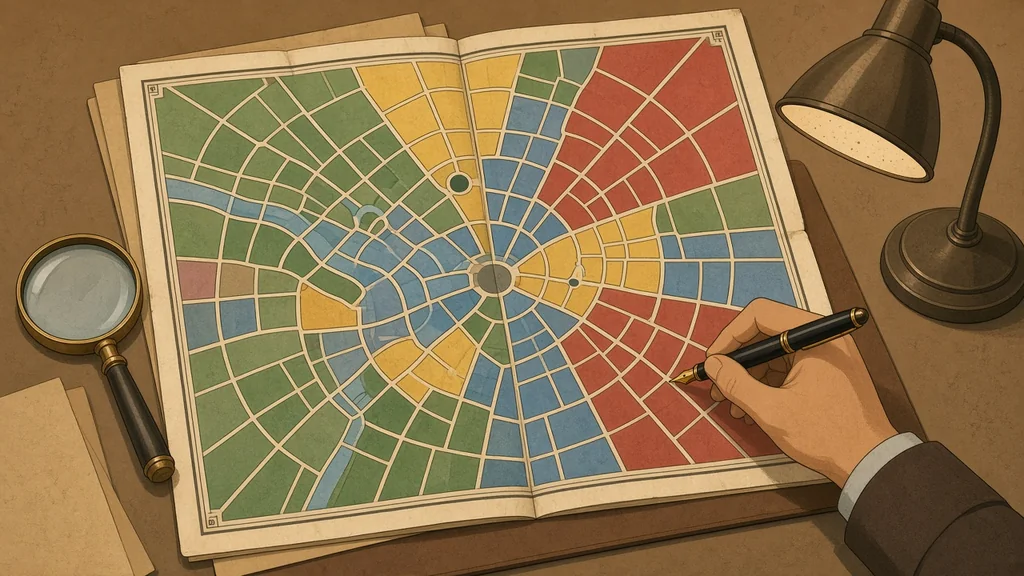
The Home Owners' Loan Corporation was created in 1933 as part of the New Deal. Starting in 1935, federal officials asked it to survey 239 cities and draw "residential security maps." Neighborhoods were graded from A, shaded green, to D, shaded red and labeled "hazardous." The maps used housing data but also the racial, ethnic and immigrant makeup of each area. Private lenders also followed the underwriting standards of the Federal Housing Administration, created by the National Housing Act of 1934.
US cases
- When and where
- 1935–1940, 239 US cities
- What happened
- Federal surveyors graded neighborhoods by lending risk, with predominantly Black and immigrant areas often shaded red. A 2018 study found that 74 percent of neighborhoods graded "hazardous" are low-to-moderate income today and 64 percent are minority neighborhoods.
- Why it matters
- The Mapping Inequality project, led by the University of Richmond with partners, put the maps online so anyone can compare old grades with today's cities.
- When and where
- January 12, 2023, Los Angeles area
- What happened
- City National Bank of California agreed to pay $31 million to resolve US Department of Justice allegations of redlining from 2017 to at least 2020.
- Why it matters
- The case shows that redlining is not only history. Modern enforcement under fair lending laws still targets banks that avoid lending in minority neighborhoods.
Laws against redlining
The Fair Housing Act of 1968 made discriminatory housing practices like redlining illegal. The Community Reinvestment Act of 1977, passed after pressure from community groups, requires banks to meet the credit needs of the communities they serve, including low and moderate income neighborhoods.
Criticisms and debates
- How much did the maps matter? Economic historian Price Fishback and co-authors argued in 2021 that blaming HOLC is misplaced and that other actors, such as the FHA and private lenders, mattered more.
- Correlation and cause: neighborhoods graded red may already have been poorer, making the long-term effect hard to separate.
- Fixes are contested: people disagree on how far modern lending rules should go to repair past harm.
Related concepts
Redlining is linked to white flight and to segregation patterns modeled in the Schelling segregation model. Disinvested areas later faced gentrification, and debates over policing them often cite the broken windows theory. The gaps it left can produce relative deprivation.
Study material (Korean): 「독후감 과제 – 도시는 왜 불평등한가와 젠트리피케이션」
Frequently asked questions
- What does redlining mean in simple terms?
- Denying loans or services to people because of the neighborhood they live in, where the neighborhood was judged by its racial makeup.
- Is redlining illegal in the US?
- Yes. The Fair Housing Act of 1968 bans it, and federal regulators still bring redlining cases against lenders.
- Where can I see historical redlining maps?
- The Mapping Inequality project from the University of Richmond and partners has digitized the HOLC maps.