
Could a psychiatric hospital tell the difference between a sane person and a patient? In the early 1970s, Stanford psychologist David Rosenhan tested the question by sending healthy people into hospitals with a single fake symptom. His answer, published in Science, shook American psychiatry. Decades later, it has also been seriously questioned.
The study
Rosenhan reported that he and seven other healthy volunteers (five men and three women in total) sought admission to 12 hospitals in five states on both coasts. Each claimed to hear unclear voices of the same sex saying words like "empty," "hollow" and "thud." Apart from that and their names and jobs, they answered every question truthfully.
- All were admitted.
- Seven were diagnosed with schizophrenia; one, at a private hospital, with manic-depressive psychosis.
- Once inside, they acted normally and said the voices had stopped.
- Stays ranged from 7 to 52 days, averaging 19 days.
- All but one were discharged with schizophrenia "in remission."
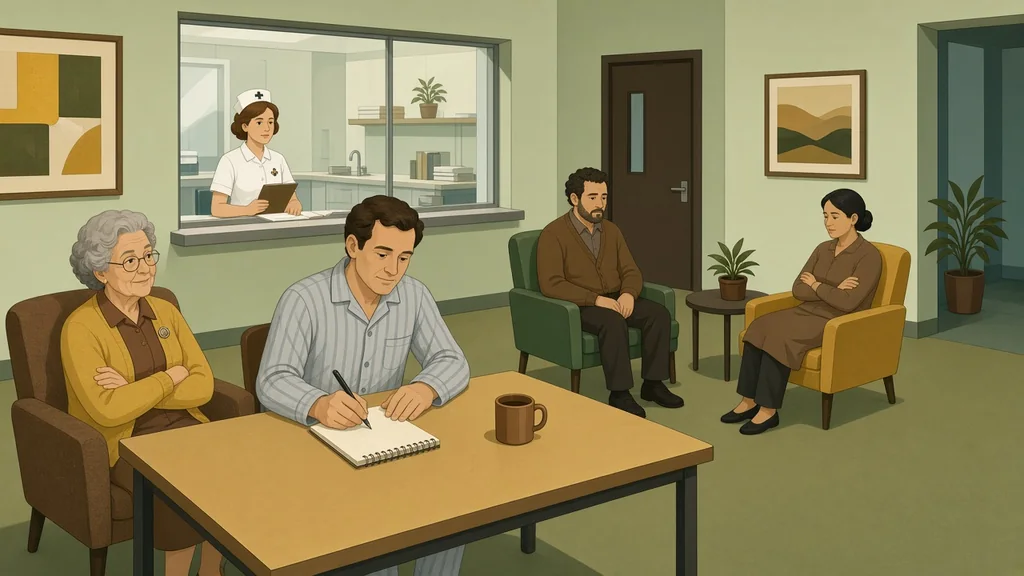
Staff never identified them as impostors, even though they openly took notes. In the first three hospitalizations, 35 of 118 patients suspected the pseudopatients were sane.
Key idea
Rosenhan argued that once a psychiatric label is applied, it colors how every later behavior is interpreted. Note-taking was even recorded as "writing behavior."
A follow-up was just as striking. A teaching hospital that had heard of the results was told pseudopatients would arrive over the next three months. Staff rated 193 patients: 41 were judged likely impostors and 42 suspect. Rosenhan had sent no one.

US cases
- When and where
- 1973, Science and hospitals in five US states
- What happened
- The paper appeared in Science on January 19, 1973, and fueled debate over the reliability of psychiatric diagnosis.
- Why it matters
- It challenged American hospitals and psychiatrists to show how reliable their diagnoses were, at a time of growing debate over deinstitutionalization.
- When and where
- 1887, Blackwell's Island, New York City
- What happened
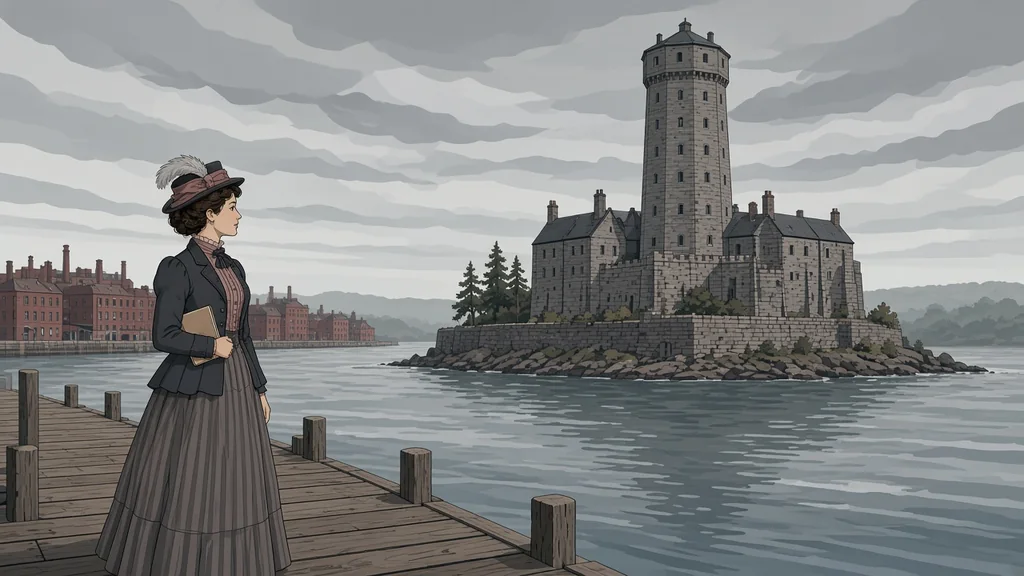
- Reporter Nellie Bly faked insanity to be committed to the Women's Lunatic Asylum on Blackwell's Island, now Roosevelt Island, and exposed brutality and neglect in the New York World. Her reporting, later published as "Ten Days in a Mad-House," led to a grand jury investigation and more funding for the city's public charities department.
- Why it matters
- Bly's work was an early American demonstration of the same method Rosenhan later used.
Criticisms
- Psychiatric rebuttal: psychiatrist Robert Spitzer argued in 1975 that diagnosis relies on what patients report, quoting Seymour Kety's analogy: someone who secretly drank blood and arrived vomiting it would be diagnosed with a bleeding ulcer, which would not prove medicine cannot diagnose ulcers.
- Doubts about the data: in her 2019 book "The Great Pretender," journalist Susannah Cahalan reported inconsistencies in Rosenhan's records, misleading descriptions and inaccurate quotations, and questioned whether some pseudopatients existed at all.
- No replication: the study was never repeated under similar conditions.
Related concepts
The study is closely tied to labeling theory and is often taught alongside the Little Albert experiment, the Stanford prison experiment and the Milgram experiment as classic but contested studies.
Study material (Korean): 「조현병 증상과 진단기준, 영화 뷰티풀 마인드 존 내쉬 사례 분석」
Frequently asked questions
- What did the Rosenhan experiment find?
- Healthy volunteers who reported hearing voices were admitted to psychiatric hospitals, mostly diagnosed with schizophrenia, and not detected as sane by staff.
- Was the Rosenhan experiment real?
- The paper was published, but a 2019 investigation found serious inconsistencies and raised doubts about whether all pseudopatients existed.
- Why is the Rosenhan experiment important?
- It sparked debate about the reliability of psychiatric diagnosis and the stigma of labels.