
The Christmas truce was a series of unofficial ceasefires along parts of the Western Front at Christmas 1914, when British and German soldiers stopped fighting without orders from above.
Picture this: five months into one of the deadliest wars in history, enemy soldiers climb out of their trenches on Christmas Day, shake hands and trade chocolate. It sounds made up. It isn't.
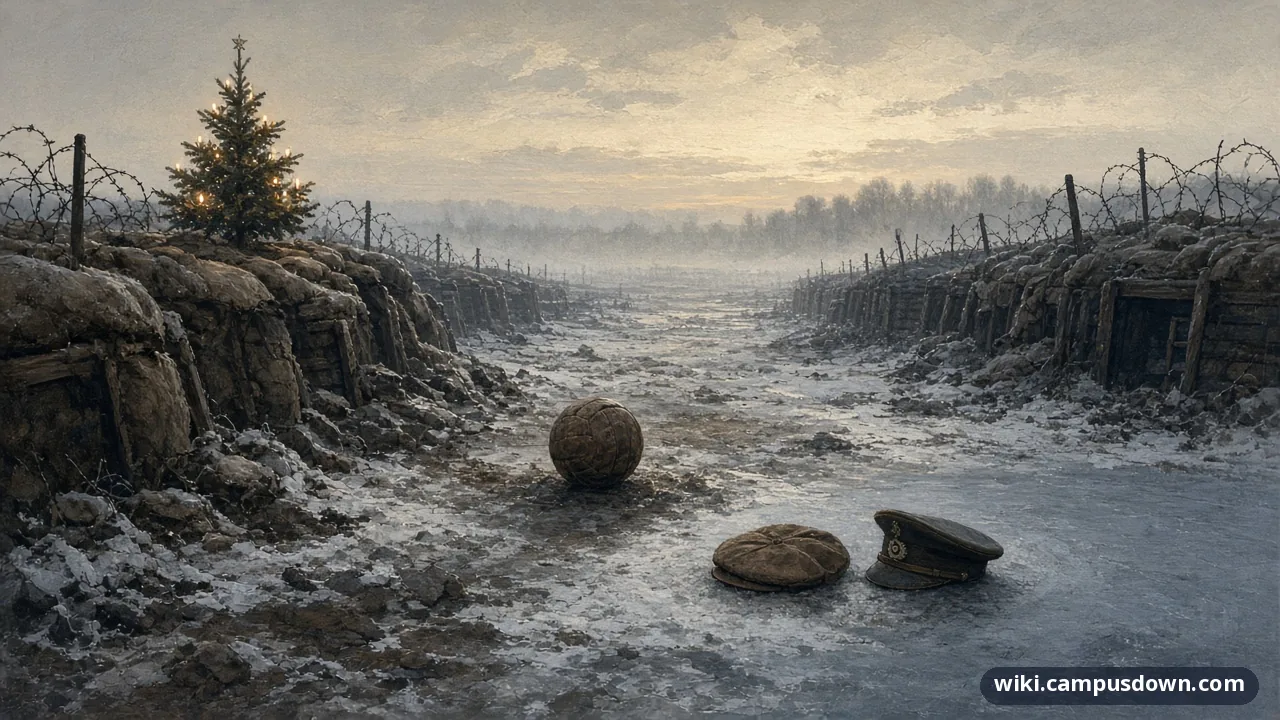
What the Christmas truce was
The Christmas truce wasn't one big ceasefire. It was a patchwork of small, unofficial truces along parts of the Western Front in December 1914, mostly between British and German troops. Nobody at the top ordered it. The men in the trenches worked it out themselves.

How it unfolded
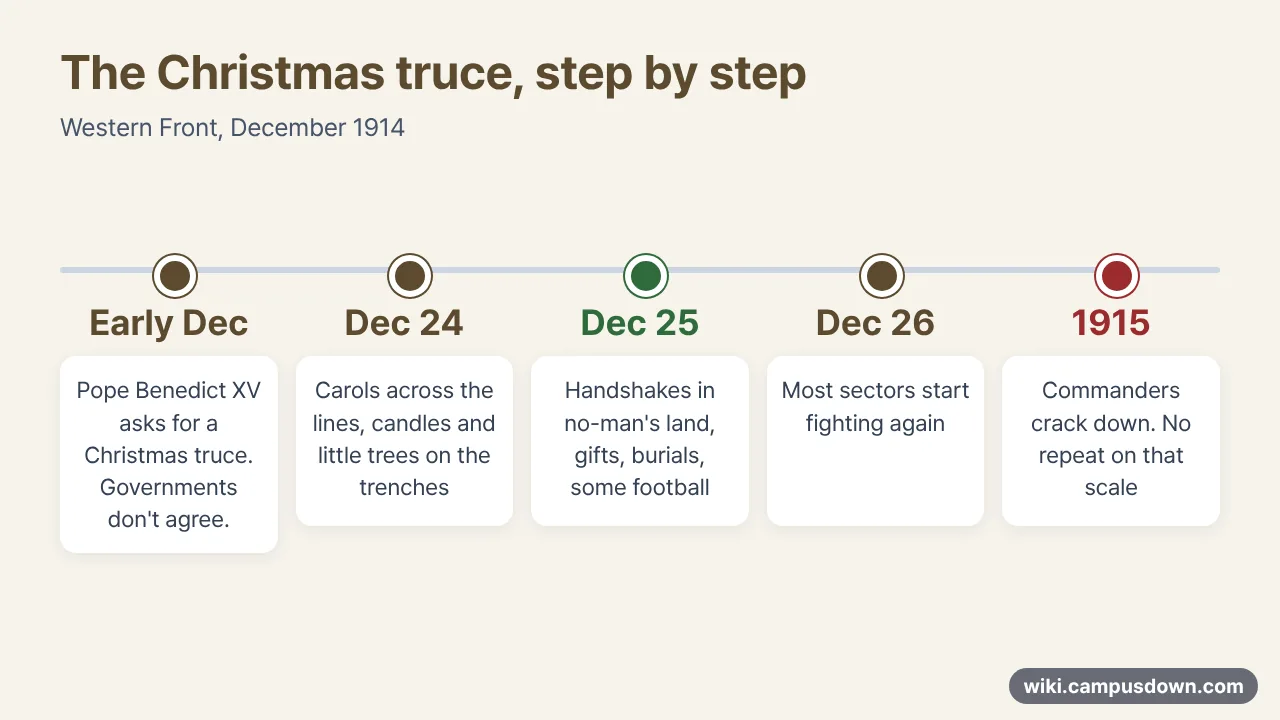
On Christmas Eve, British soldiers heard Germans singing carols and saw candles and small fir trees along the enemy trenches. People started shouting greetings across the gap.
The next day, soldiers met in no-man's land. They swapped cigarettes, food and souvenirs, took photos, and buried soldiers who had been killed. In some places they kicked a ball around. One veteran later said it was a kickabout with "at least a couple of hundred" people, not a proper match.
What's myth and what's not
It didn't happen everywhere. In other sectors the shooting went on, and soldiers were killed on Christmas Day. Earlier in December, Pope Benedict XV had called for an official Christmas truce, but the warring governments didn't agree to one.
Why it never happened again
Senior officers worried that friendly contact would kill the will to fight, and both high commands moved to stop it. By 1915 the war had turned nastier, with poison gas and huge losses, and nothing like the 1914 truce happened again on that scale.
FAQ
- When was the Christmas truce?
- Mainly on December 24 and 25, 1914. In a few places it lasted until New Year.
- Did the soldiers really play football?
- Yes, in some places, but these were informal kickabouts, not organized matches.
- Was it officially approved?
- No. It started with ordinary soldiers, and officers on both sides disliked it.
Sources reviewed: 2026-11-20
References
- Imperial War Museums. The Real Story of the Christmas Truce of 1914. Carols, trees, gifts, burials, football.
- National Army Museum. The Christmas Truce. Not one coordinated truce; diaries.
- Library of Congress, Headlines & Heroes. Good Will Toward Men: The Great War's Christmas Truce. The Pope's appeal; newspaper reports.