
Saturnalia was ancient Rome's December festival for the god Saturn: a holiday of no work, feasting, gift-giving, and masters and slaves swapping roles.
What if, for one week in December, school closed, everyone partied, and the class clown got to be in charge? Ancient Romans had exactly that festival.
What Saturnalia was
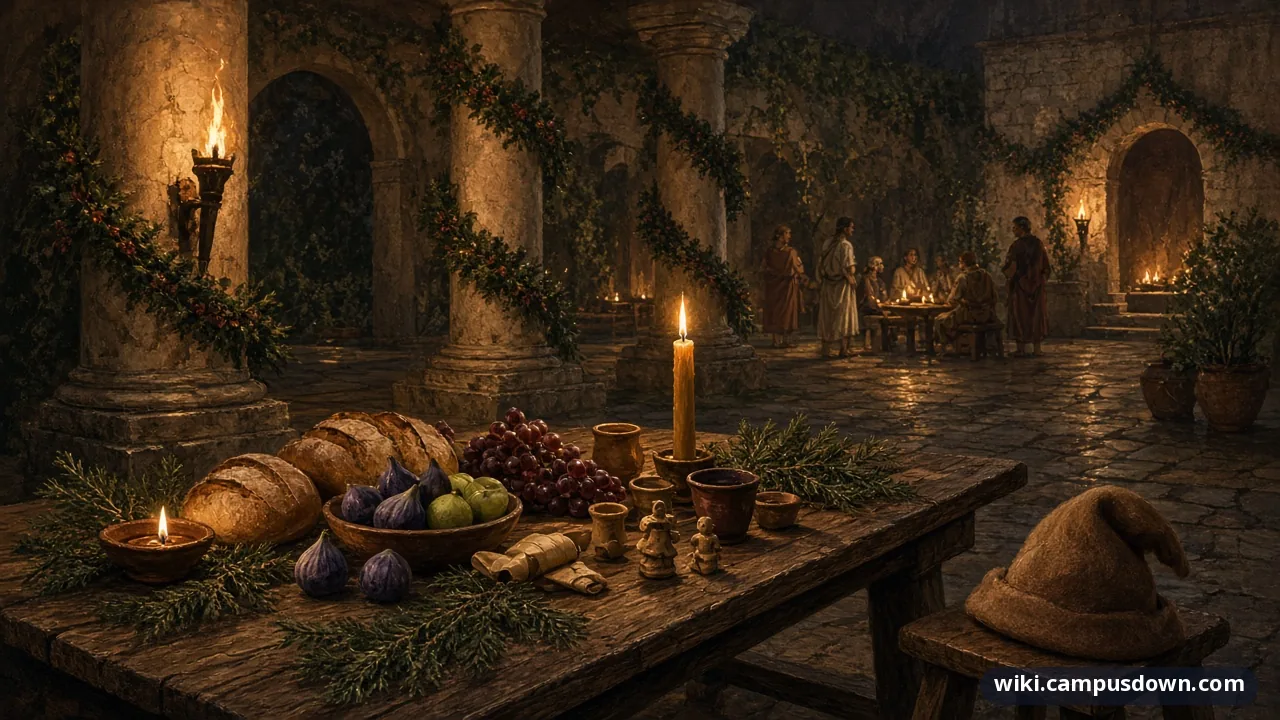
Saturnalia was a Roman festival for Saturn, an old farming god linked with sowing and with a legendary Golden Age. Britannica calls it the most popular of Roman festivals. It started on December 17 and grew from one day to as many as seven.

How Romans celebrated
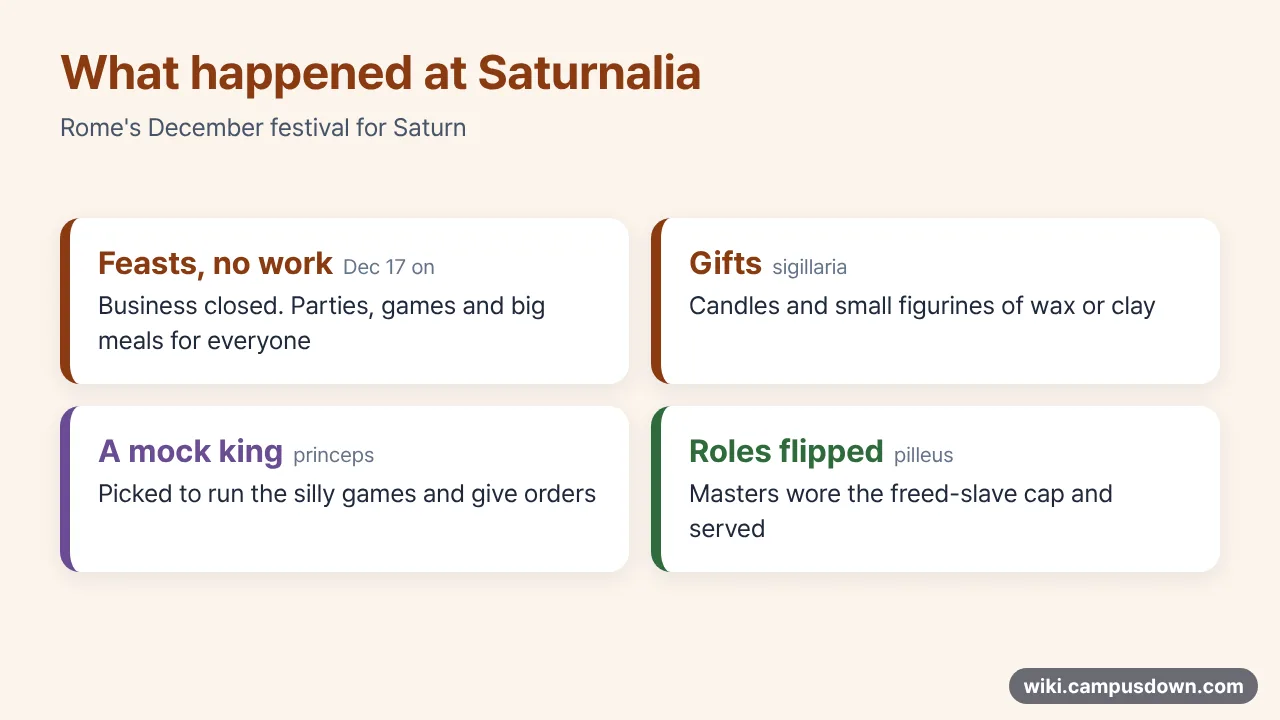
Work and business stopped. People swapped the formal toga for relaxed party clothes, feasted, gambled and shouted the greeting "Io Saturnalia!" in the streets.
The last days were called Sigillaria, after the gifts: candles and small figurines made of wax or clay. A mock king was chosen to lead the games.
The world turned upside down
The wildest part was role reversal. Enslaved people were allowed to speak freely and join in. Masters sometimes wore the pilleus, the felt cap of freed slaves, and waited on them at dinner. Some historians see it as a safety valve for a very strict society.
Is Christmas just Saturnalia?
Not exactly, but the overlap is real. Midwinter timing, gift-giving, candles, greenery and feasting all show up in both. Encyclopedias describe Saturnalia as influencing Christmas and New Year customs, while the two festivals have different religious meanings.
FAQ
- When was Saturnalia?
- It began on December 17 and usually ran to around December 23.
- What gifts did Romans give?
- Mostly candles and small wax or clay figurines, plus other small presents.
- What does "Io Saturnalia" mean?
- It's a festive shout, roughly "Hooray for Saturnalia!"
Sources reviewed: 2026-11-20
References
- Encyclopaedia Britannica. Saturnalia. Dec 17, length, Sigillaria, mock king, influence.
- World History Encyclopedia. Saturnalia. Dec 17–23, pilleus, role reversal, Catullus.