
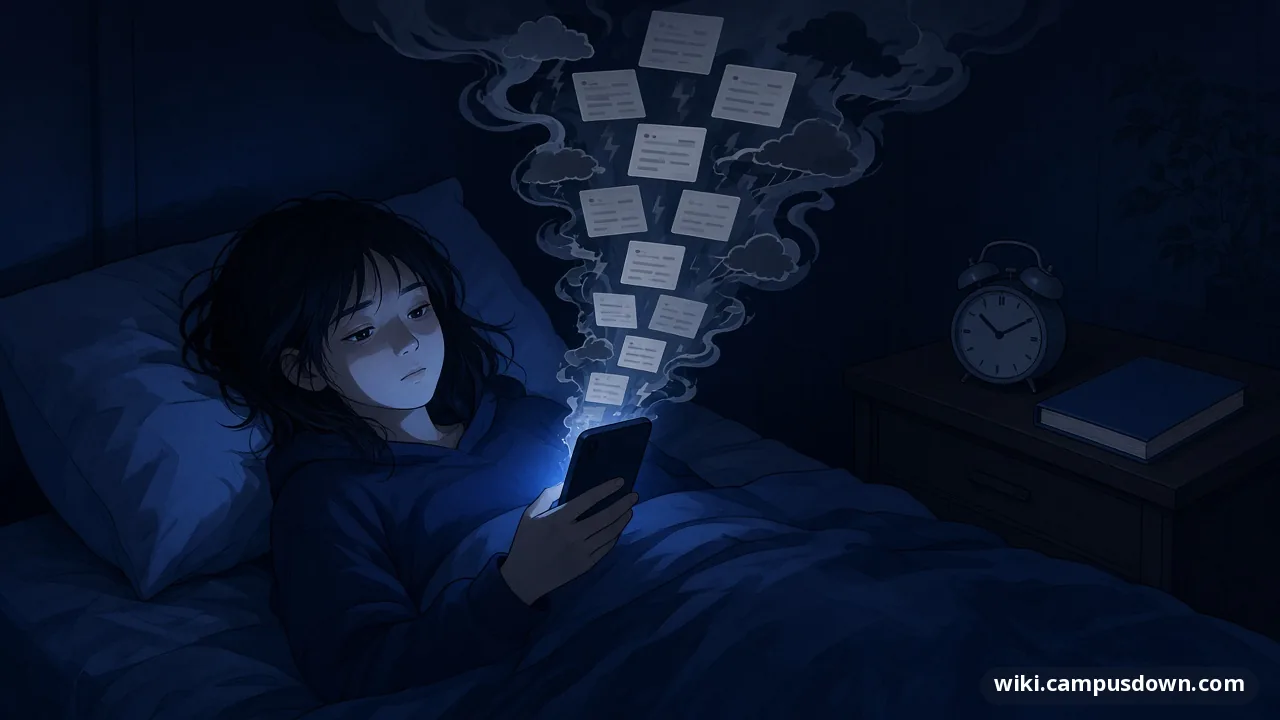
You open your phone to check one thing. Forty minutes later you're still reading terrible headlines, and you feel worse than when you started. Sound familiar?
What doomscrolling means
Doomscrolling is scrolling and scrolling through bad, scary or depressing news, even though it makes you feel worse. Its cousin is “doomsurfing.”

Where the word came from
Word historian David Wilton traces the earliest known use to a tweet on October 8, 2018, spelled “doom-scrolling.” It stayed niche for a while.
Then came March 2020. As the pandemic shut things down, a University of Michigan professor tweeted about “nervously doomscrolling,” and within ten days newspapers were using the word.
Why it's hard to stop
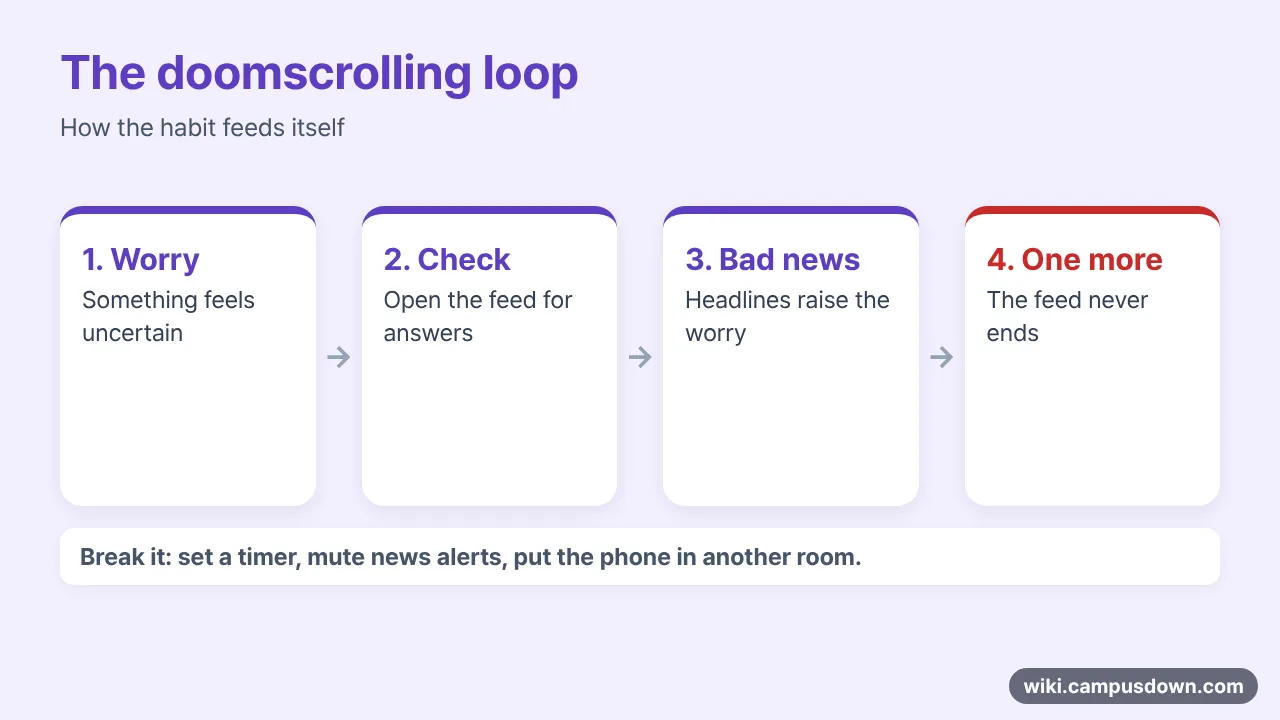
When the world feels uncertain, checking for news feels like doing something. But feeds don't have a bottom, so there's always one more post. NPR's advice is simple: notice when you're doing it, set limits, and swap in something that actually calms you down.
Small fixes that help
- Set a timer before you open news apps.
- Turn off breaking-news alerts you don't need.
- Keep the phone out of bed.
- Follow a few accounts that post good news too.
FAQ
- When did doomscrolling become a word?
- The earliest known use is an October 2018 tweet. It went mainstream in March 2020.
- Is doomscrolling the same as brain rot?
- No. Brain rot is about low-quality content; doomscrolling is about bad news.
- How do I stop?
- Set time limits, mute alerts, and keep your phone out of reach at night.
Sources reviewed: 2026-11-20
References
- Wordorigins.org (David Wilton). doomscroll / doomscrolling. Earliest known use Oct 8, 2018; spread in March 2020.
- NPR. Your Doomscrolling Breeds Anxiety. Here's How To Stop The Cycle. Why it feels hard to stop, and practical limits.