
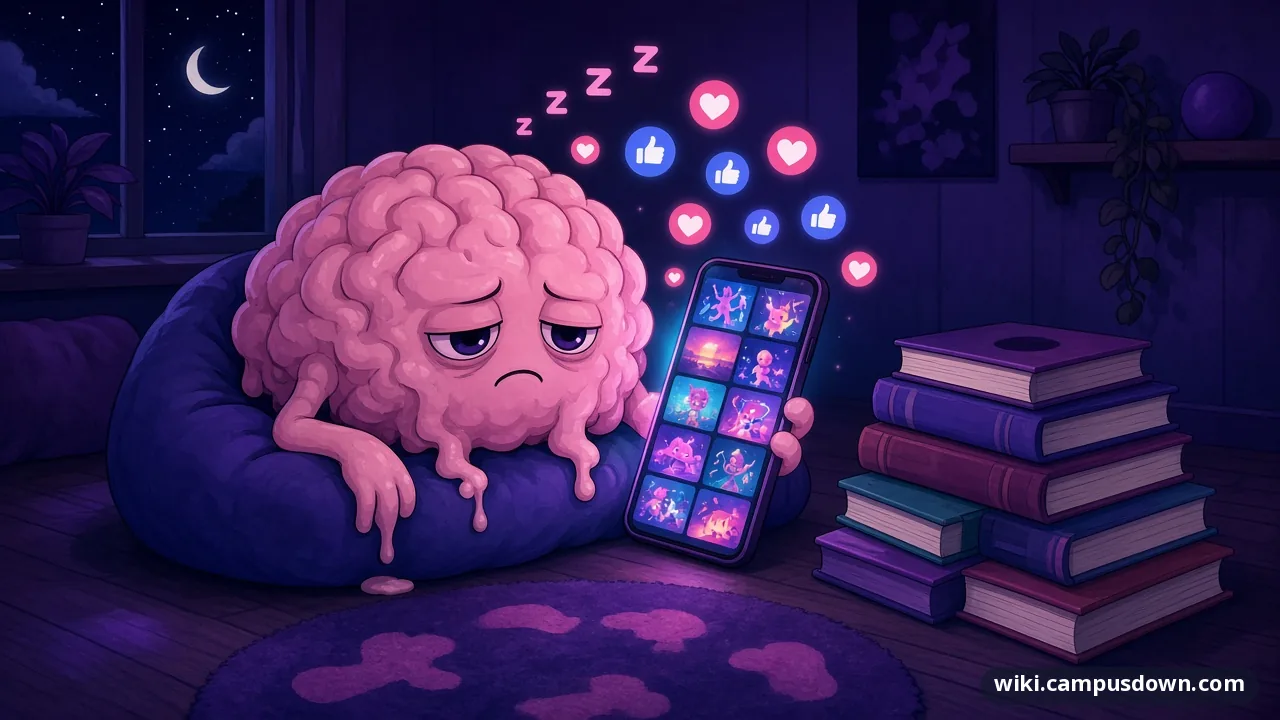
Ever closed an app after an hour and felt like your brain had turned into mush? There's a word for that, and Oxford picked it as the Word of the Year for 2024: brain rot.
What brain rot means
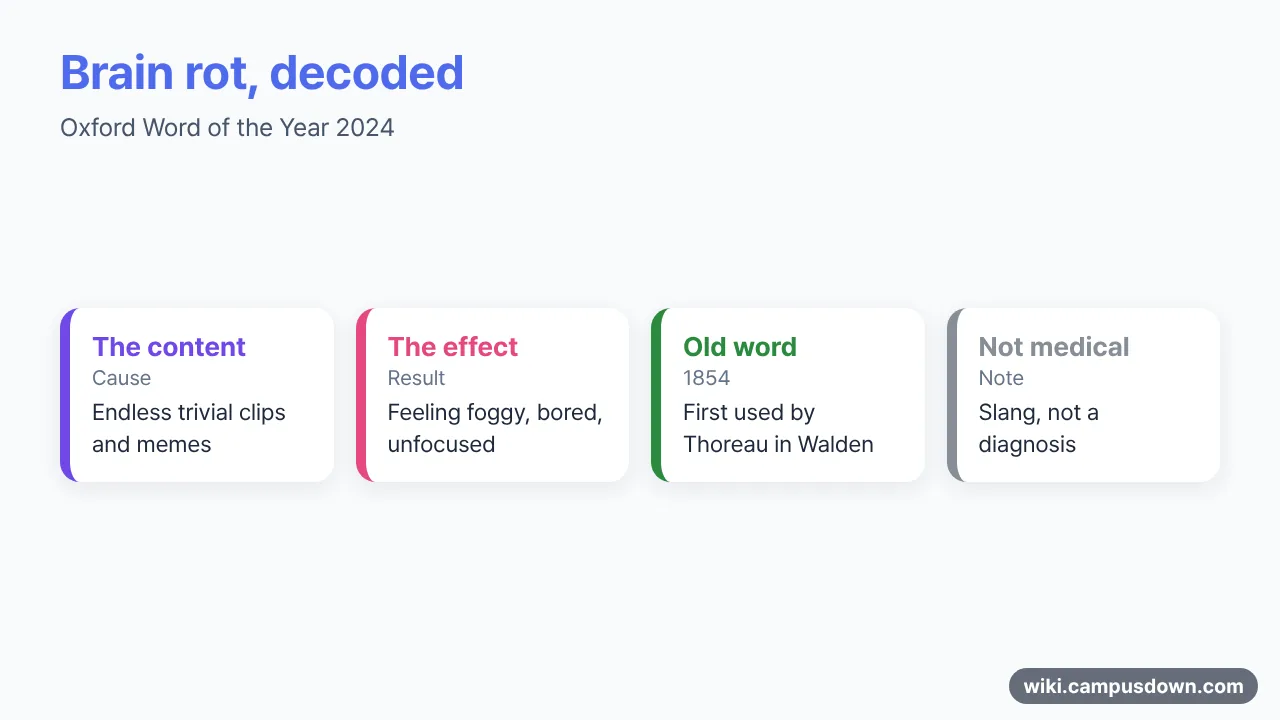
Oxford defines brain rot as "the supposed deterioration of a person's mental or intellectual state, especially viewed as the result of overconsumption of material (now particularly online content) considered to be trivial or unchallenging."
It also has a second meaning: the content itself. A video can be "pure brain rot."

Where it came from
The phrase is much older than TikTok. Its first recorded use is in Henry David Thoreau's Walden (1854). Thoreau asked why England worked so hard to cure the potato rot but not "the brain-rot," the habit of preferring simple ideas over complex ones.
How people use it now
Gen Z and Gen Alpha made it popular online, often jokingly and about themselves. Oxford linked it to viral content like the Skibidi Toilet video series and "only in Ohio" memes, which spun off their own "brain rot language," such as "skibidi" for nonsense.
Is brain rot real?
It's slang, not a medical diagnosis. Still, the word sits inside a serious conversation about screen time, attention and young people's mental health. If heavy scrolling leaves you drained, small fixes help: app timers, phone-free study blocks, or swapping one feed session for a walk or a book.
Related words
- Doomscrolling: scrolling bad news you can't stop reading
- AI slop: low-quality AI-generated content flooding feeds
- Rage bait: posts made to make you angry so you engage
FAQ
- Is "brainrot" one word or two?
- Oxford writes it as two words, "brain rot." Online you'll often see "brainrot."
- Who first used "brain rot"?
- Henry David Thoreau, in Walden (1854).
- What was Oxford's word before brain rot?
- "Rizz," the Word of the Year for 2023.
Sources reviewed: 2026-11-20
References
- Oxford University Press. 'Brain rot' named Oxford Word of the Year 2024. Definition, Thoreau and usage.
- Henry David Thoreau. Walden (Project Gutenberg). The 1854 "brain-rot" line, in the Conclusion.