
When something breaks, do you fix the part, or the reason it broke? The Five Whys is a simple method for finding that reason. You state the problem and ask "why did this happen?" Then you ask "why?" about the answer, and keep going, usually about five times, until you reach a cause you can actually fix.
How it works
A classic example from manufacturing:
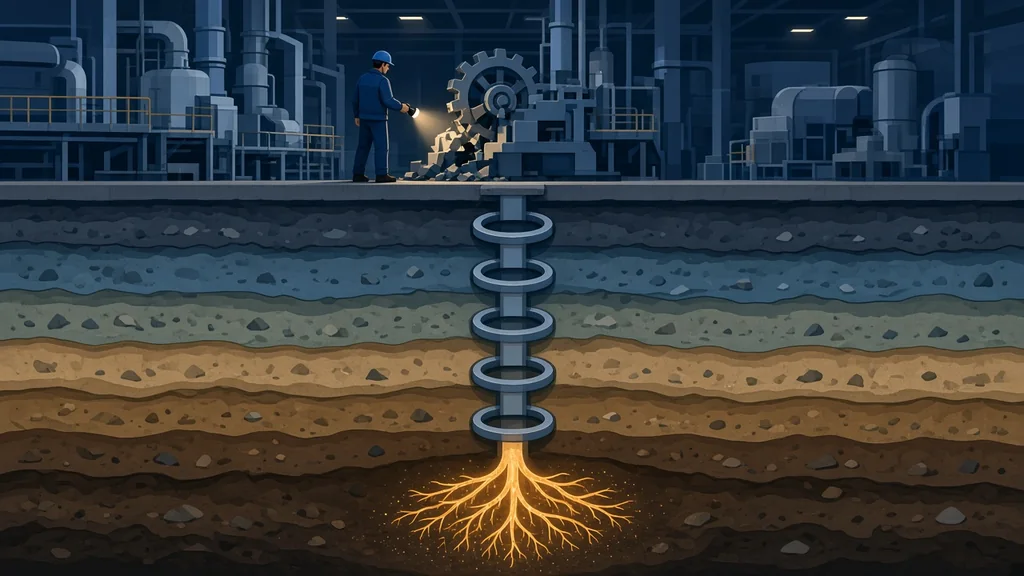
- The machine stopped. Why? The fuse blew because of an overload.
- Why an overload? The bearing was not lubricated enough.
- Why not? The lubrication pump was not pumping well.
- Why not? The pump shaft was worn.
- Why worn? There was no strainer, so metal scrap got in.
Replacing the fuse fixes the symptom. Adding a strainer fixes the root cause. This example is associated with Taiichi Ohno, the engineer who shaped the Toyota Production System and described the method in his writing on that system.
Key idea
"Five" is a rule of thumb, not a rule. The point is to keep asking until the answer is a process you can change, not a person to blame.

Origin
The technique grew out of Toyota, the company founded on the work of inventor Sakichi Toyoda. Ohno made it a standard practice: go to the actual place where the problem happened (gemba), look at the facts, and ask why repeatedly. It spread worldwide with lean manufacturing, quality management, and later software engineering.
US cases
- When and where
- 1984–2010, Fremont, California
- What happened
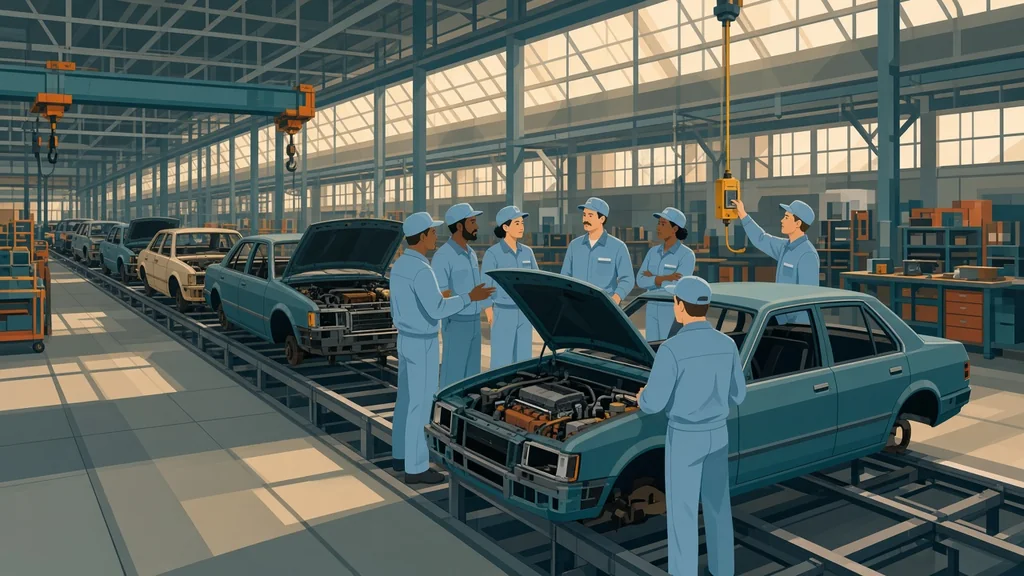
- General Motors and Toyota ran a joint venture called New United Motor Manufacturing, Inc. (NUMMI) in a former GM plant. Toyota trained the American workforce in the Toyota Production System, including stopping the line when a problem appears and asking why until the cause is found.
- Why it matters
- NUMMI became the best-known example of Toyota's problem-solving culture being transplanted into a US factory.
- When and where
- 2011, Silicon Valley
- What happened
- Entrepreneur Eric Ries, drawing on his experience at the startup IMVU, devoted a section of his bestselling book The Lean Startup to the Five Whys. He recommended using it after every failure and making a proportional investment in fixes at each level.
- Why it matters
- It carried the method from car plants into US tech companies, where it now appears in incident reviews and "postmortems."
Limits and criticisms
- Single chain: most problems have several causes; asking one chain of whys can miss them. Tools like fishbone diagrams list causes in parallel.
- Depends on knowledge: people can only answer why with what they know, so teams may stop at a convenient answer.
- Blame risk: done badly, the chain ends at "a person made a mistake." Good practice asks why the system allowed the mistake.
- Not reproducible: different teams asking the same question can reach different root causes.
Related concepts
The Five Whys is a core habit of the Toyota Production System and the lean startup method. It fits within improvement cycles such as PDCA, and the fixes it produces are often written as SMART goals.
Study material (Korean): 「도요타 생산방식 TPS, 8대 낭비 제거와 11가지 특징 정리」
Frequently asked questions
- Do you always have to ask why five times?
- No. Five is a guideline; stop when you reach a cause that you can act on and that would prevent the problem from recurring.
- Who invented the Five Whys?
- It developed at Toyota and is credited to Sakichi Toyoda and was made a standard practice by Taiichi Ohno.
- What is the main weakness of the Five Whys?
- It follows one chain of causes, so it can miss problems with several contributing causes.