
Your fingers go numb, then sting, then feel weirdly hard. That's not just “really cold.” It might be frostbite.
What frostbite is
Frostbite is when your skin freezes. The NHS says it can happen when skin is exposed to 0°C (32°F) or below. The ends of your body, like fingers, toes, nose and ears, get it most.
At first skin may feel cold and firm, numb, stinging or achy, and look red or pale. If it gets worse, skin can turn hard and white, blue or blotchy, swell, and blister.

What to do (and not do)
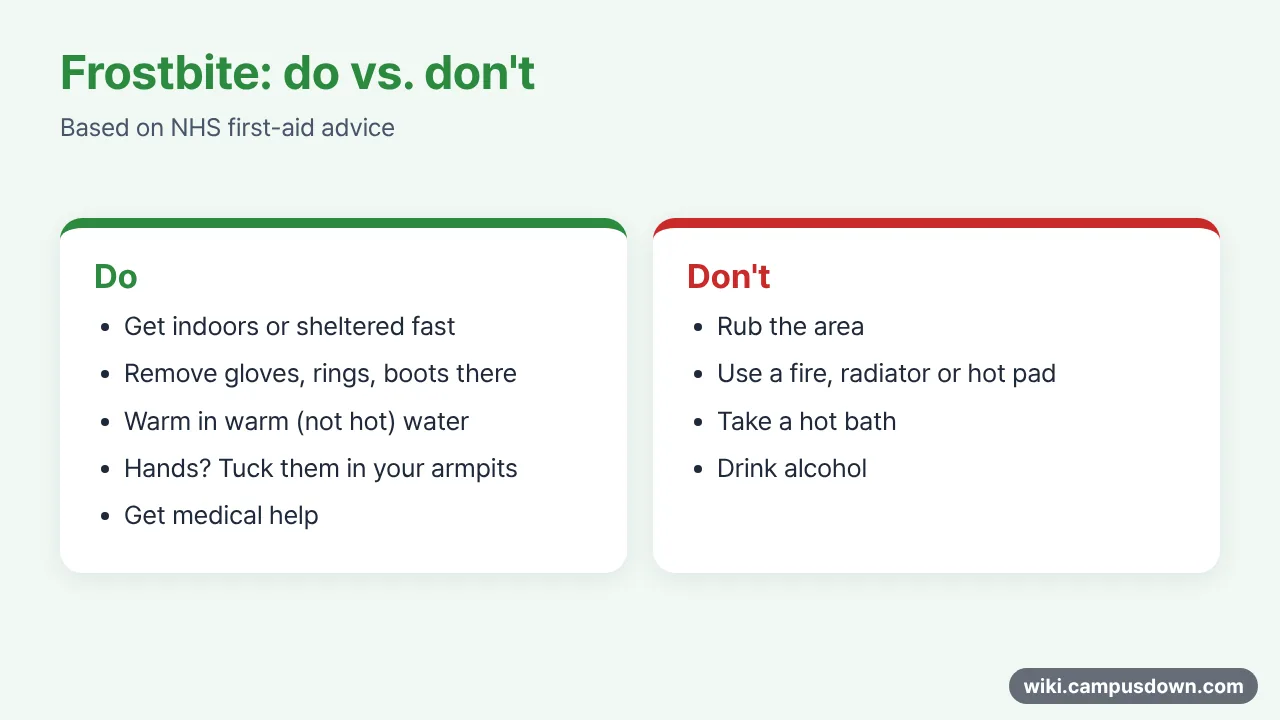
Get somewhere warm. Remove anything tight or wet from the area. Warm it gently, like hands in your armpits or the area in warm, not hot, water. Then get medical help.
Don't rub it, and don't use a fire, radiator or hot water bottle. Numb skin can't feel heat, so it can burn without you noticing.
Wind chill and frostbite
The US National Weather Service points out that frostbite needs the actual air temperature to be below freezing. Wind chill makes skin freeze faster when it's already below 0°C, but it can't cause frostbite on a day above freezing.
Prevent it
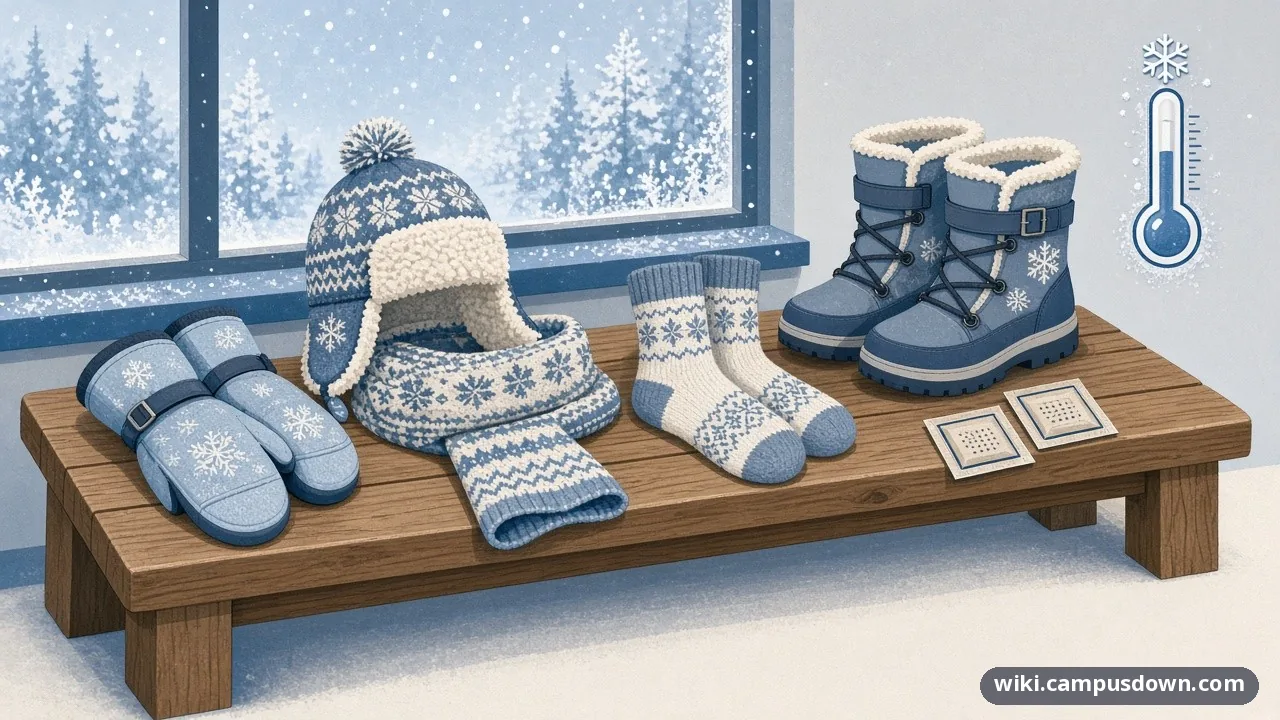
- Loose layers with a waterproof outer layer.
- A hat, a scarf and gloves or mittens.
- Thick socks and boots.
FAQ
- At what temperature can frostbite happen?
- At 0°C (32°F) or below, per the NHS.
- Should you rub frostbitten skin?
- No. Warm it gently instead.
- Can wind chill alone cause frostbite above freezing?
- No. The air itself has to be below freezing.
Sources reviewed: 2026-11-20
References
- NHS. Frostbite (reviewed June 2025). 0°C (32°F) or below; symptoms; do and don’t; when to call 999.
- Mayo Clinic. Frostbite: Symptoms and causes. Stages and risk factors.
- National Weather Service. Understanding Wind Chill. Frostbite needs actual air temperature below freezing.