
Want to see a shooting star without a telescope, an app, or much luck? Mid-December is your shot. The Geminids are one of the strongest meteor showers of the year, and you can watch them from a backyard, a rooftop or a dark field.
What the Geminids are
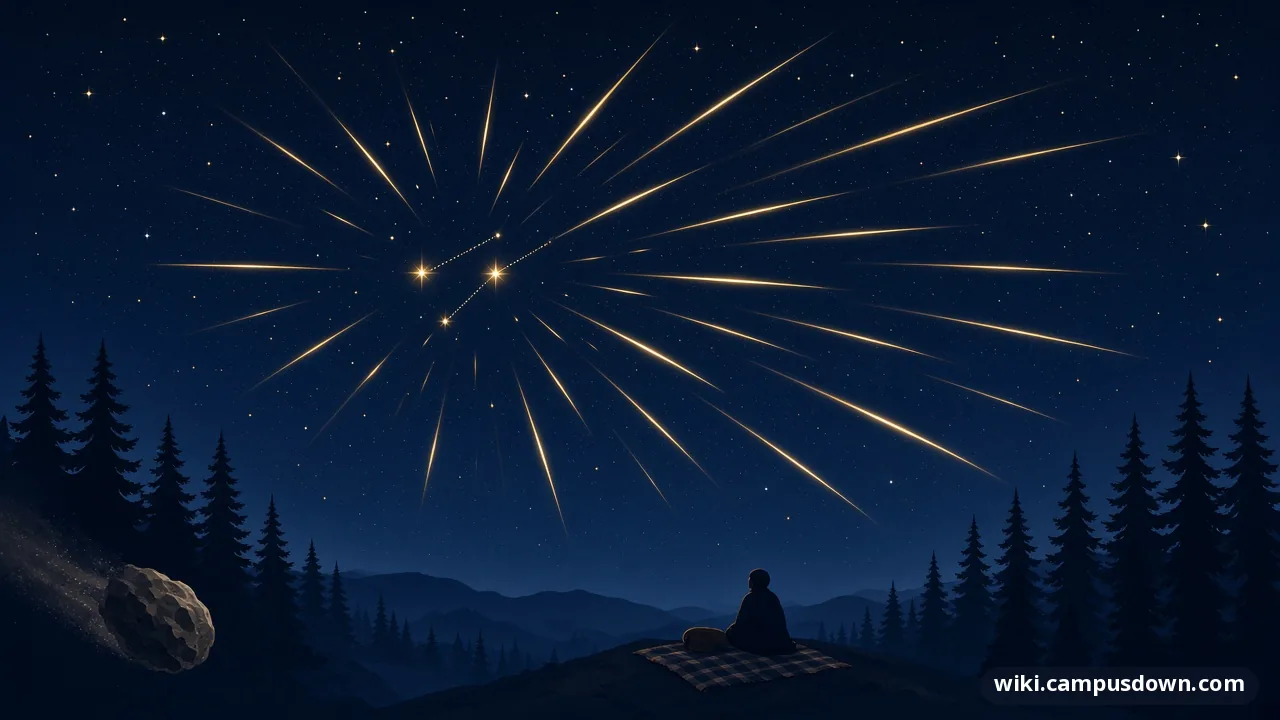
The Geminids are an annual meteor shower named for the constellation Gemini, the Twins. The streaks look like they shoot out from a point there, called the radiant. NASA calls the Geminids one of the best and most reliable showers of the year.

Geminids 2026 dates
- Active: December 4 to December 17, 2026
- Peak: the night of December 13–14
- Rate: NASA says to expect 40 to 50 meteors an hour under dark skies, and up to 120 an hour in perfect conditions
Why they come from an asteroid
Most meteor showers come from comets. The Geminids come from 3200 Phaethon, a small object about 5.1 km across that orbits the Sun every 1.4 years. Astronomer Fred Whipple linked it to the Geminids. NASA notes it may be a "dead comet" or a kind of object astronomers call a "rock comet."
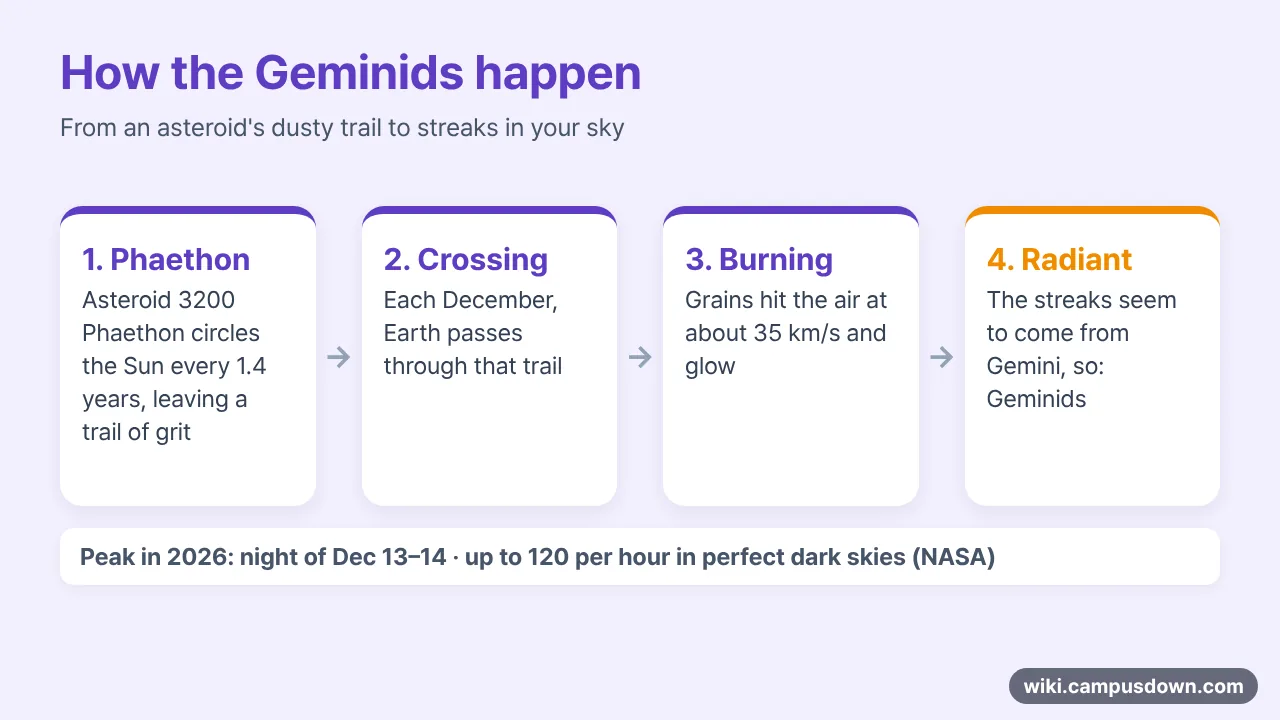
When Earth crosses Phaethon's debris, tiny grains slam into the upper atmosphere at about 35 km (22 miles) per second and heat up until they glow. Geminids are bright, fast and often yellowish.
A shower that grew up
The Geminids weren't always a big deal. NASA says they first showed up in the mid-1800s with only 10 to 20 meteors an hour. They've grown into one of the major showers since then.
How to watch
- Start after about 9 or 10 p.m. local time; the radiant climbs higher as the night goes on.
- Get away from streetlights and look at a wide patch of sky, not just at Gemini.
- Put your phone away and give your eyes about 20 to 30 minutes to adjust to the dark.
- Dress like it's colder than it is. You'll be still for a long time.
FAQ
- When is the best time to see the Geminids in 2026?
- The night of December 13–14, from late evening until dawn.
- Can you see the Geminids from the Southern Hemisphere?
- Yes, but Gemini sits lower there, so rates are usually lower than in the north.
- Do you need a telescope?
- No. Your eyes are best because meteors cross big parts of the sky.
Sources reviewed: 2026-11-20
References
- NASA Science. Geminids. 2026 dates, rates, speed and facts on 3200 Phaethon.
- American Meteor Society. Meteor Shower Calendar. Annual shower dates and viewing outlook.