
If you pull someone from a wrecked car or start CPR on a stranger and something goes wrong, can they sue you? Good Samaritan laws were written to answer that fear. Every US state has one, but they protect less, and differently, than many people assume.
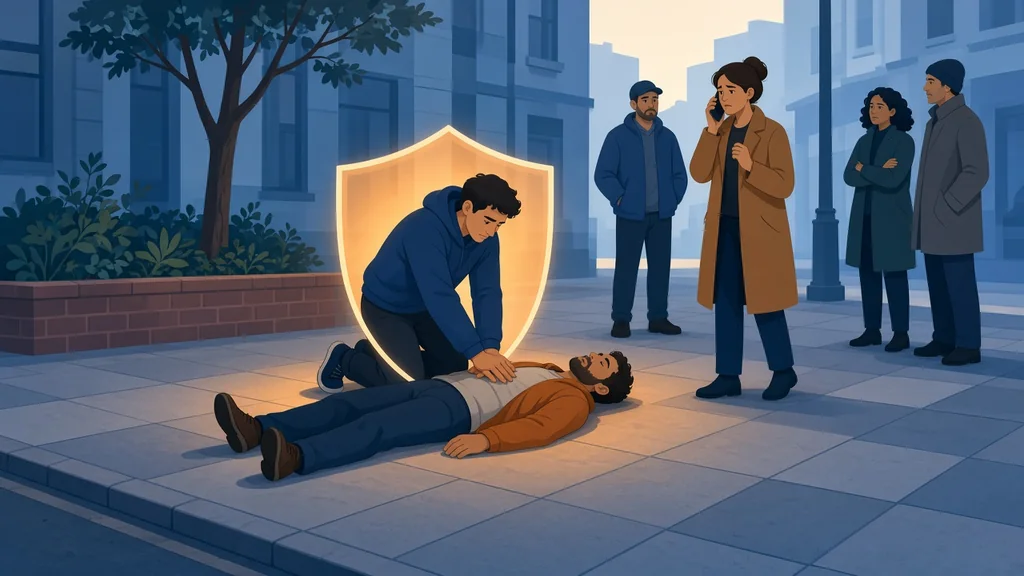
What the laws do
Good Samaritan laws protect people who, in good faith and without pay, give reasonable help to someone who is injured, ill or in danger. If the helper makes an honest mistake, the law limits or removes their liability for civil damages. Most versions do not protect gross negligence or reckless conduct.
All fifty states and the District of Columbia have some form of Good Samaritan law. Federal examples include the 1998 Aviation Medical Assistance Act, which covers people who help during a flight, and the Bill Emerson Good Samaritan Food Donation Act of 1996, which limits liability for donating food.

Not a duty to rescue
In most of the United States, a person with no special relationship to the victim has no legal duty to help at all. Good Samaritan laws protect those who choose to help; they do not require anyone to act. Minnesota, Vermont and Rhode Island are exceptions, because their statutes require people at the scene of an emergency to give reasonable assistance, such as calling for help.
Key idea
A Good Samaritan law is a shield for helpers, not an order to help. The duty to act exists only in a few states or in special relationships such as parent and child.
US cases
- When and where
- December 18, 2008, Supreme Court of California
- What happened
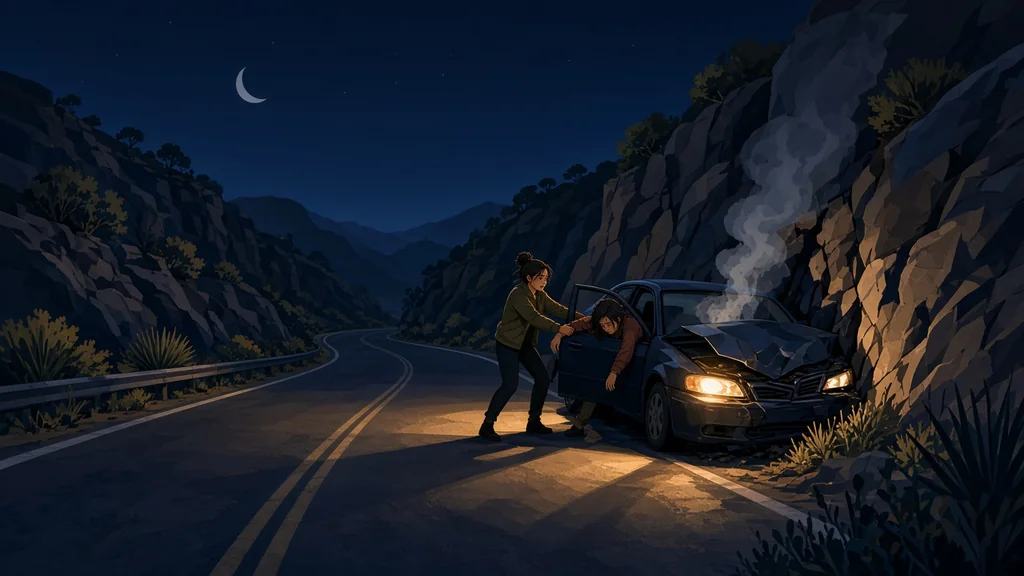
- After a crash on Topanga Canyon Boulevard in Los Angeles following a night of Halloween celebrations in 2004, Lisa Torti pulled her co-worker Alexandra Van Horn from the car, fearing it would catch fire or explode. Van Horn was left paraplegic and later sued, and the claim against Torti alleged that the rescue worsened her injuries. In a 4–3 decision written by Justice Carlos R. Moreno, the court held that California's Good Samaritan statute covered only emergency medical care, so Torti's nonmedical rescue was not immune.
- Why it matters
- The legislature responded with Assembly Bill 83, effective August 6, 2009, which amended Health and Safety Code section 1799.102 to protect people who give emergency medical or nonmedical care in good faith, unless they act with gross negligence or willful or wanton misconduct.
- When and where
- May 14, 1998, NBC
- What happened
- In the last episode of the sitcom, Jerry, George, Elaine and Kramer watch a carjacking in the fictional town of Latham, Massachusetts, make jokes instead of helping, and are arrested under a local law requiring bystanders to help. The show called it a "Good Samaritan law," although the law it described is really a duty to rescue. About 76.3 million viewers watched the original broadcast.
- Why it matters
- The episode is still the reason many Americans believe Good Samaritan laws require people to help, when most of them only protect those who do.
Criticisms
- Confusing and inconsistent: coverage differs by state, so many bystanders do not know whether they are protected.
- Gaps in protection: as the Van Horn case showed, narrow wording can leave ordinary rescuers exposed.
- Limited effect on behavior: some argue that fear of lawsuits is not the main reason bystanders hesitate, so the laws do little to change what people do.
Related concepts
The opposite question, when the law protects people who use force rather than help, is addressed by the castle doctrine and stand-your-ground laws. In a lawsuit against a rescuer, the plaintiff carries the burden of proof, which is lower in civil cases than the reasonable doubt standard used in criminal trials. The fight-or-flight response helps explain why some people freeze in an emergency while others rush in.
Study material (Korean): 「국내 응급의료체계의 구성 및 문제점 및 개선방안 핵심 내용 요약 정리」
Frequently asked questions
- What is a Good Samaritan law in simple terms?
- It is a law that protects people who help in an emergency from being sued for honest mistakes.
- Do Good Samaritan laws require you to help?
- Usually not. In most US states they only protect people who choose to help, though Minnesota, Vermont and Rhode Island require reasonable assistance.
- Can you be sued for performing CPR?
- You can be sued, but Good Samaritan laws in every state give strong protection to people who give reasonable help in good faith and without pay, unless they act with gross negligence.