
Why can someone be found not guilty in a criminal trial yet still be held responsible in a civil case for the same act? The answer lies in the standard of proof. In American criminal courts, the prosecution must prove guilt "beyond a reasonable doubt," the highest standard the legal system uses.
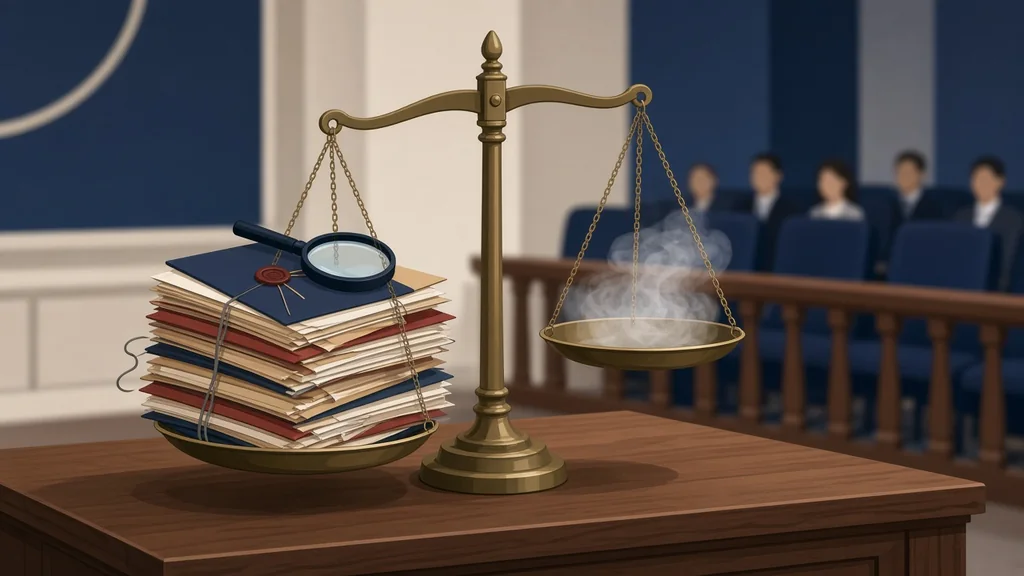
Definition
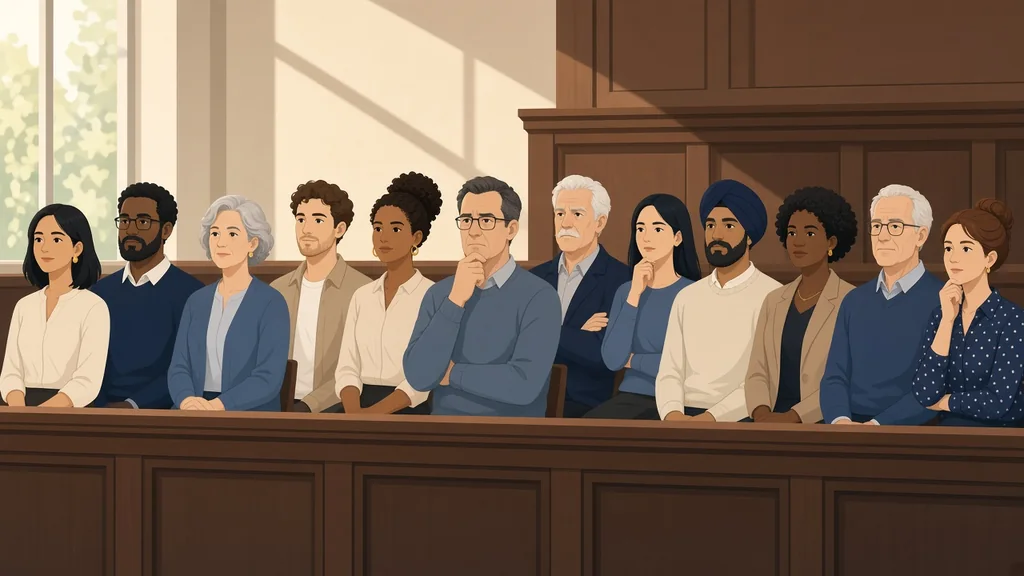
Beyond a reasonable doubt means the evidence must be so convincing that no reasonable doubt about the defendant's guilt remains in the mind of a reasonable juror. It does not require certainty or proof beyond all possible doubt. It works together with the presumption of innocence: the defendant does not have to prove anything, and if the jury has a reasonable doubt, it must acquit.
Key idea
Reasonable doubt is a deliberately high bar. The US legal tradition accepts that some guilty people will go free in order to reduce the risk of convicting innocent ones.

Comparing standards
Civil cases usually use the "preponderance of the evidence" standard, meaning more likely than not. Some matters use a middle standard, "clear and convincing evidence." Most courts refuse to put a number on reasonable doubt, and the US Supreme Court has said attempts to define it often do not make it clearer to juries. Studies show that ordinary people vary widely in the probability they associate with the phrase.
US cases
- When and where
- 1970, US Supreme Court (case from New York Family Court)
- What happened
- In 1967 a New York Family Court judge found that a 12-year-old boy had stolen $112 from a woman's pocketbook, applying the lower preponderance standard. In an opinion by Justice William Brennan, the Court held that the Due Process Clause requires proof beyond a reasonable doubt of every fact necessary to constitute the crime charged, including when a juvenile is charged with an act that would be a crime for an adult.
- Why it matters
- Winship made the standard a constitutional requirement in every state and rejected the use of the preponderance standard in criminal cases.
- When and where
- 1995–1997, Los Angeles County, California
- What happened
- After an eight-month trial, a criminal jury acquitted Simpson of the 1994 murders of Nicole Brown Simpson and Ron Goldman on October 3, 1995. In 1997 a civil jury, applying the lower preponderance standard, found him liable for the deaths and awarded $33.5 million in damages.
- Why it matters
- The two verdicts are the best-known American illustration of how different standards of proof can lead to different outcomes from the same events.
Criticisms
- Vague: without a definition, jurors may apply very different thresholds.
- Historical twist: Yale law professor James Q. Whitman argues the phrase was originally meant to ease jurors' moral worries about convicting, not to make conviction harder.
- Not a shield in practice: DNA exonerations show that convictions can still happen when evidence such as eyewitness testimony is wrong.
Related concepts
Reasonable doubt is the criminal version of the burden of proof, and prosecutors must also prove intent elements such as mens rea. Evidence gathered illegally can be excluded under the fruit of the poisonous tree doctrine. Self-defense laws like the stand your ground law change what the prosecution must disprove, and jurors' reasoning can be affected by confirmation bias.
Study material (Korean): 「사회복지개론: 영화 12명의 배심원으로 본 다문화가정 아동의 문제점과 해결방안」
Frequently asked questions
- What does beyond a reasonable doubt mean in simple terms?
- The evidence must be so strong that a reasonable person would have no real doubt the defendant committed the crime.
- Is reasonable doubt the same as 100 percent certainty?
- No. It does not require absolute certainty, but it is the highest standard of proof used in US courts.
- Why was O.J. Simpson acquitted but later found liable?
- The criminal trial required proof beyond a reasonable doubt, while the civil trial used the lower preponderance of the evidence standard.