
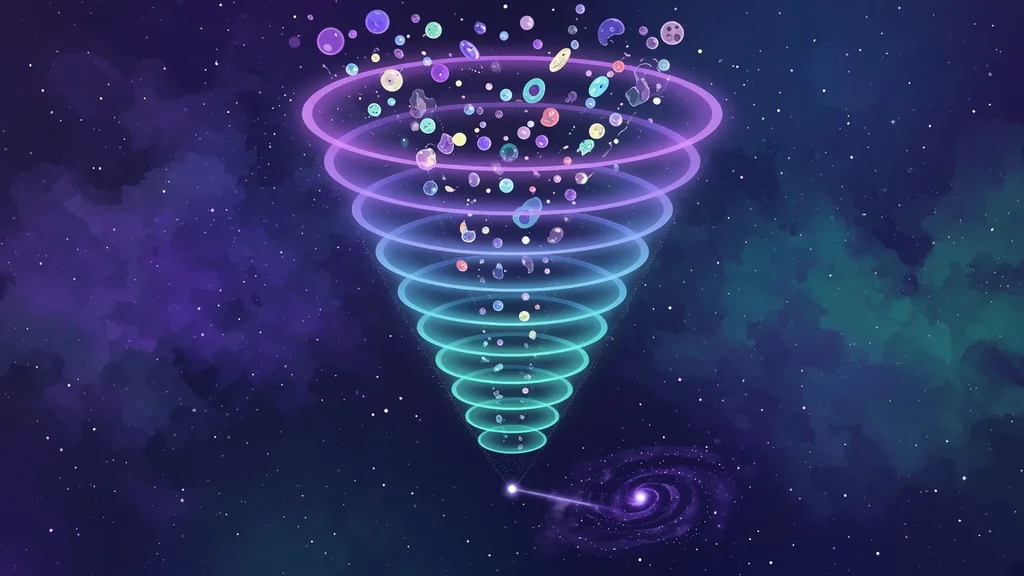
The universe is old and vast, so why don't we see anyone else out there? One unsettling answer is the Great Filter: somewhere between dead chemistry and a civilization that spreads across the galaxy, there is a step so hard that almost nothing gets through. The big question is whether humanity has already passed it, or whether it still lies ahead.
The argument
The economist Robin Hanson, now at George Mason University in Virginia, laid out the idea in a 1996 essay. He started from the Fermi paradox: if technological life were common, some civilizations should have colonized large parts of the galaxy, leaving visible signs. We see none. So the path from a lifeless planet to an expanding civilization must include at least one extremely improbable step. Hanson listed possible steps:
- the right star system and planet;
- the origin of self-replicating molecules;
- simple single-celled life;
- complex cells;
- sexual reproduction and multicellular life;
- tool-using animals with big brains;
- an advanced technological civilization;
- colonization of space without self-destruction.
Key idea
If the hard step is behind us, we are rare and lucky. If it is ahead of us, most civilizations die before spreading, and we probably will too.

Why finding life on Mars could be bad news
This leads to a famous twist. If scientists found simple life that evolved independently on Mars, that would suggest life's early steps are easy. The filter would then more likely lie in later steps, possibly including the future. The philosopher Nick Bostrom made this point in a 2008 essay for MIT Technology Review titled "Where Are They?", saying he hoped the search would find nothing.
US cases
- When and where
- 1996, posted online by Robin Hanson
- What happened
- Hanson published "The Great Filter – Are We Almost Past It?" on his website and later hosted it at George Mason University. It framed the alien question as a chain of probabilities and asked which steps were most implausible.
- Why it matters
- The essay gave a name to a debate that now shapes discussion of existential risk in American universities and think tanks.
- When and where
- 2021–present, Jezero Crater, Mars
- What happened
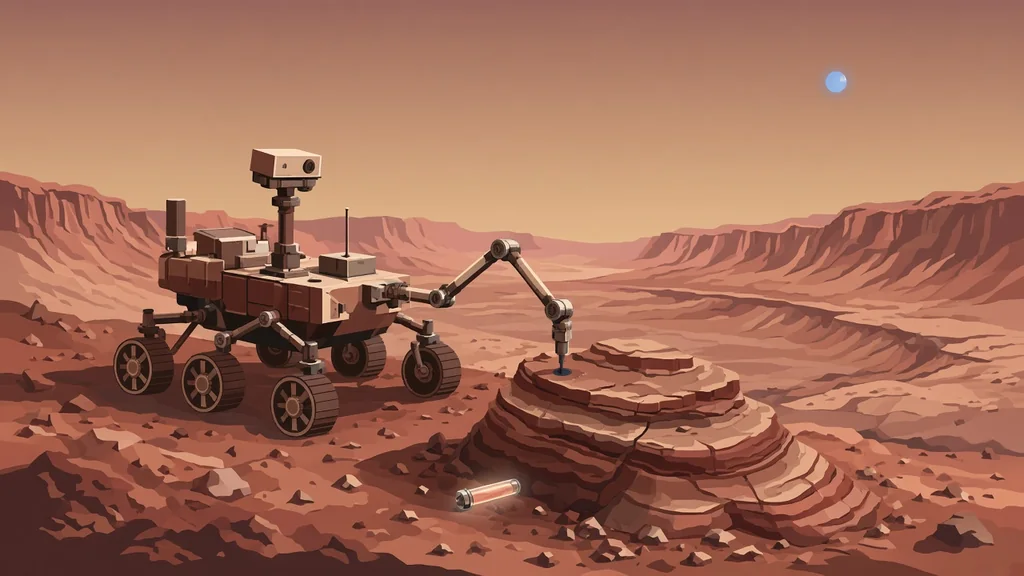
- NASA's Perseverance rover landed in a former lake bed and has been collecting rock samples to look for signs of ancient microbial life.
- Why it matters
- Its results bear directly on the Great Filter: evidence of an independent origin of life would push the hard steps later in Hanson's list.
Criticisms
- We may not see them: aliens could be quiet, far away, or uninterested in expansion, as the dark forest hypothesis suggests.
- Uncertain numbers: we have one example of life, so estimates of each step are guesses, much like terms in the Drake equation.
- Many small filters: the barrier could be several moderately hard steps rather than one huge one.
- Selection effects: we can only ask the question because we exist, a point related to the anthropic principle.
Related concepts
Past filters may include events like the mass extinctions in Earth's history. Future filters are discussed as existential risks, from nuclear war to engineered pandemics.
Study material (Korean): 「과학기술과 외계, 생명체 관련 핵심 내용 요약 정리」
Frequently asked questions
- What is the Great Filter in simple terms?
- It is the idea that some step on the way from lifeless matter to space-faring civilization is so hard that almost no life makes it, which would explain why we see no aliens.
- Has humanity passed the Great Filter?
- No one knows. If the hard step was the origin of life or complex cells, we may be past it; if it is self-destruction, it may lie ahead.
- Why would finding life on Mars be bad news?
- It would suggest early life is common, making it more likely the filter lies later, possibly in our future.