
Why do financial booms often end not with a gentle slowdown but with a sudden panic? Economists often answer with the idea of a Minsky moment. The phrase is common in American financial news whenever markets fall sharply after years of cheap credit.

Hyman Minsky's idea
Hyman Minsky (1919–1996) was an American economist who taught at Brown University, the University of California, Berkeley and, from 1965, Washington University in St. Louis. In books such as John Maynard Keynes (1975) and Stabilizing an Unstable Economy (1986), he argued that stability itself breeds instability. When times are good for long enough, lenders and borrowers feel safe and take on more debt.
He described three kinds of borrowers:
- Hedge borrowers can pay both interest and principal from their income.
- Speculative borrowers can pay the interest but must keep refinancing the principal.
- Ponzi borrowers cannot pay even the interest from income and rely on rising asset prices to refinance or sell.
Key idea
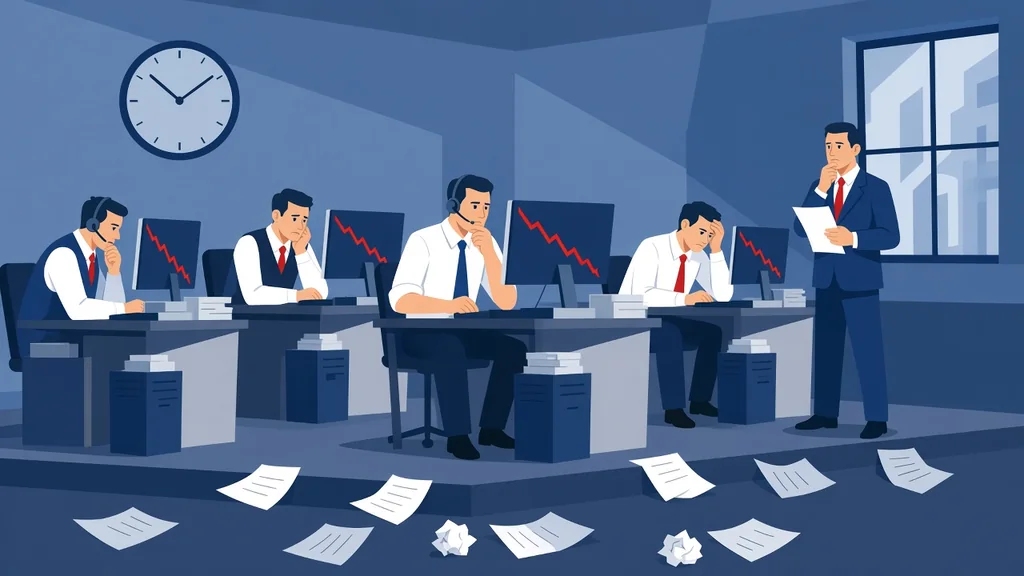
A Minsky moment is the point where this chain breaks: falling asset prices force borrowers to sell assets to meet debts, which pushes prices down further. It is not a prediction of the exact date of a crash, but a description of how debt-financed booms become fragile.

US cases
- When and where
- 1998, PIMCO, United States
- What happened
- The American economist Paul McCulley of the bond investment firm PIMCO coined the phrase "Minsky moment" in 1998 to describe the Russian financial crisis, naming it after Hyman Minsky, who had noted that bankers, traders and other financiers periodically behave like arsonists, setting the economy ablaze.
- Why it matters
- The label stuck because it gave investors a short way to describe sudden reversals after periods of easy credit.
- When and where
- June–July 2007, New York City
- What happened
- On June 22, 2007, the Wall Street investment bank Bear Stearns pledged a collateralized loan of up to $3.2 billion to bail out one of its two subprime-related hedge funds. During the week of July 16, 2007, it disclosed that the two funds had lost nearly all of their value amid a rapid decline in the market for subprime mortgages. McCulley later dated the Minsky moment of the 2008 financial crisis to August 2007, while others point to earlier events such as the June 2007 failure of the two Bear Stearns funds.
- Why it matters
- The episode is often treated as an early sign of the crisis that followed in 2008. The exact starting date shows how subjective the label can be.
Criticisms
Minsky's work was largely ignored by mainstream economics for decades until the 2008 subprime crisis renewed interest in it, and his theories have not been fully incorporated into central bank policy. Critics say the term Minsky moment is used loosely for almost any market crash, even those not driven by debt cycles. Others note that the idea does not predict timing, so it cannot guide investors or regulators on exactly when to act. Supporters respond that the point is to watch rising leverage and risk taking, not to forecast a date.
Related concepts
Minsky's wider model is called the financial instability hypothesis, and the collapse that follows is often described as debt deflation. Minsky drew on Keynesian economics, which stresses the role of demand and uncertainty. His view contrasts with the efficient market hypothesis, which treats prices as reflecting available information, and with the greater fool theory, which explains why investors buy overpriced assets.
Study material (Korean): 「경기 침체 대응 재정정책과 통화정책, 글로벌 금융위기 IMF」
Frequently asked questions
- What is a Minsky moment?
- A sudden, large collapse in asset values after a long boom financed by growing debt.
- Who coined the term Minsky moment?
- Paul McCulley of PIMCO coined it in 1998 and named it after the economist Hyman Minsky.
- Did a Minsky moment cause the 2008 financial crisis?
- Some analysts, including McCulley, describe the start of the crisis as a Minsky moment, but economists disagree on the exact date and on how much weight the idea deserves.