
Why doesn't your hand pass straight through a table when atoms are mostly empty space? Part of the answer is a rule of quantum mechanics with consequences from chemistry class to collapsed stars: the Pauli exclusion principle.
Definition
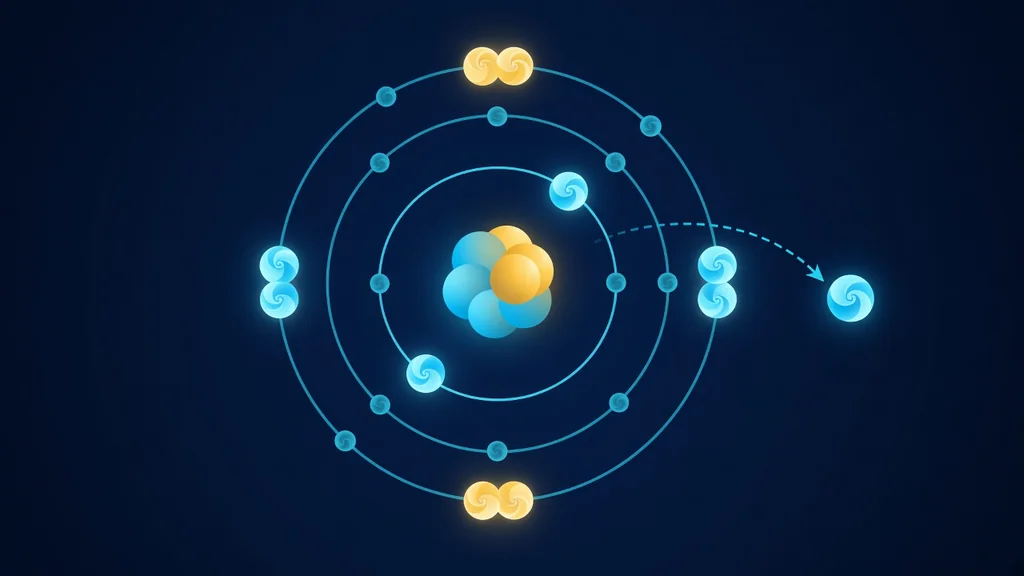
The Pauli exclusion principle states that two identical fermions cannot occupy the same quantum state at the same time. Fermions are particles with half-integer spin, including electrons, protons and neutrons. Bosons, such as photons, do not follow the rule, which is why many photons can share a state in a laser beam. In an atom, each electron is described by a set of quantum numbers, and no two electrons can have the same full set. As a result, at most two electrons, with opposite spins, fit in each orbital.
Key idea
The exclusion principle is why atoms have structure. Electrons cannot all pile into the lowest energy level, so they fill shells, and that filling pattern produces the periodic table and chemical bonding.

History
American chemists helped set the stage. Gilbert N. Lewis proposed electron shells with stable groups of eight, and in 1919 Irving Langmuir suggested that clustered electrons could explain the periodic table. Austrian physicist Wolfgang Pauli formulated the exclusion principle for electrons in 1925 and in 1940 related it to the spin–statistics theorem, which explains why fermions obey it.
US cases
- When and where
- 1940–1946, Princeton, New Jersey
- What happened
- Pauli moved to the United States in 1940 and became professor of theoretical physics at the Institute for Advanced Study. In 1945, after being nominated by Albert Einstein, he received the Nobel Prize in Physics "for the discovery of the Exclusion Principle, also called the Pauli Principle."
- Why it matters
- Pauli became a naturalized US citizen in 1946, and his prize recognized the principle as one of the foundations of modern physics.
- When and where
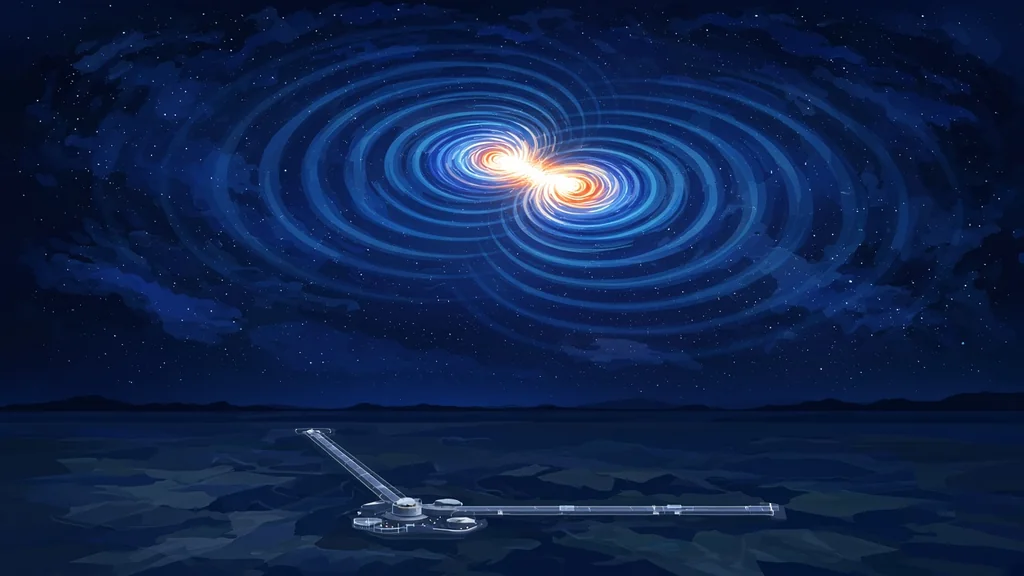
- August 17, 2017, LIGO detectors in Hanford, Washington, and Livingston, Louisiana, with Europe's Virgo
- What happened
- Detectors recorded gravitational waves from two neutron stars spiraling together about 134 million light-years away, and telescopes saw the resulting explosion. Neutron stars are held up against gravity mainly by neutron degeneracy pressure, which arises from the exclusion principle.
- Why it matters
- The event let scientists test the physics of the densest matter known, matter that exists only because fermions refuse to share states.
Misunderstandings
- "It is a force": the exclusion principle is not a force like electromagnetism, although it produces effects that act like pressure.
- "It applies to all particles": it applies only to fermions, not to bosons such as photons.
- "Touching is only electric repulsion": electric repulsion plays a role, but the stability and size of ordinary matter also depend on the exclusion principle.
Related concepts
The principle is part of quantum mechanics and works together with the uncertainty principle in setting atomic size. It explains why stars can end as white dwarfs or neutron stars instead of collapsing straight into a black hole. Electrons also show wave–particle duality, and their attraction to the nucleus follows Coulomb's law.
Frequently asked questions
- What is the Pauli exclusion principle in simple terms?
- Two identical particles like electrons cannot be in exactly the same quantum state at the same time, so they must spread out into different states.
- Why is the Pauli exclusion principle important?
- It explains the structure of atoms, the periodic table, chemical bonds and why dense stars like white dwarfs and neutron stars do not collapse.
- Does the Pauli exclusion principle apply to photons?
- No. Photons are bosons, and any number of them can share the same state.