
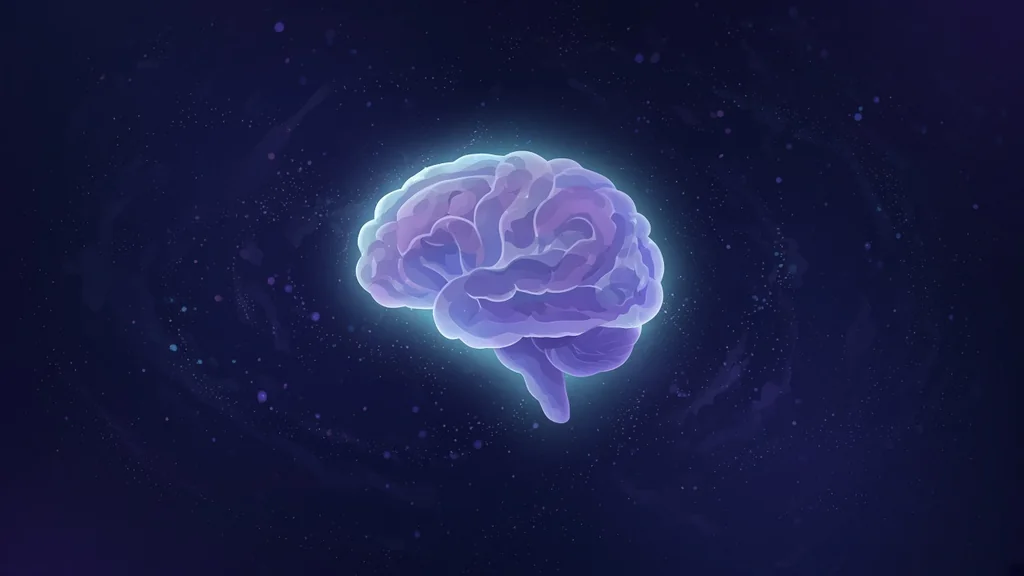
What if you are not a person living on a planet, but a lone brain that flickered into existence a moment ago, complete with false memories? That unsettling idea is called a Boltzmann brain, and it is taken seriously by cosmologists, not as something they believe, but as a test that good theories should pass.
Where the idea comes from
In the 1890s the Austrian physicist Ludwig Boltzmann wondered why the universe has such low entropy, that is, so much order. One answer he discussed was that the cosmos is mostly in disordered equilibrium, and our ordered region is a rare random fluctuation. Over endless time, even very unlikely fluctuations happen.
Later physicists noticed a problem. A small fluctuation is vastly more likely than a large one. If observers come from random fluctuations, the typical observer should not be a whole galaxy full of people but the smallest thing that can think: a single brain, briefly formed in empty space. In 2004 the cosmologists Andreas Albrecht and Lorenzo Sorbo gave such minds the name "Boltzmann brains."

Why it matters for cosmology
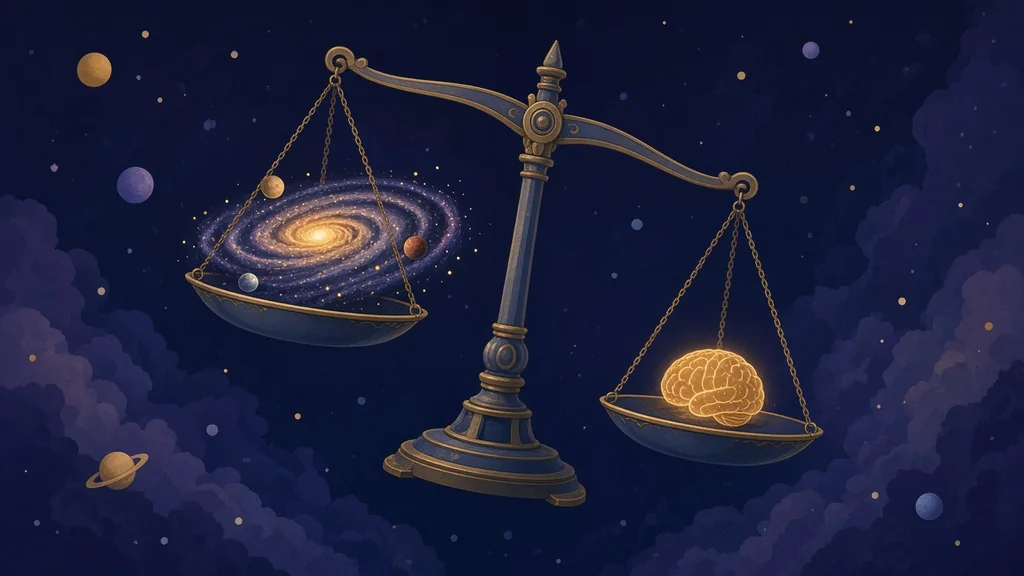
Some models of the far future predict that the universe will last forever as a nearly empty space with a small amount of energy, where quantum or thermal fluctuations keep occurring. Over infinite time, such models may predict far more Boltzmann brains than ordinary observers like us. If so, the theory says we are most likely Boltzmann brains, which conflicts with everything we observe.
Key idea
The Boltzmann brain is a reductio: if a theory predicts that most observers are random brains, most physicists take that as a reason to doubt the theory, not to doubt their own existence.
US cases
- When and where
- 2004, University of California, Davis
- What happened
- Andreas Albrecht, a cosmologist at UC Davis, and Lorenzo Sorbo published "Can the universe afford inflation?" in Physical Review D. They compared how likely different routes to our universe are and used the term "Boltzmann brains" for the cheapest possible observers.
- Why it matters
- The paper turned a 19th-century speculation into a working test for modern theories of cosmic inflation.
- When and where
- 2017, Caltech
- What happened
- Sean Carroll, a physicist at the California Institute of Technology, argued in a widely read paper that theories dominated by Boltzmann brains are "cognitively unstable." If you believed such a theory, you would have to conclude that your own memories and the data supporting the theory are probably random, so the theory undermines itself.
- Why it matters
- It gave a clear argument for why physicists treat Boltzmann brains as a bug in a model rather than a serious worldview.
Criticisms and debates
- Measure problem: comparing numbers of observers in an infinite universe is tricky, and different counting rules give different answers.
- Physics of the far future: some physicists argue that a stable, empty universe would not actually produce the kind of fluctuations needed, so the worry may not arise.
- Philosophical worries: critics say reasoning from what a "typical observer" should see relies on assumptions that are themselves debated.
Related concepts
The idea draws on the laws of thermodynamics and the Big Bang model, and it is closely linked to the anthropic principle, which also reasons from the fact that observers exist. Quantum fluctuations come from quantum mechanics. For a different way of doubting experience, compare the simulation hypothesis and solipsism.
Study material (Korean): 「리프킨 엔트로피 독후감, 엔트로피 법칙과 세계관」
Frequently asked questions
- Do scientists believe Boltzmann brains exist?
- No. They use the idea as a consistency check; a theory that predicts mostly Boltzmann brains is considered flawed.
- Why is it named after Boltzmann?
- Ludwig Boltzmann proposed that our ordered universe could be a rare random fluctuation, which is the reasoning that leads to the paradox.
- Is a Boltzmann brain the same as the simulation hypothesis?
- No. Both question whether our experiences are reliable, but a Boltzmann brain arises from random physics, not from a designed computer simulation.