
What is your earliest memory, and how old were you? For most adults the answer is around three or four. Almost nobody can recall being a baby, even though babies clearly learn faces, words and routines. This gap is called childhood amnesia.

Definition
Childhood amnesia, also called infantile amnesia, is the inability of adults to retrieve episodic memories, memories of specific situations or events, from before about age three to four. Autobiographical memory is thought to stabilize at an adult-like level around ages five to six.
Sigmund Freud coined the term and described the phenomenon in 1910. He noticed that his patients struggled to recall events before ages six to eight and argued that early memories were repressed. No experimental study has found evidence for his explanation.
Key idea
Children can remember events from before age three; the puzzle is why those memories later disappear. That makes childhood amnesia as much about forgetting as about forming memories.

Main explanations
- Brain development: the hippocampus and related regions keep changing in early childhood, which may make early memories hard to retrieve later.
- Language and self: memories may be stored in forms that do not match the words and sense of self that children develop later.
- Retrieval mismatch: some researchers argue that infant memories still exist but cannot be reached with adult cues.
US cases
- When and where
- Published January 2014, Atlanta, Georgia (families from a University of Minnesota participant pool)
- What happened
- Psychologists Patricia Bauer and Marina Larkina recorded 83 three-year-olds talking with a parent about six recent events, such as a trip to the zoo or a birthday party. Different groups returned once between ages five and nine. Children aged five to seven recalled 63 to 72 percent of the events, while eight- and nine-year-olds recalled only about 35 percent.
- Why it matters
- Bauer called it the first empirical demonstration of the onset of childhood amnesia: the forgetting begins in childhood itself, around age seven.
- When and where
- Published March 2025 in Science, New Haven, Connecticut
- What happened
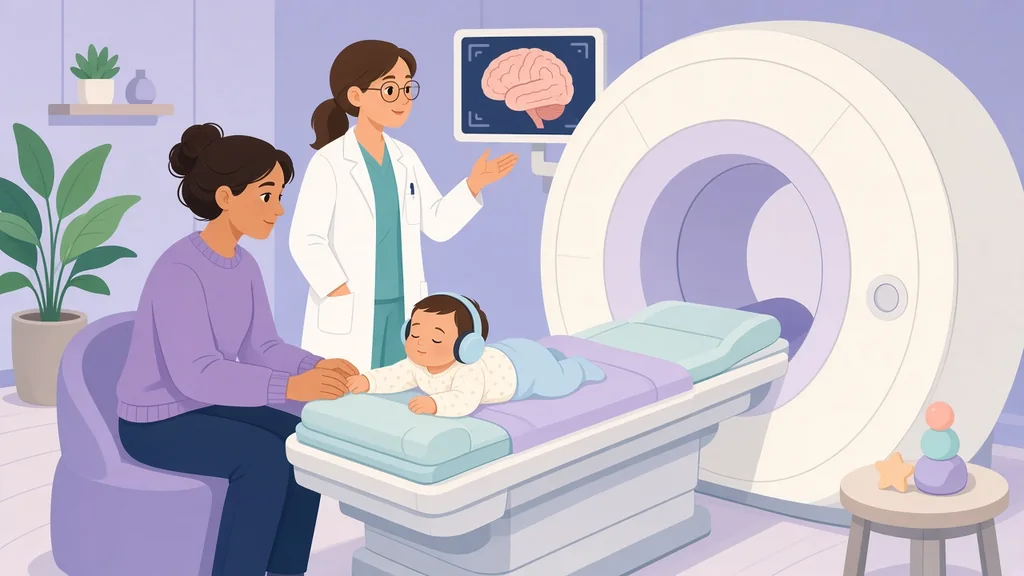
- A team led by Yale psychologist Nick Turk-Browne scanned 26 awake infants aged about 4 to 25 months with fMRI while they looked at new photographs. Greater hippocampus activity when a picture was first shown predicted later memory-based looking, beginning around one year of age.
- Why it matters
- The results suggest babies can encode individual memories, so childhood amnesia is more likely a problem of later access or retention than of encoding.
Criticisms and open questions
- Measuring memory: asking adults for their "earliest memory" mixes real recollection with family stories and photos, which can blur results.
- Short tests: critics of the Yale study noted that infant memory was tested only minutes after encoding, not years later.
- Freud's theory: the repression account is widely rejected for lack of evidence.
Related concepts
Early "memories" can be shaped by later stories, a process studied under false memory, and the idea that early memories are pushed out of awareness lives on in debates about repressed memory. How memories are strengthened at the level of brain cells is described by Hebbian theory, and intense recent experience can reappear in sleep through the Tetris effect.
Study material (Korean): 「영유아기 경험과 발달이 인생에 미치는 기초적 영향」
Frequently asked questions
- Why can't we remember being a baby?
- Babies do form memories, but changes in the developing brain and in how we store and retrieve memories make most of them inaccessible later.
- At what age do early memories start to fade?
- An Emory University study found a sharp drop around age seven: children aged eight and nine recalled far fewer events from age three than younger children did.
- Is it normal not to remember anything before age 3?
- Yes. Most adults' earliest memories date from around age three or four.