
Why does practicing a skill make it feel automatic, and why does a song you heard all summer bring back that summer? Hebbian theory offers a simple rule for how the brain wires itself through experience: connections that are used together get stronger.
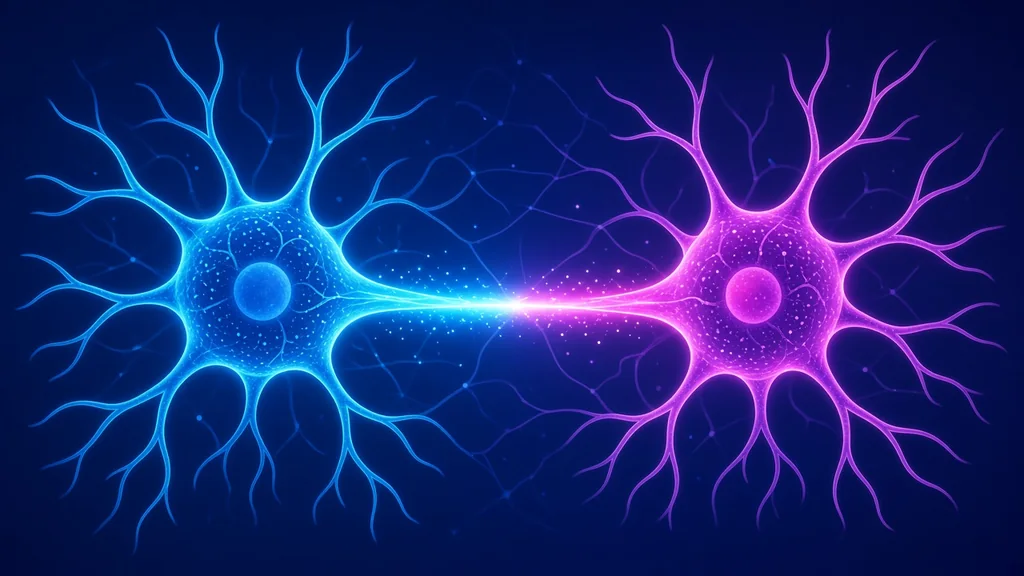
The theory
Canadian psychologist Donald Hebb introduced the idea in his 1949 book The Organization of Behavior. He proposed that when one neuron repeatedly and persistently takes part in firing another, some growth or metabolic change makes the first neuron more effective at firing the second. The idea is usually summarized as "neurons that fire together wire together."
Key idea
Hebb stressed causality, not mere timing: the first cell must help cause the second to fire, so it has to fire just before it. That detail anticipated what neuroscientists now call spike-timing-dependent plasticity.
Hebb built his career partly in the United States. In 1934 he went to study under Karl Lashley at the University of Chicago, followed Lashley to Harvard in 1935, and did his thesis there on how early visual deprivation affects perception in rats.

US cases
- When and where
- 1960s–1970s, Columbia University and New York
- What happened
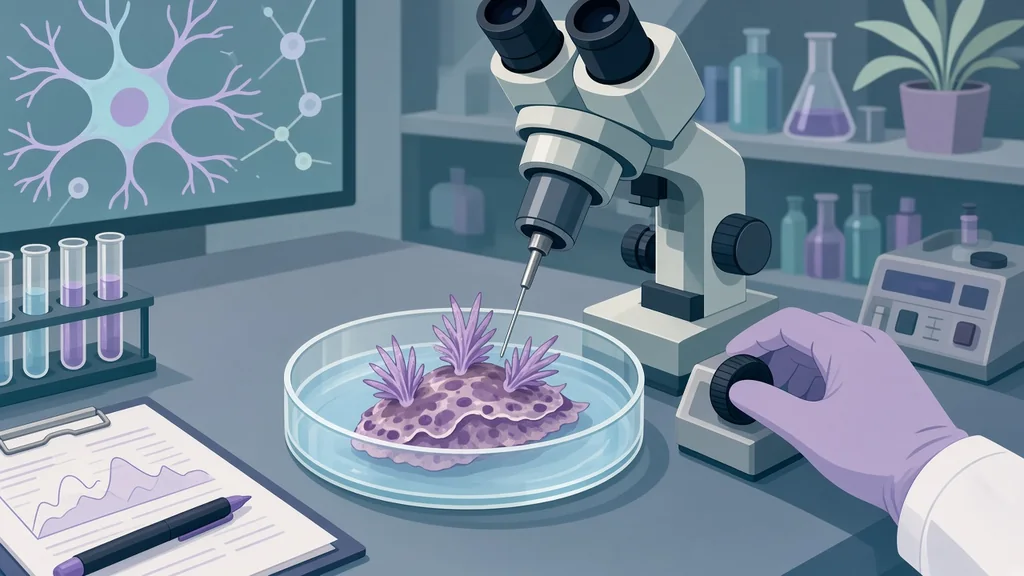
- Kandel, who arrived in Brooklyn as a 9-year-old refugee from Vienna in 1939, studied the marine snail Aplysia californica, whose large nerve cells are easy to record. His team showed that the animal's gill-withdrawal reflex could be weakened by habituation and strengthened by sensitization, and traced those changes to synapses, involving serotonin and the messenger molecule cyclic AMP.
- Why it matters
- Research from Kandel's lab provided evidence for Hebbian mechanisms at Aplysia synapses, and he shared the 2000 Nobel Prize in Physiology or Medicine for work on the physiological basis of memory storage in neurons.
- When and where
- 1982, California Institute of Technology, Pasadena
- What happened
- Physicist John Hopfield, then on the Caltech faculty, published a recurrent neural network that works as an associative memory. Patterns are stored with a Hebbian learning rule and can be recalled from partial input.
- Why it matters
- Classic Hopfield networks are rarely used in machine learning today, but the work was recognized in 2024, when Hopfield shared the Nobel Prize in Physics with Geoffrey Hinton for discoveries that enable machine learning with artificial neural networks.
Criticisms and limits
- Runaway strengthening: a pure Hebbian rule only strengthens connections, so networks become unstable; modelers add rules such as BCM theory or Oja's rule to keep weights in check.
- Not the whole story: Kandel's own work found that activity-dependent presynaptic facilitation is also needed, so Hebbian change is one mechanism among several.
- Oversimplified slogan: "fire together, wire together" drops Hebb's point about timing and cause, which leads to popular misunderstandings.
Related concepts
Hebbian wiring helps explain why intense practice leaks into dreams in the Tetris effect. The same flexible memory system can produce false memories and may explain childhood amnesia. Conditioned fear in the Little Albert experiment is a classic example of associative learning.
Study material (Korean): 「뇌의 구조와 기능: 가소성·신경 중심 핵심 내용 정리」
Frequently asked questions
- What is Hebbian theory in simple terms?
- When two brain cells are active together again and again, the link between them gets stronger, so one more easily triggers the other.
- Who said "neurons that fire together wire together"?
- The phrase is a popular summary of Donald Hebb's 1949 theory rather than his exact words.
- Is Hebbian learning used in AI?
- Yes. It is a basic method for adjusting weights in some artificial neural networks, such as the Hopfield network, and is linked to unsupervised learning.