
Why did the United States send hundreds of thousands of troops to a small country in Southeast Asia? A large part of the answer is the domino theory: the belief that if South Vietnam fell to communism, its neighbors would follow. The phrase remains one of the best-known ideas of the Cold War in American history classes.
The idea
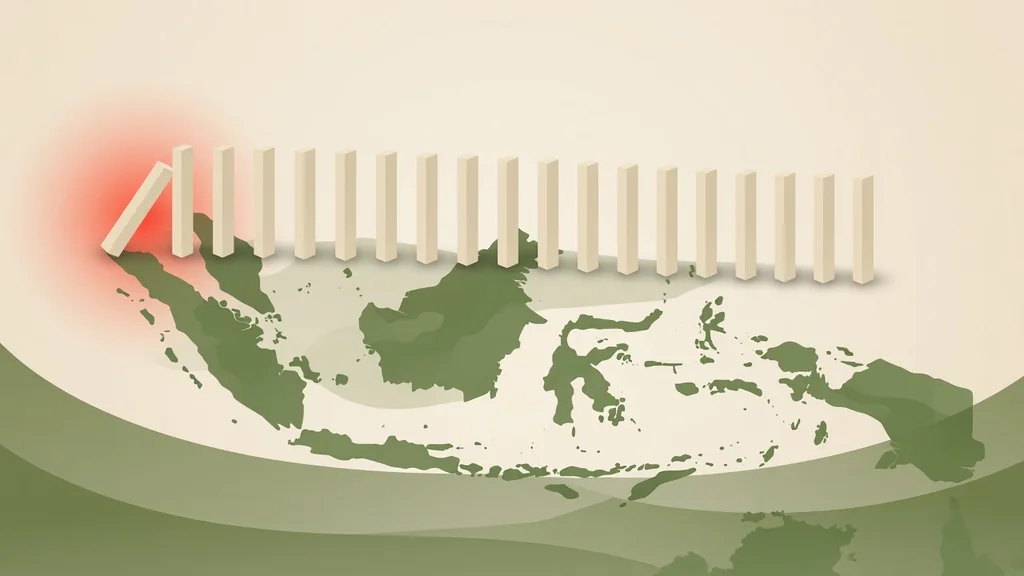
The domino theory holds that political change in one country tends to spread to its neighbors in a chain reaction. In Cold War US policy, it meant that a communist victory in one country would make communist takeovers in the surrounding region more likely, so stopping the first domino was worth great cost.

Origins and growth
- 1947: President Harry S. Truman's Truman Doctrine promised aid to Greece and Turkey to stop communism from spreading, and the Marshall Plan aimed to keep Western Europe from falling under Soviet domination.
- 1949–1950: the Communist victory in China and the Korean War made US leaders fear a wave across Asia.
- 1954: President Dwight D. Eisenhower gave the idea its famous image as France was losing in Indochina.
- 1960s: the Kennedy and Johnson administrations used the theory to justify deeper involvement in Vietnam and Laos.
Key idea
The domino theory was less a tested prediction than a way of framing risk: it treated every local conflict as a test of credibility for the whole Cold War.
US cases
- When and where
- April 7, 1954, Washington, D.C.
- What happened
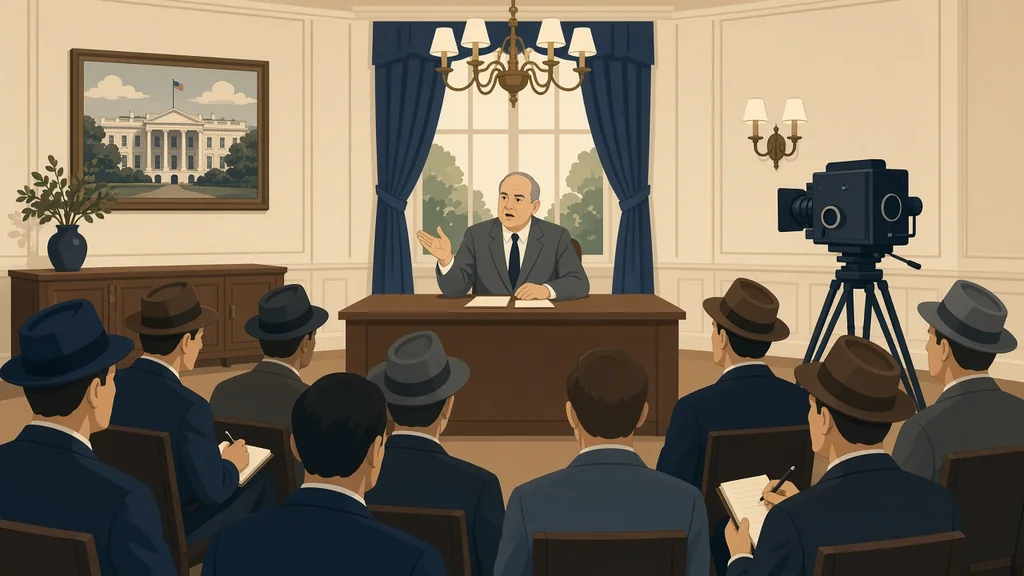
- Asked about the strategic importance of Indochina, Eisenhower said: "You have a row of dominoes set up, you knock over the first one, and what will happen to the last one is the certainty that it will go over very quickly. So you could have a beginning of a disintegration that would have the most profound influences." A month later the Viet Minh defeated French forces at Dien Bien Phu, and the 1954 Geneva Conference divided Vietnam.
- Why it matters
- The remark named the theory. Historians note that Eisenhower was describing conditions in Southeast Asia at the time rather than proposing a general law, but later leaders used the image far more broadly.
- When and where
- 1963–1995, United States
- What happened
- In September 1963, asked whether he doubted the domino theory, President John F. Kennedy replied, "No, I believe it. I believe it." On August 7, 1964, after the Gulf of Tonkin incident, Congress passed the Gulf of Tonkin Resolution, and in February 1965 President Lyndon B. Johnson said, "If they take South Vietnam, they take Thailand, they take Indonesia, they take Burma, they come right on back to the Philippines." In 1975 South Vietnam, Laos and Cambodia came under communist rule, but Thailand, Indonesia, Malaysia and the Philippines did not. In the spring of 1995, former Secretary of Defense Robert McNamara, a leading architect of the war, said he believed the domino theory had been a mistake.
- Why it matters
- The arc from firm belief to public reversal made the domino theory a lasting lesson in US debates about foreign intervention.
Criticisms
- Partial outcome: supporters point to the three countries that fell in 1975, while critics note that the wider chain across Southeast Asia never happened.
- Ignoring nationalism: critics argue that the theory treated communist movements as a single bloc and underrated local nationalism, such as Vietnam's long history of resisting foreign rule and its later war with China in 1979.
- Self-fulfilling escalation: treating every conflict as a test of credibility may have pushed the US into wars with high costs and unclear goals.
- Other readings: some writers, including the linguist Noam Chomsky, argued that the theory was roughly accurate in a different sense, because successful social movements in poor countries could inspire similar movements nearby.
Related concepts
The Cold War logic of nuclear deterrence is captured by mutually assured destruction. The domino theory is a slippery slope argument, a pattern examined by the sorites paradox. Marxist economics, built on the labor theory of value, was the intellectual foundation of the communist movements the theory feared. Moving from the fact of a threat to a duty to intervene raises the is-ought problem.
Study material (Korean): 「베트남전 한국군 민간인 학살과 파병, 전쟁특수의 반쪽 기억」
Frequently asked questions
- What is the domino theory in simple terms?
- It is the Cold War belief that if one country became communist, its neighbors would follow one after another, like a row of falling dominoes.
- Who came up with the domino theory?
- The idea grew from Truman-era containment policy in the late 1940s, but President Eisenhower gave it its famous name at a press conference on April 7, 1954.
- Was the domino theory correct?
- Partly. South Vietnam, Laos and Cambodia came under communist rule in 1975, but the wider chain reaction across Southeast Asia that US leaders predicted did not occur, and Robert McNamara later called the theory a mistake.