
Is a diamond worth more than water because it takes more work to find? The labor theory of value says the value of a product comes from the labor needed to make it. It shaped classical economics and Marxism, and it still comes up whenever Americans argue about wages, profits and who creates wealth.
The core idea
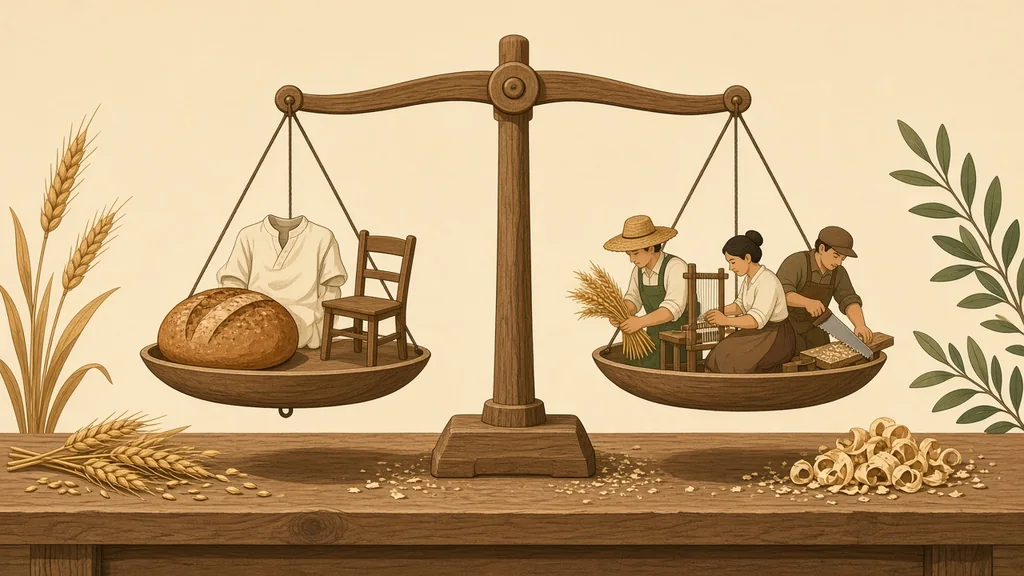
The labor theory of value holds that the value of a good or service is set by the amount of socially necessary labor required to produce it, meaning the labor needed under normal conditions of production with average skill and effort.
- John Locke (1689) argued that labor "puts the difference of value on everything" and used this to ground his theory of property.
- Adam Smith (1776) argued that labor is "the real measure of the exchangeable value of all commodities."
- David Ricardo (1817) made the quantity of embodied labor the foundation of exchange value in all stages of society, while admitting that the principle needed "considerable modification."
- Karl Marx argued that living human labor is the only source of new value and that profit comes from surplus value, the gap between what workers produce and what they are paid.
Key idea
The labor theory of value is a theory of what determines value over the long run. It does not say that every hour of any work is worth the same.

US cases
- When and where
- May 18, 1827 to May 1830, Cincinnati, Ohio
- What happened
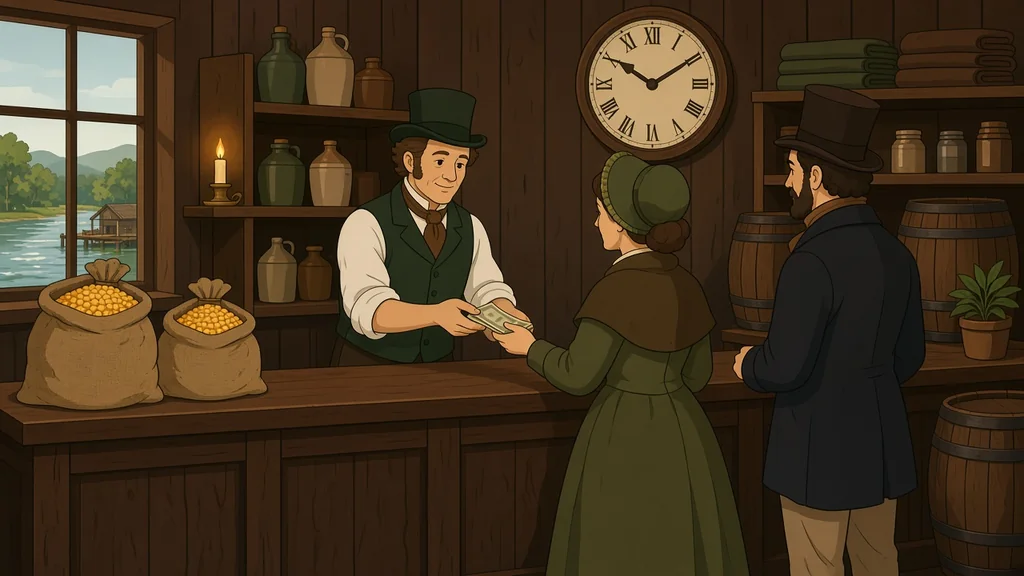
- Josiah Warren opened a store to test the labor theory of value. Goods were sold at cost plus a small markup for the shopkeeper's time, which was measured with a clock dial, and customers could pay with "labor notes" promising hours of work. Corn served as a standard, with 12 pounds of corn exchangeable for one hour of labor. Warren summed up the policy as "cost the limit of price."
- Why it matters
- The store became popular, and it is usually considered the first use of labor notes as an alternative currency, more than 20 years before similar experiments in Europe. Warren later founded stores in New Harmony, Indiana, and Modern Times on Long Island.
- When and where
- December 3, 1861, Washington, D.C.
- What happened
- In his first annual message, President Abraham Lincoln wrote: "Labor is prior to and independent of capital. Capital is only the fruit of labor, and could never have existed if labor had not first existed. Labor is the superior of capital, and deserves much the higher consideration." He also wrote that "capital has its rights, which are as worthy of protection as any other rights."
- Why it matters
- The passage shows how labor-centered ideas of value ran through 19th-century American political language, well beyond socialist circles.
Criticisms
- The marginal revolution: from the 1870s, economists such as William Stanley Jevons, Carl Menger and Léon Walras argued that value comes from the usefulness of the last unit to the buyer, the subjective theory of value. This view replaced the labor theory in mainstream economics.
- The transformation problem: Austrian economist Eugen von Böhm-Bawerk argued that Marx's value theory in Volume I of Capital contradicted his price theory in Volume III, where goods sell at prices of production rather than at their labor values.
- Wasted labor: critics point out that hard work on something nobody wants does not make it valuable, which is why Marx specified socially necessary labor.
Related concepts
The Austrian school of economics built its subjective theory of value partly as a reply to labor value. Ricardo also relied on the law of diminishing returns in his analysis of land rent. Prices far above any measure of production cost are the subject of the greater fool theory, and the Big Mac index compares what the same product costs across countries.
Study material (Korean): 「마르크스와 자본가, 노동자 관련 핵심 내용 요약 정리」
Frequently asked questions
- What is the labor theory of value in simple terms?
- It is the idea that the value of something comes from the amount of labor needed to produce it.
- Did Adam Smith believe in the labor theory of value?
- Smith used a version of it, arguing that labor is the real measure of exchange value, but his account mixed labor commanded and labor embodied. Ricardo and Marx developed it further.
- Why do most economists reject the labor theory of value?
- Since the 1870s, mainstream economics has explained value through marginal utility and supply and demand, and critics argue the labor theory cannot fully explain prices.