
Did a friend tell you your face looks "tired" since you started losing weight? You may have heard the phrase "Ozempic face." It sounds alarming, but what it describes is a common, mostly cosmetic effect of losing weight quickly, and there are practical ways to think about it.

This guide uses a Cleveland Clinic explainer, a Journal of Drugs in Dermatology (JDD) review and FDA guidance on dermal fillers. It explains in detail what they say. It isn't medical or cosmetic advice for you personally.
What "Ozempic face" means
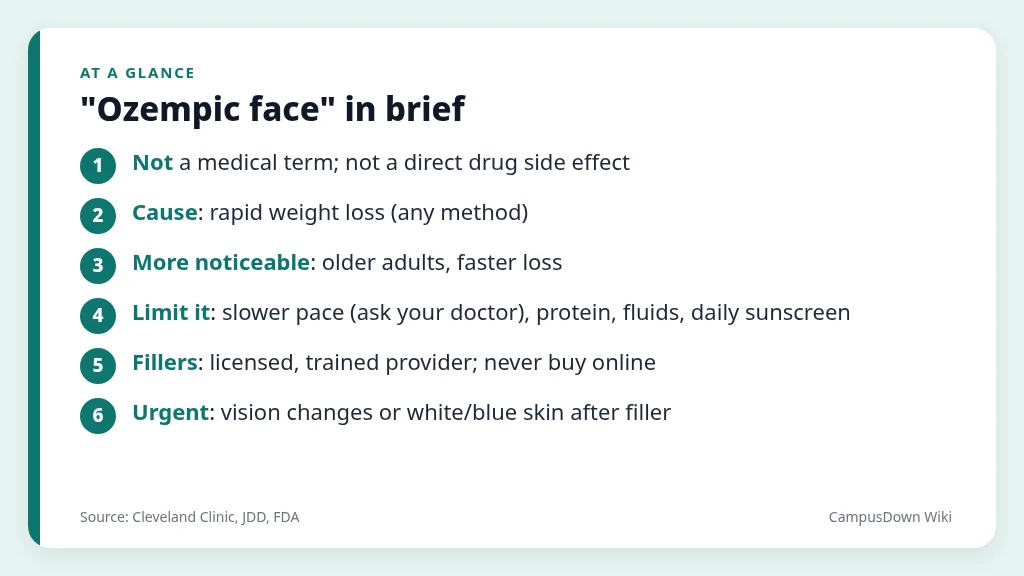
Cleveland Clinic describes it as facial changes that can happen with rapid weight loss: gauntness, sunken cheeks, new wrinkles and loose skin on the face and neck. Key points:
- It's not a medical term; it became popular on social media.
- It's not a side effect of the medication itself but of fast weight loss the medication can bring.
- It's not limited to Ozempic. Similar changes can follow bariatric surgery or any very rapid weight loss, and with other drugs such as tirzepatide.
The JDD review (2024) framed the question as whether this is a new drug effect or a natural consequence of rapid weight loss, and noted dermatologists can counsel patients on countermeasures.

Why the face changes
Cleveland Clinic explains that losing fat just under the skin of the face and neck causes hollowing and sagging. We all lose facial fat with age, and rapid weight loss can speed up that look. Fast loss can also lower skin proteins such as collagen and elastin, which keep skin firm and stretchy.
Who's more likely to notice it? Cleveland Clinic says faster weight loss raises the chance, and older adults may notice it more because they start with less fat under the skin.
Ways to limit it
Cleveland Clinic suggests:
- Slower weight loss, about one to two pounds a week, in its endocrinologist's view. Never change your GLP-1 dose on your own; ask your prescriber whether your pace makes sense.
- Combining medication with a healthy diet and exercise, including enough protein. Learn more in dietary protein and GLP-1s and muscle loss.
- Staying hydrated, a good skin care routine and daily sunscreen.
Hair thinning is a separate concern; hair loss is listed among side effects on several GLP-1 labels, so mention it to your doctor if it happens.
About "before and after" photos
Photos online can be striking, but they rarely show lighting, camera angle, how much weight was lost or how fast. Cleveland Clinic notes the changes don't fade on their own if weight stays off, and the face may look fuller again if weight returns. Neither outcome is a reason to stop a medicine without talking to your doctor.
Treatment options and filler safety
Cleveland Clinic lists options such as dermal fillers, Botox, microneedling, platelet-rich plasma, radiofrequency skin tightening, fat grafting and facelifts, and stresses that "Ozempic face" has no negative health effects and doesn't need treatment unless you want it.
If you consider fillers, the FDA recommends:
- A licensed provider with dermatology or plastic surgery experience who is trained to inject fillers.
- Never injecting yourself or buying fillers online, since they could be counterfeit or unapproved.
- Asking about the risks at each injection site; FDA-approved fillers are for adults 22 and older.
Get help now if
FDA says the most concerning filler risk is accidental injection into a blood vessel, which can cause tissue death, vision problems including blindness, or stroke. Get immediate medical attention for unusual pain, vision changes, white, gray or blue skin near the injection, or stroke signs during or soon after a filler procedure.
Example scenario: the mirror at 55
- Who
- Odessa, 55, a hospital billing coordinator in Sacramento, lost 40 pounds in eight months on Wegovy and brought her blood pressure down.
- What happened
- At her niece's wedding, a cousin joked that she looked "Ozempic-y." Afterward, Odessa studied the photos and saw hollow cheeks and new lines.
- How it felt
- She felt hurt and confused: proud of her health gains, yet suddenly self-conscious and tempted to quit the medication.
- What they did
- She raised it with her doctor, who explained the face changes came from the speed of weight loss, reviewed her protein intake, and talked through whether her pace and dose still fit her goals. She started daily sunscreen and a strength class, and later booked a consultation with a board-certified dermatologist instead of a discount med spa.
- How it turned out
- She decided against fillers for now. She said hearing that it wasn't harmful, and that she had choices, let her focus on what the weight loss had done for her heart.
This is an illustrative example, not a real patient or a review.
Odessa is an illustrative example. Your doctor and a qualified dermatologist can advise you personally.
Most-asked questions about Ozempic face
What does "Ozempic face" mean?
It's a social media term for facial volume loss, sunken cheeks, wrinkles and sagging skin after rapid weight loss. It isn't a medical diagnosis.
Why people ask: "ozempic face meaning" is #9 for "ozempic face" (US autocomplete, November 2026).
What do Ozempic face before and after photos really show?
Usually the effect of losing a lot of weight quickly. Photos rarely show the pace, lighting or angle, so they aren't a reliable prediction for you.
Why people ask: "ozempic face before and after" is #2 for "ozempic face" (US, November 2026).
What is the treatment for Ozempic face?
Treatment isn't medically needed. Options people choose include fillers, skin tightening, microneedling and surgery; discuss risks with a qualified dermatologist or plastic surgeon.
Why people ask: "ozempic face treatment" is #8 for "ozempic face" (US, November 2026).
Do fillers fix Ozempic face?
Fillers can add volume to some areas, but FDA lists risks including rare blood vessel injection that can cause blindness or stroke. Use a licensed, trained provider and FDA-approved products.
Why people ask: "ozempic face before and after filler" is #7 for "ozempic face before and after" (US, November 2026).
Related on CampusDown
To take a closer look at the medicines, read semaglutide (Ozempic, Wegovy) and Wegovy vs Zepbound. For the early weeks, check it for yourself in Ozempic side effects in the first weeks.
Frequently asked questions
- Is Ozempic face dangerous?
- Cleveland Clinic says it has no negative health effects. It's a cosmetic change.
- Will Ozempic face go away if I stop?
- It doesn't fade on its own if weight stays off. Don't stop a medicine without talking to your doctor.
- Does it only happen with Ozempic?
- No. Rapid weight loss from any cause, including tirzepatide or bariatric surgery, can cause similar changes.
"Ozempic face" is about the speed of weight loss, not a hidden drug danger. Talk to your doctor about your pace, protect your skin and muscle, and if you want cosmetic treatment, choose a licensed, trained professional.
Browse more guides like this in the U.S. Health Topics hub.
This article is for general education and does not replace advice from your own doctor, nurse or pharmacist.