
Have you ever searched a symptom at midnight and ended up more confused than when you started? This hub is meant to fix that. It gathers CampusDown's 100 U.S. health topic guides in one place, grouped so you can find the right page quickly. Every guide is written in plain language from U.S. sources such as the FDA, CDC, NIH and MedlinePlus, and every one ends with the same advice: take what you learn to your doctor or pharmacist. If you are new here, take a closer look at the first two clusters, which cover the questions Americans search most.

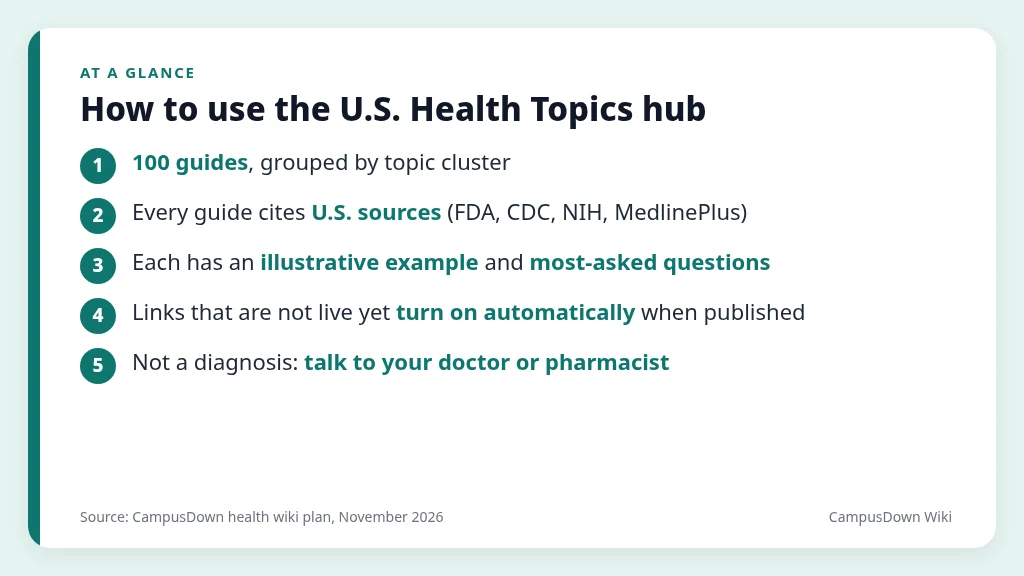
How to use this hub
- Pick the cluster that matches your question, then open the guide whose title fits best.
- Each guide opens with the key facts, then an illustrative example, then the most-asked questions people really search for.
- Titles shown as plain text are coming soon; they become links automatically when they go live.
- Related devices, senior care, nursing and medicine guides are linked inside each article and from the other hubs below.

Heart, rhythm and blood thinners
- Atrial Fibrillation Symptoms: Fluttering, Fatigue and When It Is an Emergency
- Anxiety Chest Pain vs Heart Pain: How Doctors Tell the Difference
- ApoB Blood Test: Why Some Doctors Look Beyond LDL
- Cold Plunges and Ice Baths: Claimed Benefits and Heart Safety
- Coronary Artery Calcium Score: What 0, 100 and 400 Mean
- Heart Attack Symptoms in Women That Are Easy to Miss
- Heart Palpitations at Night When Lying Down: Common Triggers and Red Flags
- High Potassium on a Blood Test: Causes and Why It Matters for the Heart
- Lipoprotein(a) Test: Why Doctors Check Lp(a) Once in a Lifetime
- POTS: Racing Heart When Standing and How It Is Diagnosed
- Resting Heart Rate: Normal Range and What Smartwatches Show
- SVT: Sudden Racing Heart Episodes and Vagal Maneuvers
- Skipped Heartbeats (PVCs): Why the Heart Seems to Pause
Infections, vaccines and antibiotics
- Alpha-Gal Syndrome: The Tick Bite Red Meat Allergy Spreading in the US
- Ashwagandha: Stress Claims, Thyroid and Liver Cautions
- C. diff Infection After Antibiotics: Watery Diarrhea Warning Signs
- Elevated ALT and AST Liver Enzymes: Common Causes on a Routine Blood Test
- H5N1 Bird Flu in Humans: How People Get Infected and Current Risk
- HPV Vaccine for Adults Up to 45: Who Benefits and How Many Doses
- Hand, Foot and Mouth Disease in Adults Caught From Kids
- Measles Outbreaks in the US: Symptoms, MMR Doses and Adult Boosters
- Mpox: Rash, Spread and the JYNNEOS Vaccine
- Strep Throat vs Viral Sore Throat: Rapid Test and When Antibiotics Help
- Tick Bite and Lyme Disease: Bullseye Rash, Removal and When to See a Doctor
- UTI Symptoms in Women: Burning, Urgency and When It Has Reached the Kidneys
- West Nile Virus: Mosquito Season Symptoms and Who Gets Seriously Ill
Example scenario: a new diagnosis and a long list of tabs
- Who
- Beverly, 61, a bank branch manager in Missouri, left her checkup with a new AFib diagnosis, a borderline A1C and a prescription she could not pronounce.
- What happened
- That night she opened twenty browser tabs, half of them ads, and read about strokes until 2 a.m.
- How it felt
- She felt overwhelmed and alone, and a little angry that the visit had felt so rushed.
- What they did
- Her son sent her this hub. She read one guide on AFib, one on A1C and one on her new medicine, and wrote down three questions for a follow-up call.
- How it turned out
- Her nurse answered all three in ten minutes. Beverly says the difference was not more information but the right three pages in the right order.
This is an illustrative example, not a real patient or a review.
Beverly is an illustrative example, not a real person. Use the guides to prepare better questions, not to replace your care team.
Pain, joints and bones
- Achilles Tendinitis: Heel Cord Pain in Runners and Weekend Athletes
- Appendicitis Signs in Adults and Kids: Pain That Moves to the Lower Right
- Bunions: Shoes, Splints and When Surgery Is Considered
- Ingrown Toenail: Home Care and Signs of Infection
- Migraine With Aura: Visual Zigzags, Triggers and Treatment Options
- Rosacea: Facial Redness, Flushing Triggers and Treatment
- Sciatica: Pain Down the Leg, Common Causes and When to Worry
- Shin Splints: Pain Along the Shin When You Start Running
- Shingrix Shingles Vaccine: Two Doses, Side Effects and Eligibility
Trending health questions
- "Cortisol Belly": What Stress Hormones Can and Cannot Explain
- Caffeine in Energy Drinks: The 400 mg Guide for Adults
- Delta-8 THC Products: FDA and CDC Safety Warnings
- Magnesium Glycinate vs Citrate: Forms, Uses and Who Should Be Careful
- Microplastics in the Body: What Is Known About Health Effects
- Nicotine Pouches (Zyn): What They Contain and Health Concerns
- Seed Oils: What the Evidence Says Behind the Social Media Debate
- Ultra-Processed Foods: The NOVA Classification and Health Studies
- Zone 2 Cardio: What It Is and How to Find Your Zone
Stomach and digestion
- Celiac Disease Testing: Why You Should Not Stop Gluten Before the Blood Test
- Colon Cancer in Younger Adults: Rising Rates and Symptoms Not to Ignore
- FIT Test vs Cologuard: At-Home Colon Cancer Screening Kits Compared
- Hemorrhoids: Bright Red Bleeding, Itching and When It Is Something Else
- IBS and the Low-FODMAP Diet: How the Three Phases Work
- Iron Supplements: Constipation, Timing With Food and Absorption
- Kratom: FDA Warnings, Dependence and Liver Concerns
Lungs and breathing
- Asthma Attack Warning Signs and When a Rescue Inhaler Is Not Enough
- COVID-19 Symptoms and Testing: Current CDC Guidance on Staying Home
- Long COVID: Fatigue, Brain Fog and Post-Exertional Malaise
- RSV Vaccine for Adults: Who Is Eligible and Common Side Effects
- Valley Fever (Coccidioidomycosis): Southwest Dust and Lingering Cough
- Walking Pneumonia (Mycoplasma): Lingering Cough and Treatment
- Whooping Cough in Adults: Long Coughing Fits and Tdap Boosters
GLP-1 and weight medicines
- "Ozempic Face": Why Rapid Weight Loss Changes Facial Volume
- Berberine: The "Nature's Ozempic" Claim vs the Evidence
- Compounded Semaglutide and Tirzepatide: What the FDA Says About Safety
- GLP-1 Medications and Muscle Loss: Protein, Strength Training and What Studies Show
- Ozempic Side Effects in the First Weeks: Nausea, Constipation and Warning Signs
- Wegovy vs Zepbound: How the Two Weight-Loss Injections Differ
Blood sugar and diabetes
- A1C of 5.7: What a Prediabetes Result Means and What to Do Next
- Blood Sugar Spikes After Meals: What CGM Users Notice
- Dawn Phenomenon: High Morning Blood Sugar Without Eating
- Urine Albumin-to-Creatinine Ratio: Early Kidney Damage in Diabetes
- Vitamin B12 Deficiency: Tingling, Fatigue and the Metformin Link
Sleep and CPAP
- Acid Reflux at Night: Positioning, Trigger Foods and When to Get Checked
- Insomnia and CBT-I: The First-Line Treatment Before Sleeping Pills
- Night Sweats: Common Causes and When They Need a Workup
- Perimenopause Symptoms in Your 40s: Periods, Sleep and Mood Changes
- Sleep Paralysis: Waking Up Unable to Move
Kidneys and labs
- Blood in Urine (Hematuria): Visible vs Microscopic and Common Causes
- Dehydration Signs in Adults: Urine Color, Dizziness and Electrolytes
- Low Sodium (Hyponatremia): Causes From Medications to Over-Drinking Water
- eGFR and Kidney Function: Reading the Numbers on Your Lab Report
Women's health
- Hair Thinning in Women: Telogen Effluvium, Pattern Loss and Lab Checks
- Hot Flashes: Triggers, Hormone and Non-Hormone Treatment Options
- Mammogram at 40: The USPSTF Screening Recommendation and Dense Breasts
- Menopause Hormone Therapy: Benefits, Risks and the Boxed Warning Debate
Blood pressure
- Blood Pressure of 130/80: Stage 1 Hypertension Explained
- White Coat Hypertension: Why Your Reading Is Higher at the Doctor's Office
- Low Blood Pressure: When 90/60 Is Normal and When It Is Not
Skin
- Psoriasis vs Eczema: How the Two Rashes Look and Behave Differently
- Skin Cancer and the ABCDE Rule for Checking Moles
- Sunscreen SPF, Broad Spectrum and How Much to Apply
More topics
- Carbon Monoxide Poisoning: Symptoms at Home and Detector Basics
- Swollen Lymph Nodes in the Neck: When It Is an Infection and When to Check
- BE FAST Stroke Signs: Balance, Eyes, Face, Arm, Speech, Time
- Heat Exhaustion vs Heat Stroke: Warning Signs and First Steps
- Indoor Mold Exposure: Symptoms, Allergies and Cleanup Basics
- Low Ferritin Without Anemia: Iron Deficiency That Standard Tests Miss
- Tonsil Stones: Bad Breath Lumps and When to See ENT
- Concussion Symptoms After a Fall or Sports Hit: When to Go to the ER
- Earwax Buildup: Why Cotton Swabs Backfire and Safe Removal
- Panic Attack: What It Feels Like and What to Do in the Moment
- Hashimoto's Thyroiditis: TPO Antibodies, Symptoms and Treatment
- PSA Test Results: What a Number Means and the Screening Decision
Other CampusDown health hubs
Get help now if
Call 911 for chest pain or pressure, trouble breathing, fainting, or stroke signs (face drooping, arm weakness, speech trouble). A web page is never the right first step in an emergency.
How these guides are written
Each guide starts from official U.S. sources, keeps doses to what the FDA label says, avoids promises about results, and labels every patient story as an illustrative example. You can check it for yourself: every guide lists its references at the bottom. If a topic you need is missing, it may be in another hub. You can learn more about devices, senior care, nursing or medicines through the hubs above.
Frequently asked questions
- Are these guides medical advice?
- No. They are for general education; talk to your doctor, nurse or pharmacist about your own care.
- Why are some titles not clickable?
- Those guides are still being written; links turn on automatically when they are published.
- Where do the facts come from?
- U.S. sources such as the FDA, CDC, NIH, MedlinePlus and professional guidelines, listed at the end of each guide.
- Are the patient stories real?
- No. Each is an illustrative example written to show how a situation can feel and what steps can help.
Start with one question, open one guide, and bring what you learn to your next appointment. You can learn more in detail from the clusters above, and always check decisions with your doctor or pharmacist.
This article is for general education and does not replace advice from your own doctor, nurse or pharmacist.