
You're finally lying in the dark and suddenly you can feel your heart pounding. Is it anxiety, the coffee, or something more? And when does it become an emergency?
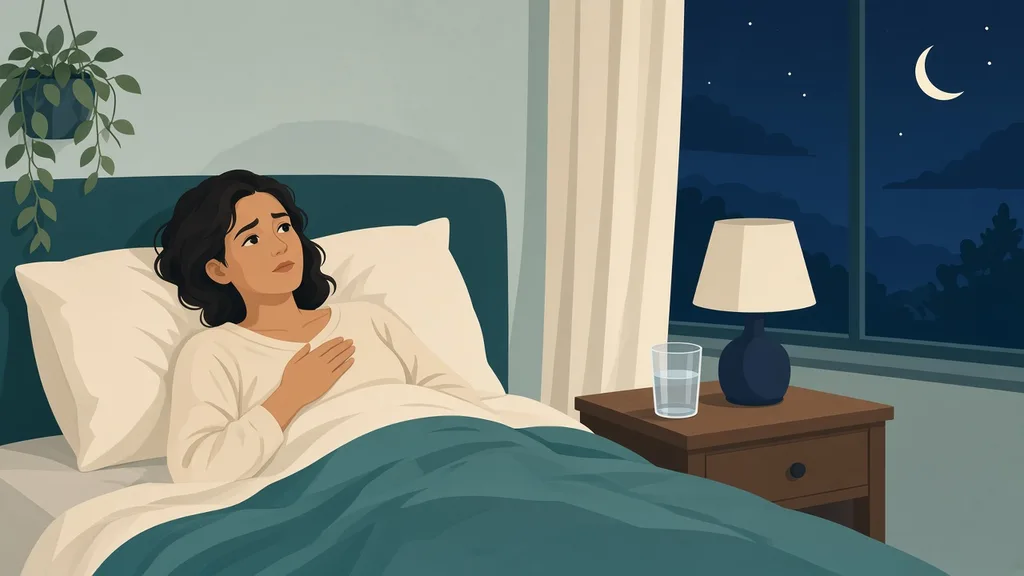
Many people notice their heartbeat more when it's quiet. This guide uses MedlinePlus's palpitations article and the American Heart Association's heart rate page. It is general information, not a diagnosis. If palpitations come with chest pain, shortness of breath, unusual sweating, dizziness or fainting, call 911. To learn more about what counts as a typical pulse, take a closer look at resting heart rate.
What palpitations feel like
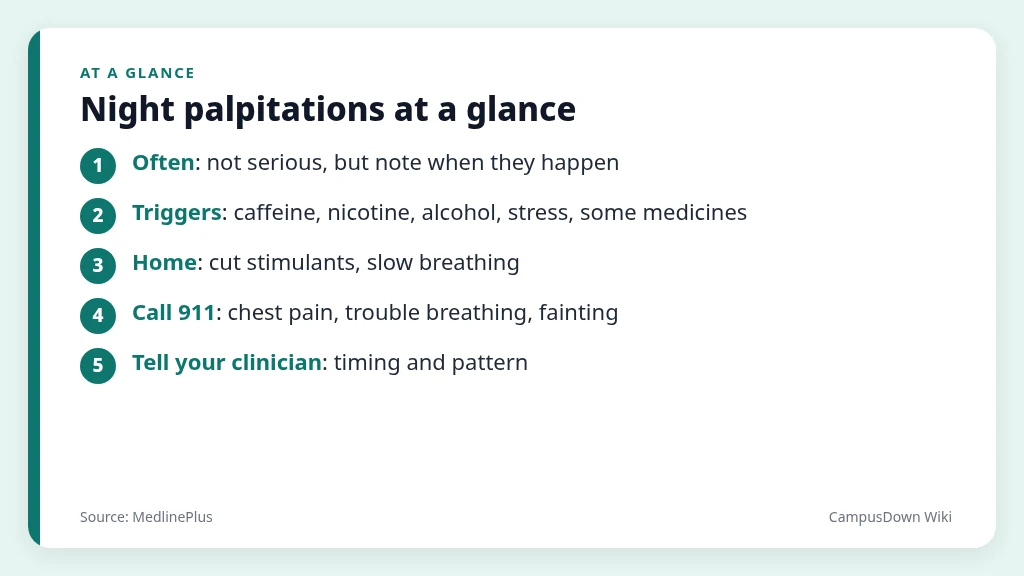
MedlinePlus describes palpitations as feelings that your heart is pounding or racing, felt in your chest, throat or neck. You may have an unpleasant awareness of your own heartbeat or feel like your heart skipped or stopped beats. Your heart's rhythm may be normal or abnormal during palpitations, and MedlinePlus says they are not serious most of the time, though sensations from an abnormal rhythm (arrhythmia) may be more serious.

Why night and lying down?
MedlinePlus doesn't say why palpitations may be noticed more at night. It does list "when you are lying down and resting" among the timing questions a provider may ask. What matters is the pattern: when it starts, how it feels, how long it lasts and what else was happening. Write it down; see the questions below.
Common triggers
MedlinePlus lists these as causes of palpitations:
- Anxiety, stress, panic attack or fear
- Caffeine
- Nicotine
- Excessive alcohol
- Stimulant drugs such as cocaine or methamphetamine
- Decongestant medicines, such as phenylephrine or pseudoephedrine
- Diet pills
- Exercise and fever
Some palpitations come from an abnormal heart rhythm, which may be caused by heart disease, an abnormal heart valve such as mitral valve prolapse, an abnormal blood potassium level, certain medicines (including some used for asthma, high blood pressure or heart problems), an overactive thyroid, or low oxygen in the blood. MedlinePlus says you are more likely to have an abnormal rhythm if you have known heart disease, significant risk factors for heart disease, an abnormal heart valve or an electrolyte abnormality such as low potassium.
Home steps
MedlinePlus suggests things that may limit palpitations:
- Lower caffeine, nicotine and other stimulants, which often reduces palpitations
- Learn to reduce stress and anxiety; try deep relaxation or breathing exercises, yoga, meditation or tai chi
- Get regular exercise
- Don't smoke
- Once a serious cause has been ruled out by your provider, try not to focus closely on the palpitations, since that can add stress
Check labels of cold and allergy products for decongestants, and ask a pharmacist before combining medicines. For anxiety-related chest sensations, see anxiety chest pain vs heart pain and what to do during a panic attack.
Get help now if
Call 911 for palpitations with loss of alertness, chest pain, shortness of breath, unusual sweating, dizziness or lightheadedness. Don't drive yourself.
When to contact a clinician
MedlinePlus says to see your provider if you have never had palpitations before, and to contact them right away if:
- you often feel extra heartbeats (more than 6 per minute, or in groups of 3 or more)
- you have heart disease or risk factors such as high cholesterol, diabetes or high blood pressure
- your palpitations are new or different
- your pulse is over 100 without exercise, anxiety or fever
- you have related symptoms such as chest pain, shortness of breath, feeling faint or loss of consciousness
The AHA adds that a rate that is suddenly very fast or very slow, with chest pain, shortness of breath, dizziness or fainting, calls for 911. For irregular rhythms, see atrial fibrillation and ECG rhythm basics. For heart failure symptoms, see heart failure.
What a visit may involve
MedlinePlus says your provider will ask about skipped or stopped beats, whether the rate feels fast or slow, racing, pounding or fluttering, whether the pattern is regular, whether it began or ended suddenly, when it occurs (including when lying down and resting, changing position or feeling emotional), other symptoms and whether you use stimulants, caffeine or excessive alcohol. An electrocardiogram may be done. If a rhythm problem is found, other tests may include a Holter monitor for 24 hours or longer heart monitor, an echocardiogram, an electrophysiology study or coronary angiography. MedlinePlus notes that most people with palpitations don't need an emergency room visit for diagnosis and treatment.
Notes to keep
- Date and time, and what you were doing
- How it felt: pounding, fluttering, skipping
- How long it lasted and how it ended
- Caffeine, alcohol, nicotine and medicines that day
- Your pulse if you can take it, counted at rest
- Other symptoms such as dizziness or chest tightness
Questions for your clinician
- Do my symptoms need an ECG or a heart monitor?
- Could a medicine, supplement or decongestant be a trigger?
- Should my thyroid or potassium be checked?
- Which cutbacks should I try first, such as caffeine or alcohol?
- What symptoms mean I should call 911?
Example scenario: the quiet bedroom
- Who
- Vera, 38, a bookkeeper in Boise, Idaho, felt her heart pounding when she lay down for several nights and lay awake worrying about it.
- What happened
- She'd been drinking more coffee during a busy tax season and had started a cold medicine.
- How it felt
- She felt frightened and embarrassed to bother anyone.
- What they did
- She wrote down the timing and her caffeine and medicine use, then called her clinician. They asked about her symptoms, checked her pulse and ordered an ECG; Vera cut back on caffeine and asked her pharmacist about the cold medicine.
- How it turned out
- Vera said having notes made the call easier and the worry smaller.
This is an illustrative example, not a real patient or a review.
Vera's story is an illustrative example. Your clinician decides what your symptoms need.
Most-asked questions about heart palpitations at night
Why do I get heart palpitations at night when lying down?
MedlinePlus doesn't explain why; it lists lying down among the timing details a provider asks about. Note the pattern and talk to your clinician.
Why people ask: "heart palpitations at night when lying down" is #2 for "heart palpitations at night" (US autocomplete, November 2026).
What if I can't sleep because of heart palpitations at night?
Check triggers such as caffeine, nicotine, alcohol and stress, and tell your clinician if it keeps happening.
Why people ask: "heart palpitations at night can t sleep" is #4 for "heart palpitations at night" (US autocomplete, November 2026).
Can anxiety cause heart palpitations at night?
MedlinePlus lists anxiety, stress, panic and fear as causes of palpitations.
Why people ask: "heart palpitations at night anxiety" is #8 for "heart palpitations at night" (US autocomplete, November 2026).
What about heart palpitations while sleeping?
If they wake you or come with symptoms, see your provider; note timing and triggers.
Why people ask: "heart palpitations at night while sleeping" is #9 for "heart palpitations at night" (US autocomplete, November 2026).
Can alcohol cause night palpitations?
MedlinePlus lists excessive alcohol consumption among causes of palpitations.
Why people ask: "heart palpitations at night after drinking" is #10 for "heart palpitations at night" (US autocomplete, November 2026).
What if my heart is racing at night when lying down?
A resting pulse over 100 without exercise, anxiety or fever should be discussed with your provider; call 911 with chest pain, trouble breathing or fainting.
Why people ask: "heart racing at night when lying down" is #5 for "heart palpitations at night when lying down" (US autocomplete, November 2026).
Related on CampusDown
You can learn more about the health topics hub and check it for yourself in the resting heart rate guide. For triggers in detail, see the anxiety and chest pain guide.
Frequently asked questions
- Are palpitations dangerous?
- Most aren't serious, per MedlinePlus, but those from an abnormal rhythm can be.
- When should I call 911?
- With chest pain, shortness of breath, unusual sweating, dizziness or loss of alertness.
- Can caffeine cause palpitations?
- Yes; MedlinePlus says lowering caffeine, nicotine and other stimulants often reduces them.
- What tests might I need?
- An ECG, and possibly a Holter monitor, echocardiogram or other tests.
- Should I go to the ER for palpitations?
- Most people don't need one, per MedlinePlus, but go with emergency symptoms.
Night palpitations are often triggered by everyday things, but they deserve a note and a call if they're new, frequent or come with other symptoms. Keep notes, cut back triggers and call 911 for emergency signs.
Browse more guides like this in the U.S. Health Topics hub.
This article is for general education and does not replace advice from your own doctor, nurse or pharmacist.