
Your heart is pounding, your hands are tingling, and you're sure something is terribly wrong. It might be a panic attack. It might not. What do you do right now, and what do you do afterward?
This guide combines what NIMH, Mayo Clinic, MedlinePlus and the NHS say about panic attacks. It is general education, not a diagnosis, and it can't replace a clinician. If you are not sure whether you are having a heart attack or another emergency, call 911. To learn more about the condition behind repeated attacks, take a closer look at panic disorder.
What a panic attack feels like
Mayo Clinic describes a panic attack as a sudden episode of intense fear that triggers severe physical reactions when there is no real danger or apparent cause. Symptoms listed by Mayo and the NHS include:
- a rapid, pounding heart
- sweating, trembling or shaking
- shortness of breath or a tight throat
- chest pain
- dizziness, lightheadedness or feeling faint
- numbness or tingling
- nausea or stomach cramping
- chills or hot flashes
- a feeling of unreality or detachment
- a sense of impending doom or a fear of losing control or dying
NIMH notes these physical symptoms might feel like a heart attack. That is why attacks are so frightening.

How long it lasts
NIMH says an attack can last from a few minutes to an hour or sometimes longer. Mayo says symptoms usually peak within minutes, and you may feel worn out afterward. The NHS says most attacks last between 5 and 20 minutes, and some have been reported to last up to an hour. NIMH adds that panic attacks themselves are not life-threatening and the physical symptoms usually resolve with time.
Could it be something else?
Mayo says panic attack symptoms can resemble other serious problems, such as a heart attack, so it's important to get evaluated if you aren't sure what's causing your symptoms. The NHS makes a similar point that many of the symptoms can come from other conditions. If this is your first episode, if the chest pain is severe, if it feels different from past attacks or if you have heart disease or risk factors, treat it as a possible emergency. For the specifics, see anxiety chest pain vs heart pain.
Get help now if
Call 911 for chest pain or pressure, trouble breathing, fainting, or any symptom that may be a medical emergency, especially if you are not sure it's a panic attack. If you or someone you know is thinking about suicide, call or text 988.
What to do in the moment
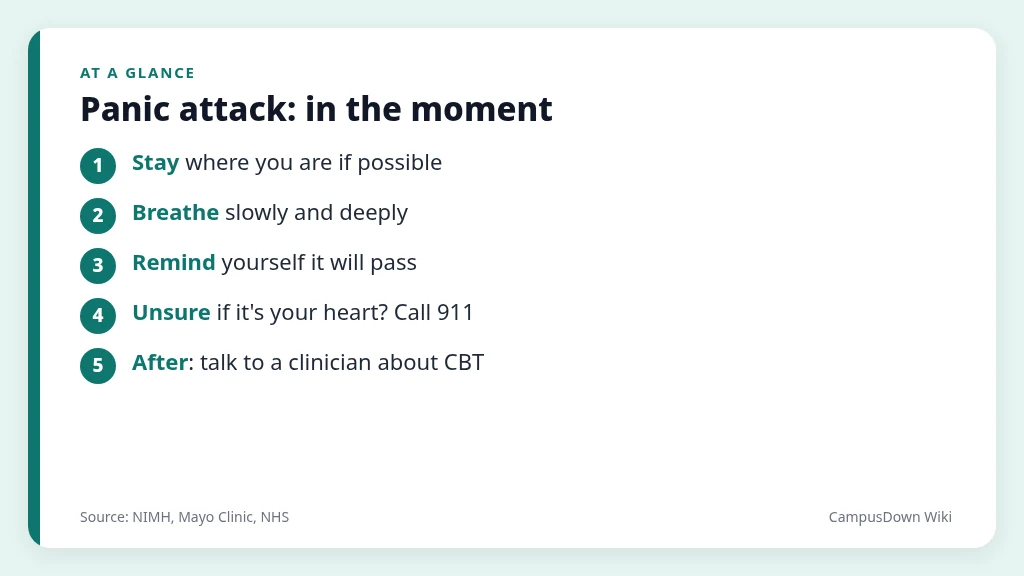
The NHS gives these steps for when you feel an attack coming on:
- Stay where you are, if possible. Unless you are somewhere unsafe, such as driving, staying still can help; pull over safely if you are behind the wheel.
- Breathe slowly and deeply.
- Remind yourself that the attack will pass.
- Focus on positive, peaceful and relaxing images.
- Remember it's not life-threatening.
Practicing a slow breathing exercise when you're calm can make it easier to use during an attack. Some people also find it helpful to name things they can see or hear to anchor themselves, but the sources used for this page don't evaluate that approach, so ask your clinician or therapist what they teach.
At night
Mayo says attacks can happen at any time, including while you are sound asleep, and NIMH says they can occur during sleep. If you wake in a panic, the NHS steps above still apply: stay where you are if you can, breathe slowly and remind yourself it will pass. If you're unsure whether it's your heart, call 911. Afterward, note what happened and when, since a clinician will ask. For broader sleep questions, see sleep changes with age.
Afterward
You may feel tired or shaky. The NHS and Mayo both stress that treatment is effective, and that panic disorder, with recurring unexpected attacks and a month or more of worry about more, is treatable. Mayo says to get evaluated if you aren't sure what's causing the symptoms, and Mayo and NIMH note not everyone who has an attack develops panic disorder.
Treatment and prevention
- Cognitive behavioral therapy (CBT): NIMH and the NHS name it as a main treatment, and NIMH describes exposure-based approaches that help people face the sensations of panic safely. The NHS says a therapist can teach ways to stay calm during an attack.
- Medicine: NIMH says SSRI and SNRI antidepressants can help treat panic disorder symptoms and may take several weeks to start working. The NHS says antidepressants can take 2 to 4 weeks to start working and up to 8 weeks to work fully, and not to stop them unless your clinician advises. For the medicine group of anxiety drugs, see generalized anxiety disorder.
- Lifestyle: NIMH says enough sleep, exercise, a healthy diet and trusted support can help but cannot replace treatment. The NHS says to avoid sugary food and drinks, caffeine, alcohol and smoking, since they can make attacks worse. Mayo lists smoking and excessive caffeine as risk factors.
Questions to bring to your appointment
- Could my symptoms come from a heart, lung or thyroid problem, and what tests do I need?
- Is this panic disorder, or something else?
- What does CBT involve, and how do I find a therapist?
- Would a medicine make sense, and what are the side effects?
- What is my plan for the next attack?
- Which caffeine or alcohol habits should I change?
Example scenario: the 3 a.m. wake-up
- Who
- Verity, 29, a home health aide in Tucson, Arizona, woke at 3 a.m. with a pounding heart, tingling hands and a terrifying sense that something was wrong.
- What happened
- She wasn't sure whether to call 911 or wait it out.
- How it felt
- She felt frightened and ashamed to be panicking in the dark.
- What they did
- Because this was new, she called 911 and was checked, and the clinicians found no emergency. At a follow-up her clinician talked with her about panic attacks, CBT options and what to try the next time one starts.
- How it turned out
- Verity said having a plan, and knowing that getting checked the first time was reasonable, helped her sleep again.
This is an illustrative example, not a real patient or a review.
Verity's story is an illustrative example. Your own plan is decided with your clinician.
Most-asked questions about what to do during a panic attack
What should you do during a panic attack at night?
Stay where you are if possible, breathe slowly, remind yourself it will pass and call 911 if you're unsure it's your heart.
Why people ask: "what to do during a panic attack at night" is #2 for "what to do during a panic attack" (US autocomplete, November 2026).
What do people say about what to do during a panic attack on Reddit?
Forum advice varies and isn't medical advice. NHS and NIMH guidance is summarized above; talk to a clinician about your own plan.
Why people ask: "what to do during a panic attack reddit" is #3 for "what to do during a panic attack" (US autocomplete, November 2026).
What to do during a panic attack when you can't breathe?
Shortness of breath is a listed symptom, but it can also signal other problems. If you aren't sure, or you have chest pain, call 911.
Why people ask: "what to do during a panic attack and can't breathe" is #4 for "what to do during a panic attack" (US autocomplete, November 2026).
What to do during a panic attack alone?
Follow the NHS steps, reach out to a trusted person if you can and call 911 if it could be an emergency or 988 for a mental health crisis.
Why people ask: "what to do during a panic attack alone" is #6 for "what to do during a panic attack" (US autocomplete, November 2026).
What should you take for a panic attack?
Don't self-medicate. Medicines such as SSRIs or SNRIs are prescribed and take weeks to work; talk to a prescriber.
Why people ask: "what to take in a panic attack" is #10 for "what to do during a panic attack" (US autocomplete, November 2026).
Related on CampusDown
You can learn more about the health topics hub and check it for yourself in the panic disorder guide. For repeated worry in detail, see generalized anxiety disorder.
Frequently asked questions
- How long does a panic attack last?
- NIMH says a few minutes to an hour or sometimes longer; the NHS says most last 5 to 20 minutes.
- Can a panic attack hurt me?
- NIMH and the NHS say attacks themselves aren't life-threatening or physically harmful, but symptoms can resemble other conditions.
- When should I call 911?
- For chest pain, trouble breathing, fainting or any symptom that might be an emergency, especially if you aren't sure.
- What treatments work?
- CBT and SSRIs or SNRIs are the main treatments per NIMH and the NHS.
- Where can I get crisis help?
- Call or text 988 for the Suicide & Crisis Lifeline, or call 911 for an emergency.
A panic attack passes, even though it feels endless, and good treatment exists. If you're not sure it's a panic attack, get checked, and tell a clinician about repeated episodes.
Browse more guides like this in the U.S. Health Topics hub.
This article is for general education and does not replace advice from your own doctor, nurse or pharmacist.