
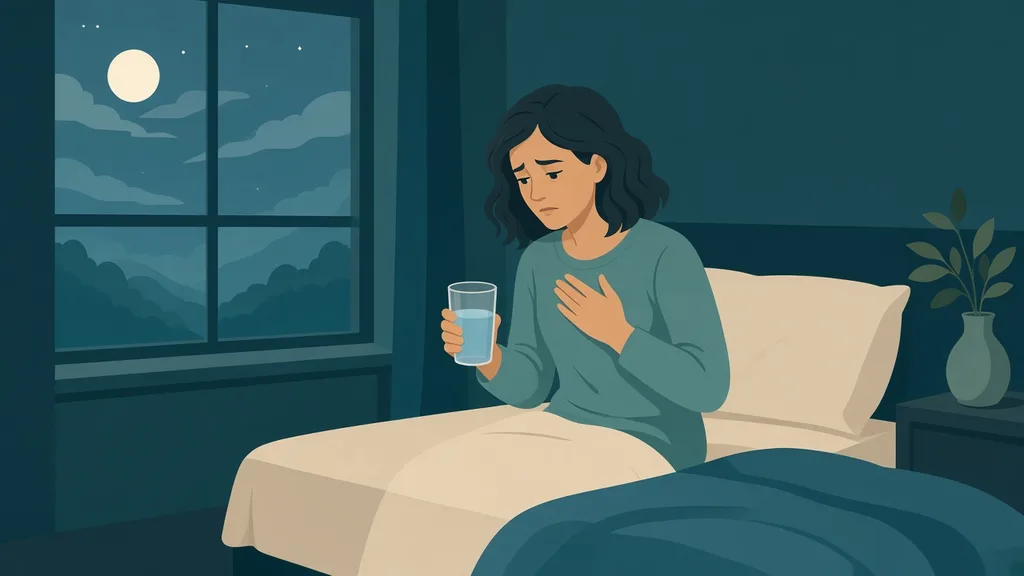
Your heart is pounding, your chest feels tight, and your mind says "this is it." Is it anxiety, or is it your heart? The honest answer is that you often can't tell from the inside, and that's exactly why doctors take chest pain seriously.
This guide uses MedlinePlus on chest pain, NIMH on panic disorder and the American Heart Association (AHA) on heart attack symptoms. It is general education. If you think you may be having a heart attack, call 911 now; don't wait to read. To learn more about anxiety conditions, see panic disorder, and take a closer look at the warning signs below.
Why anxiety can cause chest pain
NIMH describes a panic attack as a sudden wave of fear or discomfort, sometimes with no clear danger or trigger. The physical symptoms it lists include a pounding or racing heart, sweating, chills, trembling, difficulty breathing, weakness or dizziness, tingly or numb hands, chest pain, and stomach pain or nausea. NIMH adds that these symptoms might feel like a heart attack, that an attack can last from a few minutes to an hour or longer, and that panic attacks themselves are not life-threatening, and the physical symptoms usually resolve with time.
That is good news for people who have been checked and told their heart is fine. It is not a reason to assume a new episode is anxiety, because the opposite mistake can be costly.

Why you can't sort it out by feel
MedlinePlus says many people with chest pain fear a heart attack, but that any organ or tissue in the chest can be the source: the heart, lungs, esophagus, muscles, ribs, tendons or nerves. Pain can also travel into the chest from the neck, abdomen or back. Its list of causes includes:
- Heart and blood vessel problems, such as angina, a heart attack, a tear in the aorta or inflammation around the heart
- Lung problems, such as a blood clot in the lung, a collapsed lung, pneumonia or pleurisy
- Other causes, including panic attacks (which often come with fast breathing), costochondritis (rib inflammation), shingles and strained chest muscles
- Digestive causes, such as esophageal spasm, gallstones, heartburn or reflux (GERD) and stomach ulcers
The AHA adds that women may have heart attack symptoms that are less typical, such as upper back pressure, shortness of breath, nausea, unusual tiredness and, yes, anxiety. See heart attack symptoms in women for more.
When to call 911
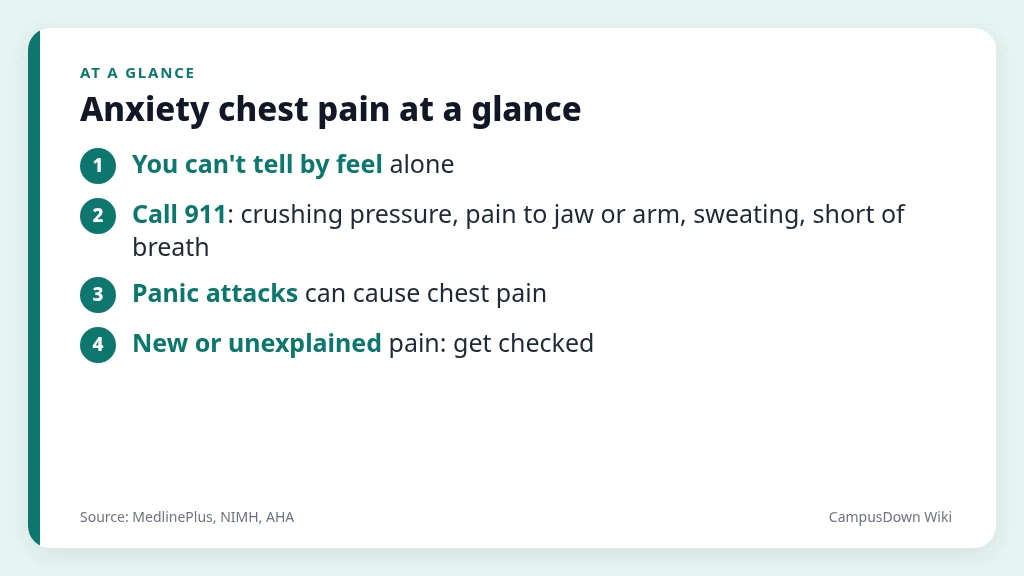
MedlinePlus says to call 911 if you have:
- sudden crushing, squeezing, tightening or pressure in your chest
- pain that spreads to your jaw, left arm or between your shoulder blades
- nausea, dizziness, sweating, a racing heart or shortness of breath with the chest pain
- known angina that is suddenly more intense, comes on with lighter activity, lasts longer than usual or happens at rest
- sudden sharp chest pain with shortness of breath, especially after a long trip or bedrest, or with one swollen leg
The AHA lists similar signs, including discomfort in the center of the chest that lasts more than a few minutes or comes and goes, discomfort in the arms, back, neck, jaw or stomach, shortness of breath, a cold sweat, nausea and lightheadedness.
Get help now if
Call 911 for these signs; don't drive yourself. Risk is higher if you smoke, have high blood pressure, high cholesterol or diabetes, have a family history of heart disease, or already have heart disease. If you're not sure, call.
What a doctor will ask and check
MedlinePlus says your provider may ask where the pain is, how you would describe it, whether it started suddenly, whether it changes with position, breathing, eating or exercise, whether pressing on the chest reproduces it, how long it lasts and what other symptoms come with it. Tests depend on the cause and on your risk factors. A heart rhythm tracing is one possibility; to see what that looks like, read ECG rhythms basics. If your heart races in episodes, see atrial fibrillation and palpitations at night.
If the heart is cleared
If a clinician has ruled out heart and lung problems and diagnosed panic attacks or panic disorder, NIMH says treatment typically involves psychotherapy, medication or both. Cognitive behavioral therapy (CBT) is commonly used. Medicines can include SSRI or SNRI antidepressants, and in some cases other medicines such as benzodiazepines, which NIMH says can build tolerance or dependence, so providers often prescribe them with care. For one example, see alprazolam. NIMH also notes that healthy habits such as sleep, exercise and trusted support can help but don't replace treatment. For the larger picture, see generalized anxiety disorder.
Example scenario: the 2 a.m. wake-up
- Who
- Bronwyn, 34, a graphic designer in Portland, Oregon, woke at 2 a.m. with a tight chest and a racing heart.
- What happened
- She had been under pressure at work, and she had read that anxiety can do this, so she tried to talk herself down.
- How it felt
- She felt ashamed of "overreacting," but the pain spread toward her left shoulder and she got more frightened.
- What they did
- She called 911 instead of gambling. At the hospital the team checked her heart and lungs first and told her the tests were reassuring. A follow-up visit led to a panic disorder diagnosis and a referral for therapy.
- How it turned out
- Bronwyn said she felt relieved that she had not guessed, and calmer knowing there was a plan for the next time.
This is an illustrative example, not a real patient or a review.
Bronwyn's story is an illustrative example. Symptoms and next steps are decided with your own clinician.
Most-asked questions about anxiety chest pain
Where is anxiety chest pain usually felt?
There's no location that proves it. MedlinePlus says chest pain can come from many organs, and heart pain can spread to the jaw, arm or back.
Why people ask: "anxiety chest pain location" is #2 for "anxiety chest pain" (US autocomplete, November 2026).
Is anxiety chest pain on the left side?
Side alone doesn't tell you the cause; get new or unexplained pain checked.
Why people ask: "anxiety chest pain left side" is #4 for "anxiety chest pain" (US autocomplete, November 2026).
How do I tell anxiety chest pain from a heart attack?
You often can't by feel; NIMH says panic can feel like a heart attack. If in doubt, or with warning signs, call 911.
Why people ask: "anxiety chest pain vs heart attack" is #5 for "anxiety chest pain" (US autocomplete, November 2026).
What if anxiety chest pain won't go away?
Pain that is severe or does not go away needs medical evaluation; MedlinePlus says to contact a provider if chest pain lasts longer than 3 to 5 days.
Why people ask: "anxiety chest pain not going away" is #6 for "anxiety chest pain" (US autocomplete, November 2026).
What are the symptoms of anxiety chest pain?
NIMH lists chest pain with a racing heart, sweating, trembling, shortness of breath and nausea as panic attack symptoms.
Why people ask: "anxiety chest pain symptoms" is #8 for "anxiety chest pain" (US autocomplete, November 2026).
Related on CampusDown
You can learn more in the guide to what to do during a panic attack and check it for yourself against the heart attack symptoms in women page.
Frequently asked questions
- Can anxiety really cause chest pain?
- Yes. NIMH lists chest pain among the physical symptoms of a panic attack, but other causes must be ruled out.
- Can anxiety cause a heart attack?
- NIMH says panic attacks themselves are not life-threatening. A heart attack has its own causes, so don't dismiss chest pain as anxiety.
- Should I go to the ER for chest pain?
- Call 911 for crushing pressure, pain spreading to the jaw or arm, or pain with sweating, nausea or shortness of breath. Otherwise ask a clinician promptly.
- What helps after the heart has been checked?
- NIMH says therapy such as CBT, medicine or both can help panic disorder; ask your provider which fits you.
Chest pain with anxiety is real and frightening. Since the two can feel the same, let a clinician sort it out, call 911 for warning signs, and treat panic as the real condition it is once the heart is cleared.
Browse more guides like this in the U.S. Health Topics hub.
This article is for general education and does not replace advice from your own doctor, nurse or pharmacist.